

Alex Rose-Innes
Thato Kgatlhanye, with her repurposed schoolbags, had not only addressed problems faced in poorer communities, but also found a use for South Africa’s plastic pollution issue.
Five years ago, Thato (then 23) started Rethaka Repurposed Schoolbags with her winnings from a start-up competition.
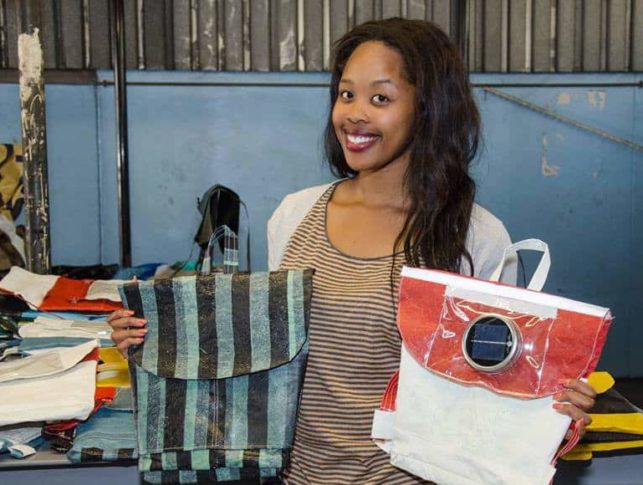
Her factory uses plastic waste and turns it into school satchels for children from low-income households. To ensure school children who had to walk many kilometres,(often in the dark), to schools are noticed, the bags are reflective and include a small solar device to provide light to learners often traversing dangerous areas. At night, in homes where there is no electricity, the solar panels can power solar jar-lamps as the panels are automatically charged during daylight.

(Image: Rethaka Repurposed Bags B)
Thato remembers growing up in a poor community in the North West province in South Africa, but today Rethaka employs 20 people from the village who did not have an income before.
This young entrepreneur is not only changing the lives of her fellow residents, she is also planning on expanding to make raincoats for children out of recycled material.

Rethaka identifies low income, disadvantaged schools in South Africa whose learners lack basic school items and have to walk long distances to school. Companies, corporations and individual sponsors are sourced and become partners in giving, funding the order for the bags for those schools. The donors/sponsors are provided with a Corporate Social Investment (CSI) opportunity which is tax-deductible.
Thato, after feedback from the schools, send a thank you pack to the donating partners with information on how much plastic was recycled for their order, photos and videos from the official handover event and letters from the disadvantaged school and its children.

Thato’s wish to prove to disadvantaged children that no one has to stay in the poor circumstances they were born into, now benefits many and saw the dream of one young woman bear more fruit than even she could have dreamt.
Today one young woman’s dream is providing a sustainable income to those who did not have jobs.

The solar panels on the repurposed school bags charge during the day and can be used in a jar at night to provide light in households without electricity.