A renowned South African conservationist, Lucy Kemp, has won Whitley Award – one of the highly regarded accolades in the nature conservation space. The award, worth £40 000 (over R790 000) is presented annually to individuals from the Global South by the Whitley Fund for Nature, a United Kingdom-based charity organisation.
Kemp was recognised for her initiatives to protect the Southern Ground-hornbill and its habitat. Six other conservationists were also recognised for their passion and commitment to protecting some of the planet’s most endangered species and natural habitats.

Charity trustee Sir David Attenborough and charity patron, Her Royal Highness, The Princess Royal gave messages of support to Kemp and the other conservationists. Said: “Whitley Award winners are local environmental heroes, harnessing the best available science and leading projects with passion. I admire their courage, their commitment, and their ability to affect change. There are few jobs more important.”
Southern Ground-Hornbill ((Bucorvus leadbeateri)) is culturally valued in most African communities and is widely known as the harbinger of rain as it is believed to have the ability to predict or foretell the summer rains and can also help avert lightning strikes. Many farmers in some part of the continent are believed to rely on sightings of the bird for a signal of when to prepare their land for crops and are growing increasingly concerned with their decline.
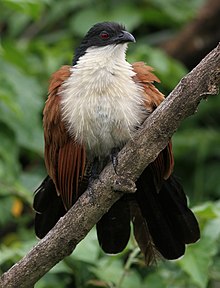
At present the species are considered internationally as “vulnerable” in their entire sub-equatorial range in Africa by the International Union for Conservation of Nature. But within South Africa and Namibia they have already been classified as “Endangered”, as their numbers outside of formally protected areas are declining. It is projected that the rate at which their populations dwindle they are likely to be classified as “Critically Endangered” in South Africa.
Observers say cultural protection has kept some populations safe but downward trends continue – mostly on commercial farmland and some communal grazing areas where western influence trumps traditional beliefs.
“Most threats to species are caused by humans so it’s important that we educate ourselves and learn how we can adapt our actions in order to better protect them. My work with schools and young people provides me with hope that the next generation will use their knowledge to live in harmony with our area’s remarkable creatures,” said Kemp.
With the Whitley Award, Kemp will be able to implement local custodianship outside of protected areas in South Africa. Custodians are trained to protect natural nests and install artificial nests where needed, which will improve breeding success. In addition, a network of citizen scientists, led by regional champions, will support an intensive national monitoring programme.
Kemp will also document cultural beliefs, so that indigenous knowledge can be fully incorporated into conservation activities, as well as producing national roadmaps to recovery for Namibia and Botswana where the species is most threatened beyond South Africa.
According to experts, nest availability is a major factor in breeding success. The Southern Ground-hornbill is a territorial creature that needs its own space. If ideal nest sites are scarce, it will choose a sub-optimal site rather than leave its territory, which increases vulnerability to predation or flooding and limits chick survival, they added.
Kemp graduated from the University of Cape Town with BSc, BSc (Hons) and MSc in Zoology. Her early success in conservation led her to work on programmes aimed to protect black rhinos, wild dogs and cheetahs until she became the project manager of Mabula Ground Hornbill Project in 2010.
Kemp was weaned on nature conservation from very young age having been brought up by parents who were closely involved in hornbill research. She used to be taken to various breeding sites across Africa and Asia and spent her entire childhood surrounded by wildlife.
Founder of the Whitley Fund for Nature, Edward Whitley, commended Kemp’s community-based approach towards conserving the Southern Ground-Hornbill. “Lucy’s passion continues to inspire so many people. Her work with communities, to conserve the Southern Ground-hornbill – a cultural icon – is an example of the impact we can make collectively. Her family must be proud that she is able to carry on their pioneering research, so this species survives. We are delighted to welcome Lucy into our network of Whitley Award winners,” said Edward.