
Alex Rose-Innes
Africa is home to 17% of the world’s population with more than 60% under 25 years of age, ideal to create a large and highly skilled workforce.
With this great untapped potential, Africa is still lagging behind the rest of the world in terms of Science, Technology, Engineering and Math (STEM) capabilities. STEM had proved to be a unique economic force in Western countries and desperately needed across Africa. It would assist emerging economies to compete in a global market and create necessary employment to eradicate poverty. The United Nations (UN) calls it “critical” that STEM education, for especially young women, should be prioritised on the continent.

Globally, countries which had invested in STEM research and education of especially female scientists had achieved global prominence and increased their individual Gross Domestic Product (GDP). This proves that Africa desperately needs solid STEM programmes and higher-level STEM education.
Non-African countries dedicate up to 4% of their GDP to scientific research, whereas African countries allocate very little or no funding to science, increasing the gap between Africa and other countries in STEM performance and as a result, economic growth.
The African Development Bank, in a report, showed that less than 25% of African higher education students (and even less females) were involved in STEM fields, with the majority focusing on social sciences and humanities. Most African schools do not specialise in STEM subjects and because of poverty, very few top science students have the option of studying abroad.
Skilled scientists often immigrate to other continents to earn their livelihoods and it is especially true when it comes to STEM skills. Annually, 70,000 skilled professionals make this exodus, further diminishing talent in STEM industries in Africa which are in need of highly educated nationals.
Due to the lack of domestic STEM workers of both sexes, most STEM jobs in Africa are outsourced to the United States, China and India. More than 50% of STEM funding in Africa is generated by international investors. But changes are slowly being made. In South Africa organisations are forced to spend 1.5% of their payroll on training their workforce. In the Science and Technology Consolidated Plan of Action, the African Union (AU) urges members to spend 1% of its GDP on STEM research and development to enhance innovation.
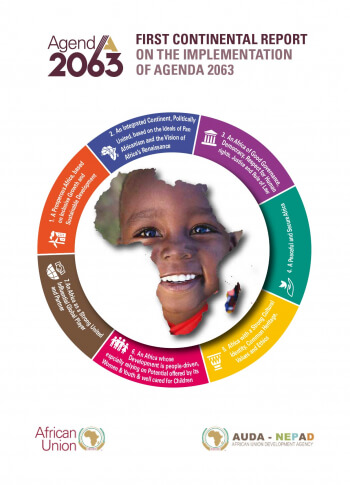
With STEM education a critical key to Africa’s future, governments are increasing efforts and it is predicted that within a decade, STEM jobs are expected to increase markedly. The AU’s Agenda 2063 is a long-term framework intended to transform the African continent over 50 years.
BLURB:
Africa shall be a continent where “well educated and skilled citizens, underpinned by science, technology and innovation for a knowledgeable society, will be the norm and no poor child would miss school” – AU 2063 Agenda
This will not be an easy task, but African governments had been called upon to fully embrace STEM as a key point of focus and invest in educational resources, driving this by involving more young women. Already, the success of female STEM workers across the globe had proved that women scientists have the ability to enhance economic development and provide leadership in their countries.
The Revised Migration Policy Framework for Africa Plan of Action for 2018-2027 had tasked governments to incentivise qualified professionals to stay and thrive in their home countries and share their skills. While overseas investment programmes do attain success in Africa, specific cultural needs require African leadership and sustainable projects akin to the continent and its own peoples.
STEMpedia, a global resource focusing on education in Africa, had called for societal attitude changes regarding female STEM scientists. Many African students and especially young women are part of a first generation of poor families on the continent, to be properly educated. Not only educators, but also families and communities had been called upon to motivate young people towards transforming their futures by highlighting the benefits of STEM education.
Improving STEM education and resources in African schools will require governments, public and private organisations, communities, the business sectors and individuals to work together. Africa is in a prime position to educate a new highly skilled female workforce with STEM skills to grow its economy to compete with the world’s biggest players.