An international research team has made what is considered a “ground-breaking” discovery of the world’s biggest fish breeding colony in the southern Weddell Sea in Antarctica.
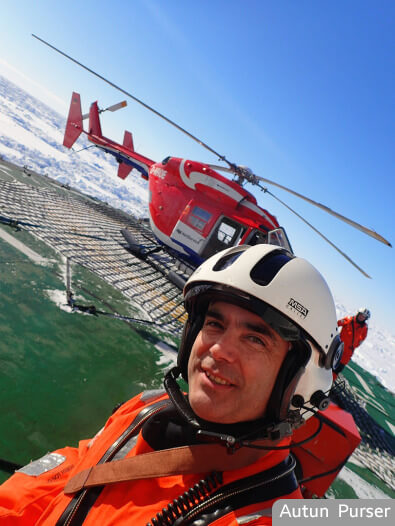
Lead scientist and deep-sea biologist, Dr Autun Purser of the AWI, led the team. The group comprised scientists from various institutions, including the University of Bremen, UP’s Department of Zoology and Entomology, the University of Basel, HafenCity University Hamburg and the Max Planck Institute for Marine Microbiology.
Multinational research team
Dr Mia Wege, a lecturer in the Department of Zoology and Entomology at University Pretoria’s Faculty of Natural and Agricultural Sciences, was part of the esteemed team. The discovery was made in February 2021 by scientists from the Alfred Wegener Institute (AWI) Helmholtz Centre for Polar and Marine Research, Germany. The team was aboard German research vessel Polarstern, which was breaking through sea ice in the Weddell Sea to study marine life, as part of the multinational collaborative research team.
Important find
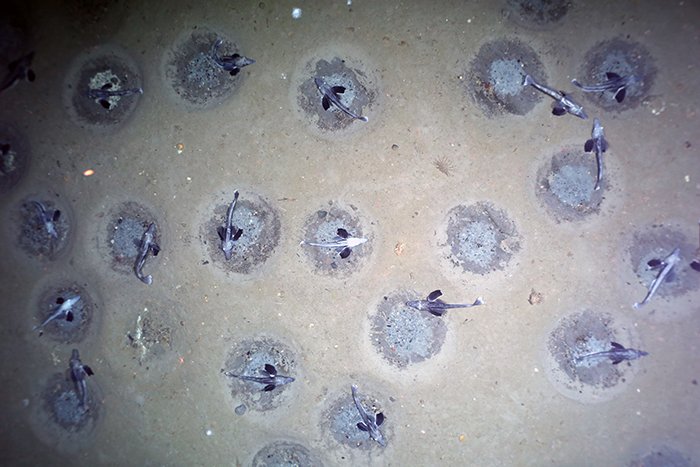
The findings were recently published in the journal Current Biology, a highly rated biweekly peer-reviewed scientific journal. The breeding colony of notothenioid icefish (Neopagetopsis ionah) discovered by the research team is the highest density of fish nests ever encountered globally. According to Dr Wege the breeding colony, which stretches some 240km2, represents a significant scientific find. The team used the Ocean Floor Observation and Bathymetry System, a state-of-the-art towed camera system to make the discovery. Said Dr Wege: “Using towing video cameras and other instruments half a kilometre down, the ship came upon thousands of 75cm-wide nests near the seafloor, each occupied by a single adult icefish, as well as scores of fish eggs.”
Perfect breeding spot
She said the way the currents flow and the presence of some underwater troughs in this area of the Weddell Sea, there are slightly warmer waters (though still very cold at -1°C to 0°C) flowing up onto the continental shelf. This creates the perfect breeding spot for the icefish, and vice versa – the fish support many other aspects of the local ecosystem. For instance, fish carcasses contribute nutrients to the system and are most likely a source of food for Weddell seals.
Satellite tracking devices
Dr Wege said the historic and newly collected Weddell satellite tracking data found that seals are spending up to 90% of their time over the fish nests area. “As someone who studies animal movement behaviour, this alone is a unique finding. We use satellite tracking devices to tell us where animals are swimming and eating and combine [this information] with other cues about the ocean to tell us that this must be a productive area with lots of fish and nutrients. But here, we have all the pieces of the puzzle coming together,” said Dr Wege.
“We rarely get the chance to study all levels of the food web in one go,” she said, adding, “this is valuable information, not only because of the new fish nests discovery, but also because we have a much better understanding of how all those pieces of the puzzle fit together – of all the aspects that make up a productive area in one of the most remote and least-studied parts of the ocean.”
Antartic Treaty
Two seafloor cameras would be left at the colony site for a couple of years, taking photographs four times a day to determine whether this is a one-time occurrence or a long-term nesting spot, explained Dr Wege. She said this discovery adds an enormous amount of support to the establishment of a vital marine-protected area in the Weddell Sea under the Convention on the Conservation of Antarctic Marine Living Resources umbrella – a proposal that has been blocked by several member nations of the Antarctic Treaty for the past few years.