Karl Muller
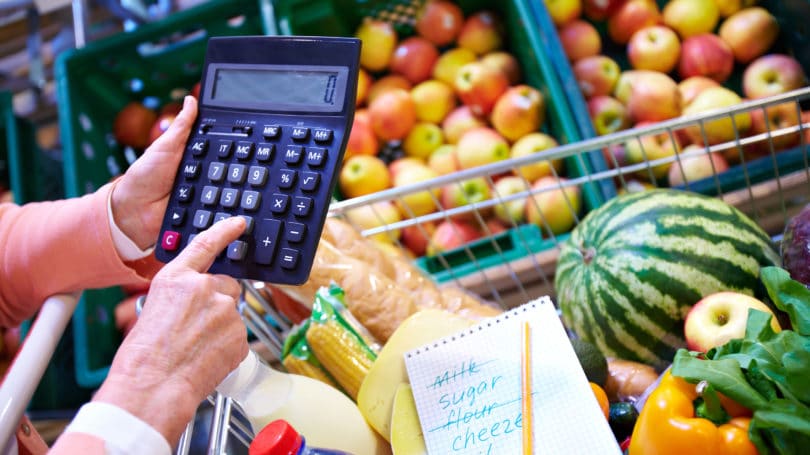
The continued steep rise in food price inflation, from 3.4% in 2019 to 5.7% at the beginning of this year, remains a major concern for South Africa, as it is exacerbating poverty and food insecurity among the country’s poorest households.
The sharp rise in food inflation is driven by both international and domestic factors. Domestic influences that are pushing up food prices include the increases in food production costs, mainly related to recent electricity tariff increases of more than 15% and a minimum wage hike of over 16%.
On the international front, factors driving the increase in food inflation include higher prices for crude oil that contribute to high food production costs and a rise in international commodity prices such as sunflower oil, grains and meat.
“Regulated prices of resources such as fuel and electricity are going to have an impact on food pricing as inflation moves upwards. Unfortunately, this has the undesirable effect of pushing the vulnerable further into poverty and undernutrition,” says Tiger Brands Foundation (TBF) Operations Manager Karl Muller.
Growing poverty levels
According to World Bank figures released in late 2020, the COVID-19 pandemic was estimated to have pushed an additional 88 million to 115 million people into extreme poverty that year, with predictions that the total could rise to as many as 150 million by 2021.
Muller also points out that chronic hunger has been on the rise since 2014, with research by the World Food Programme (WFP) showing that, in 2019, 650 million people around the world suffered from chronic hunger – 43 million more than in 2014.
The WFP notes that the situation deteriorated drastically in 2020, with up to 811 million people classified as chronically hungry – an astounding 161 million people more than in 2019. Current projections show that around 660 million people may still face chronic hunger in 2030.
“In South Africa, some 55.5% (30.3 million people) of the population is currently living in poverty at the national upper poverty line, living on about R992 per month, while about 13.8 million people (25% of the population) are experiencing food poverty,” says Muller.
“These are alarming figures, and serve as a wakeup call to philanthropic organisations to roll up their sleeves and get involved in providing nutrition to the vulnerable in our society.”
To fight the scourge of food insecurity and protect the most vulnerable people in society, the TBF is continuing to push ahead with its successful in-school nutrition programme. Since its inception in 2011, the programme reached the milestone of serving its 100 millionth in-school meal in December last year.

Noticeable impact
Muller notes that the breakfast programme now reaches 95 schools across all nine provinces in South Africa, and feeds over 74 637 learners per day, with a total of 78 510 beneficiaries.
“One of the biggest drivers behind the establishment of the TBF was to offer support to underprivileged communities that struggle with perpetual poverty. The Foundation aims to make a noticeable socio-economic impact in these communities by ensuring that learners have access to good nutrition,” he says.
“Now more than ever, philanthropic organisations and stakeholders must step in to provide assistance to sustain and enhance food security particularly in schools through programmes that are cost-efficient.”
He adds that against the backdrop of growing hunger, food insecurity and malnutrition, government’s ability to address these challenges will remain constrained. This means that nutrition programmes should become a priority investment while at the same time working to maximise their effectiveness and efficiency to achieve demonstratable outcomes and sustainable impact.
To drive sustainability, the TBF is also promoting the creation of school food gardens. Through this initiative, schools are encouraged to establish food gardens from which they obtain fresh produce to supplement the menu, in line with South African Food Based Dietary Guidelines.
“The programme gives learners, teachers and parents the skills to grow their own gardens, contributing towards long-term household food security. The gardens are also used as a teaching and learning resource for learners” Muller concludes.

Perspective piece by Karl Muller: Karl Muller is the Operations Manager at the Tiger Brands Foundation, an organisation that implements a school nutrition programme in 95 no-fee paying schools across South Africa. The programme provides over 74 637 learners with a nutritious breakfast every school day.