
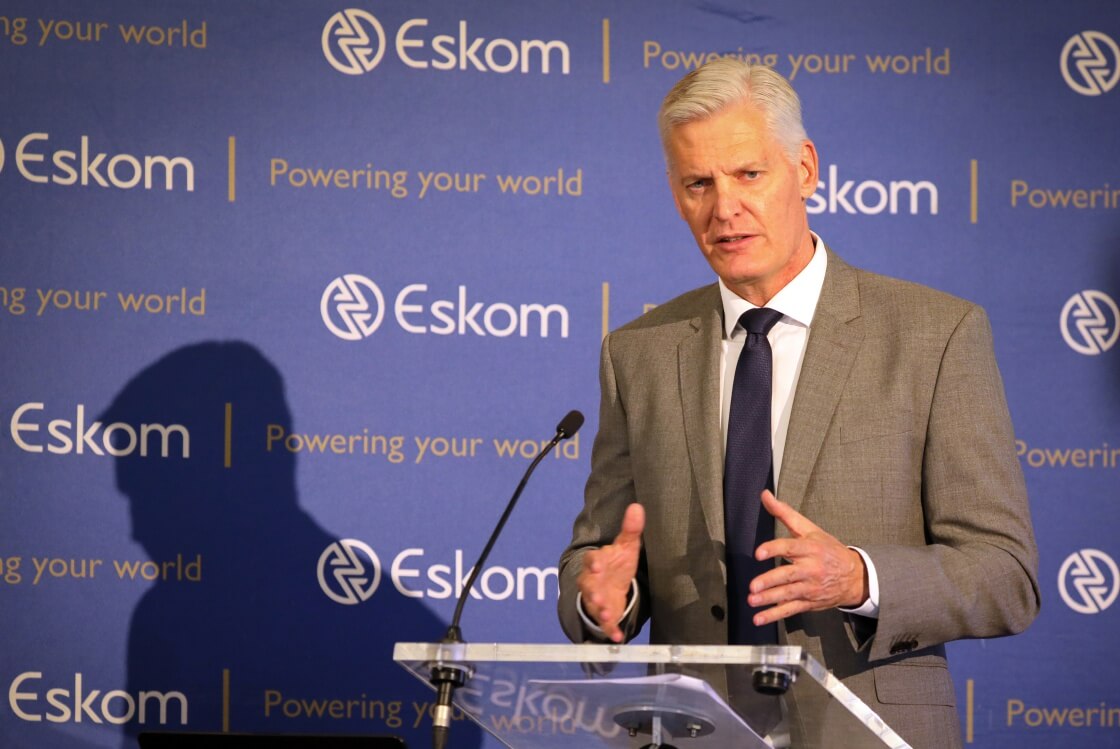
Eskom chief executive officer, André de Ruyter, assured farmers that his organisation is working hard to reduce its carbon footprint by restructuring its business and operations model to become carbon neutral. The South African state-owned energy utility is considered to be the largest emitter of sulphur oxide and nitrogen oxides including the greenhouse gas carbon dioxide in the country due to its heavy reliance on coal. At the moment, South Africa is ranked 12th biggest carbon emitter in the world.
Moving away from fossil fuel
Addressing the Agbiz Congress held at Sun City recently, de Ruyter said the continued use of coal as an energy source means that South Africa’s agricultural commodities will not be welcomed on international markets in future as the world is moving away from fossil fuel usage. He said it was in the best interest of the agriculture sector that Eskom begins to earnestly embrace greener and more carbon neutral practices.
COP26 partnership
Late last year South Africa, during COP26 entered into an $ 8.5 billion partnership with developed nations including the US, the UK, Germany, France and the EU to help wean itself from fossil fuel. The funding will be geared towards establishing green and renewable energy sources. This includes re-purposing the current coal-fired power energy infrastructure, investing in sustainable sectors including green hydrogen and electric vehicles, among others. South African plans to phase out its reliance on coal in the next 15 years.
Accelerating grid access
De Ruyter said: “It’s crucial that we should decarbonise our business, to ensure that there won’t be discrimination against our clients going forward,” said de Ruyter. He also told the conference that Eskom has decided to accelerate grid access for independent third parties who want to sell power back to the national grid. “I know in the past Eskom has been hesitant to do this, but we are excited to announce it now.”
Standardised grid system
He acknowledged that the exact modalities on how to resell power to the national grid still need to be worked out and clarified; adding what it is required is a regulatory framework to resolve this. “We have hundreds of municipalities that each has their own extensive grid. While Eskom has a standardised grid system, each municipality’s grid is run differently. It’s important that these inconsistencies be removed, because it’s currently a massive problem from a voltage perspective,” de Ruyter said.
Green energy generation
He said Eskom was looking into generating greener energy on the massive land it owns. Currently the power utility leases 4 000ha of land to independent contractors who are harvesting green energy for the national grid. De Ruyter said currently Eskom is focusing on green energy generation initiatives in the Mpumalanga Highveld by harnessing sun and wind farms. He said Eskom will leverage its existing electricity grid to connect new energy renewable projects to the grid. Said de Ruyter: “We have an opportunity to leverage our existing transmission grid. As we shut down coal-fired power stations, we can increasingly use the grid capacity that is made available by providing access to renewable energy investments in the province. The existing grid is a great enabler of the just energy transition.”
The transition will also help create sustainable jobs in the province because it is the one area where most jobs will be lost due to a move away from coal generation. According to the World Bank’s recent studies between 160 000and 300 000 new jobs would be created by the just energy transition in the coal sector. De Ruyter further said while Eskom will drive the just energy transition project by re-configuring its existing network, it is also creating an enabling the private sector to increase its investment into Mpumalanga by availing the land on a rental basis.