
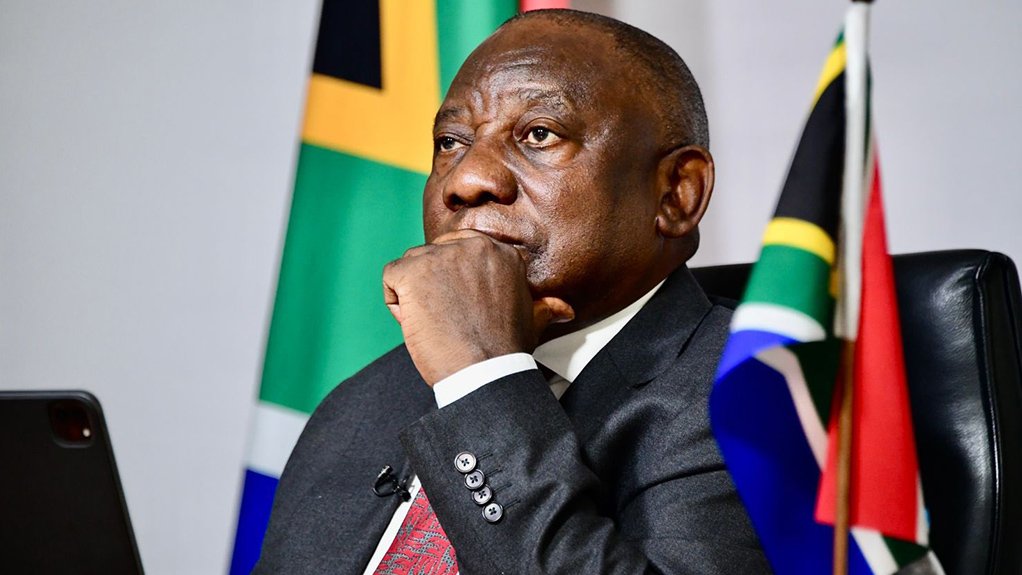
South Africa is an investment destination of choice with existing and future potential to produce green hydrogen, said President Cyril Ramaphosa during his keynote address to the Green Hydrogen Summit held last week in Cape Town.
Gateway to a dynamic continent
The recent global catastrophes such as spontaneous wildfires, extreme heat and excessive rains have foregrounded the importance of renewables with green hydrogen on top of the list. Ramaphosa’s address focused on positioning South Africa as a critical player in the green hydrogen value chain. He said the country has proven itself as a gateway to a dynamic continent with great prospects. “South Africa leads the continent in advanced manufacturing, science and technology. This country is a favourable, reliable and stable place to conduct business. We are driving regulatory and legislative reform to make our economy more competitive, to attract more investment and to create more jobs,” said Ramaphosa.
Adapting to the effects of climate change
He said the summit is a sequel to the ‘Sustainable Infrastructure Development Symposium’ held last year to highlight South Africa’s potential as a global exporter of green energy. He said the summit is also taking place on the back of the COP27 held at Sharm el-Sheik in Egypt. He said these gatherings are even more urgent in the context of the increasing frequency and intensity of extreme weather occurrences. “Low and middle-income countries are most affected by these weather events, but are least equipped to adapt to the effects of climate change”, added Ramaphosa.
Moving towards a low-carbon society
He welcomed the commitment made by developed countries’ leaders to establish a fund to address climate change damage suffered by developing economies. Ramaphosa told the summit that South Africa has just recently released for comment ‘Just Energy Transition Investment Plan’ as a way to explore pathways towards a low-carbon and climate resilient society. The plan, he said, shows that South Africa will need “approximately $98 billion over the next five years to enable a just transitionand achieve our ambitious emissions reduction targets”.
Leveraging green hydrogen to create jobs
He said green hydrogen is one of the key features of the investment plan of a just energy transition, indicating that it has huge growth and investment potential for the country. Ramaphosa said South Africa will capitalise on the rising global demand for green hydrogen and green hydrogen-based products such as ammonia and synthetic jet fuels. More importantly, the entire renewable energy project would boost the creation of much-needed jobs, attract investment, bring development to rural provinces and support a just transition from fossil fuels.
South Africa has been involved in the green hydrogen since 2007 with the department of science and innovation (DSI) leading research and innovation. The country’s involvement in the green hydrogen was motivated partly by the potential impact that the transition away from the internal combustion engine to battery electric vehicles would have on the country’s platinum mining industry, said Ramaphosa.
Local expertise to produce synthetic fuel
Ramaphosa said it is estimated that South Africa has the potential to produce six to 13 million tons of green hydrogen and derivatives a year by 2050. This will, he added, require between 140 and 300 gigawatts of renewable energy with the focus on green hydrogen exports, electrolyser and fuel cell production, and the manufacture of green steel, sustainable aviation fuel, ammonia, fertilisers and renewable energy components. He said South African companies such as Sasol and PetroSA have the technical expertise to produce synthetic fuels like diesel, petrol and kerosene and other related chemical products. Ramaphosa said there are also a number of large and emerging South African companies that are doing remarkable work in the green hydrogen sector. These include:
- The Boegoebaai Port and Rail project which has just been gazetted as a Strategic Integrated Project in 2020.
- Sasol and the Northern Cape provincial government have produced the master plan for a green hydrogen special economic zone, which aims to support 40 gigawatts of electrolyser capacity by 2050.
- This would require approximately 80 gigawatts of renewable energy, which is almost double South Africa’s current installed electricity generation capacity.
- Transnet has issued a request for proposals for the development of the port and rail project, which could see the port developed by 2028.
- The Prieska Power Reserve Project, which is being led by Mahlako a Phala, a black women owned renewable energy developer, has made major progress over the last year.
Hydrogen Valley
A similar initiative is the development of a Hydrogen Valley that would link the three hydrogen hubs of Mogalakwena in Limpopo, Johannesburg and the Durban – Richards Bay hub. This initiative is being led by the Department of Science and Innovation and supported by Anglo American, Bambili Energy and Engie.
Ramaphosa indicated that nine catalytic projects have been identified as part of this initiative. These include the successful demonstration by Anglo American in May 2022 of the world’s first, largest mine haul truck to run on hydrogen and fuel cells.
“We hope to see the[se] international firms partnering with South African firms as we increase our renewable energy footprint, green hydrogen manufacturing capability and local production of value added products. We look forward to welcoming more of the firms in the green hydrogen value chain and associated technologies into our market,” concluded Ramaphosa.