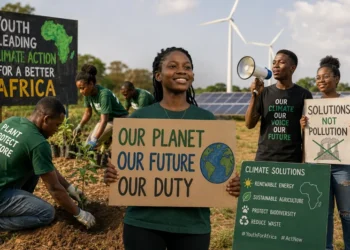


Globally, there’s a shortage of expertise and skills (green talent.) to drive the transition towards a green economy. These talent need to be double by 2050 if the world is to move away from fossil fuels. In South Africa (SA), despite efforts, there are still major gaps in green talent training. These are delaying the transition away from coal says author, Dr Sean Kruger, senior lecturer: Centre for the Future of Work, University of Pretoria
SA has vast renewable energy resources (solar and wind) and is continually growing in sectors such as hydrogen technology, making development of green talent to run these new projects, crucial. Every sector of the economy affects the environment, i.e. the retail sector’s waste production can be reduced by changing packaging. Managers will need green talent to reduce their companies’ greenhouse gas emissions while still driving efficiency. Studies of labour markets show a great global shortage of green talent.
Multinational corporations in renewable energy face a shortage of skilled technicians and engineers to set up and maintain large-scale wind and solar farms. For smaller enterprises, incorporating renewable energy can reduce operational costs and enhance sustainability branding. However, they also struggle to find small-scale renewable specialists or green energy auditors. They assist businesses or individuals to draw from renewable energy sources to reduce their carbon footprint and operating costs.
Hydrogen specialists are also in short supply. SA’s platinum reserves is a prime location for hydrogen fuel cell technology, a clean energy system where hydrogen and oxygen react in an electrochemical cell to produce electricity, water and heat. This offers high energy efficiency and zero emissions at point of use. Anglo American Platinum is investing in green hydrogen technology for heavy-duty transportation. However, the scarcity of hydrogen fuel cell engineers and chemists hampers this innovation.
Data scientists use advanced statistical, analytical and programming skills to extract insights from large datasets. They support data driven decision-making and predictive analysis for businesses, but their skills are also in short supply. Environmental engineers are needed to prepare, review, update and present reports on environmental issues related to design systems protecting the environment; reclaim water or to control air pollution. They are necessary t obtain, update and maintain plans, permits and standard operating needed to interpret climate-related data, assess carbon footprints, and devise plans for companies to be environmentally sustainable to achieve net-zero emissions. However, there is also shortage of data scientists with environmental expertise.
Eco-friendly buildings are also needed. These are designed and constructed with sustainable materials to be energy efficient and minimise greenhouse gas emissions. This lead to another shortage of skills – mid-level technicians trained in energy efficiency and green building practices.
This affects small and medium property developers needing to expand their efforts in using energy efficient design in renovations and new builds. This will lower long-term costs and increase market value of their properties. But they face challenges in sourcing qualified green professionals, balancing green efforts with returns for investors.
How could COP29 change this?
The 29th annual global climate change conference of the parties (COP29) will bring together the world’s governments in Azerbaijan and has started today (11 November 2024) with discussions on how to limit global warming. Part of the discussion will be on the green talent shortage globally.
COP29 has called for greater international cooperation in tackling climate challenges through skills development and technology transfer. Technology transfer is where new ideas, inventions or technologies are turned into profitable products or services through commercialisation, licensing or new business models that generate revenue and economic value.
SA already has partnerships with international development organisations and should use these to accelerate the development of green talent such as joint training programmes of green hydrogen professionals, collaborating with other countries to provide SA with access to best practices in hydrogen production and renewable energy.
The country has a South Africa-H2 Fund, launched in collaboration with the Netherlands and Denmark, aiming to attract US$1 billion in blended finance (loans, incentives and grants). The H2 Fund will accelerate the green hydrogen economy, including developing skilled jobs.
Green Jobs for the Youth
COP29 will hold talks on innovative ways to bring young people into green careers. SA’s move away from coal provides opportunities to retrain and upskill young people through apprenticeships and work-based learning programmes such as training for hydrogen fuel cell system practitioners. They manage chemical reactions between hydrogen and oxygen in the fuel cell stack.
This training is being conducted by the Energy and Water Sector Education Training Authority and Bambili Energy.
SA should advocate for funding to establish skills development zones focusing on renewables training, hydrogen and electric vehicle sectors. This would bolster the country’s green economy, support the transition to renewable energy and provide much-needed employment opportunities.
The country urgently needs to develop a green talent strategy for training in renewable energy and environmental conservation from school level. This will aid in developing a pipeline of future talent. Vocational training needs to be part of the strategy. SA’s Technical and Vocational Education and Training colleges should offer specialised programmes in solar, wind energy and energy efficiency. However, updated curricula and up-skilling for trainers are needed and these colleges also need enhanced industry partnerships for apprenticeships and hands-on training.
Universities must continue to integrate specialised green talent development into their curricula and focus on environmental data science, renewable energy engineering and sustainable business practices. These institutions also need to train managers and strategic thinkers skilled in sustainability reporting and environmental, social and governance compliance. Multinational companies are relying more and more on these professionals for guidance through the green transition.
The biggest challenge is reskilling the current workforce towards a just transition. Workers in traditional industries such coal mining can be retrained for solar and wind energy installation. These jobs require similar mechanical and electrical skills.