
Leapfrogging SA economy, transformation
Small-Scale Fisheries Key to SA Economic Growth, Transformation
The story of transformation in South Africa cannot be told fully without acknowledging the struggles of the country’s small-scale fishers and their rise to being recognised as a formal sector. MUSA NDLANGAMANDLA reports.
The contribution of the Fisheries Branch of the Department of Environment, Forestry and Fisheries (DEFF) in formally recognising the small-scale fishers (SSF) for the first time in South Africa’s history, has been a turbulent journey with evident distance sailed towards the set destination.
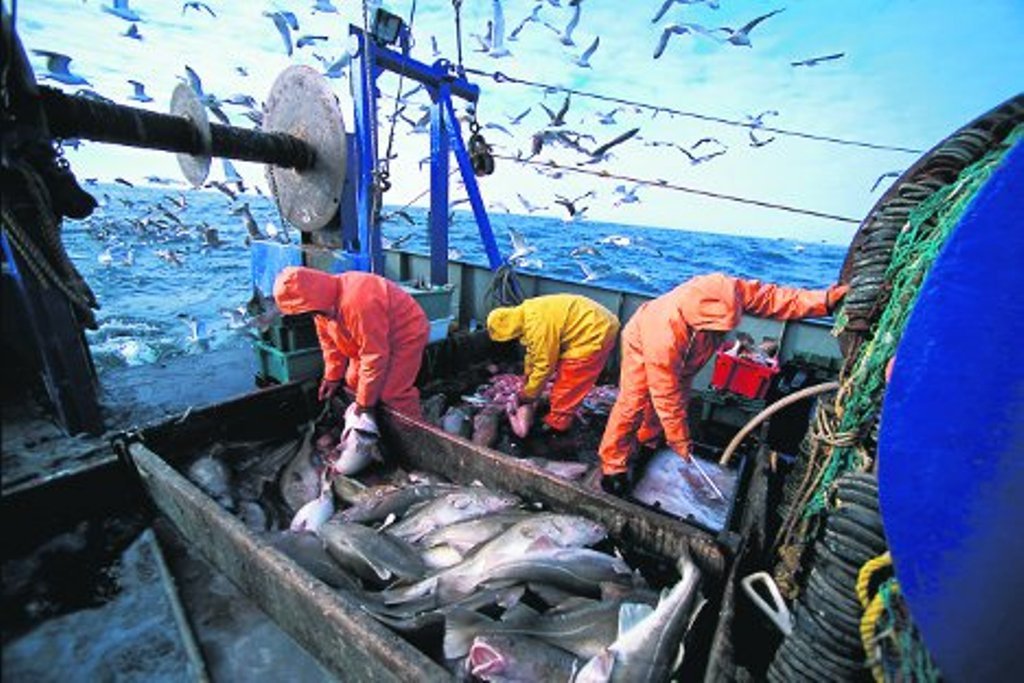
Prioritising thousands of small-scale fishers from an informal and subsistence arrangement into small-scale commercial players, is one of government’s top priorities. In South Africa between 90% and 95% of the SSF catch is destined for local consumption.
With support from the Fisheries Branch of the DEFF, in collaboration with key strategic players, this fishing sector contributed over R3 billion to South Africa’s GDP in 2019. This translates to over 15, 000 jobs.
“The fisheries sector is an important element of the Oceans Economy Strategy and battle against poverty, inequality and economic challenges,” said Minister Barbara Creecy, when issuing 15-year fishing rights to 20 co-operatives representing over 1,500 small-scale fishers at Kwazakele in the Eastern Cape. The small-scale fishing sector will directly benefit over 30, 000 people from the coastal communities, namely in the Northern Cape, Western Cape, Eastern Cape and KwaZulu-Natal.
The fishing industry is coming from a painful history of neglect in which, even after South Africa ushered in a new democratic dispensation in 1994, the wheels of transformation were grinding slowly for the industry. Compounding the situation is climate change, a global phenomenon that has led to an unprecedented dwindling of marine stock.
To turn the tide, the Fisheries Branch of DEFF, in collaboration with the private sector, prioritises capacity building, skills development, access to finance and markets for SSF, so that they play a more pronounced role in the mainstream economy – and not just remain mere price takers fighting for survival in an industry that historically has kept them on the edges of the value and supply chain. “This fuels over fishing as the SSFs are left with few options but to catch more fish to sustain their livelihoods, perpetuating their marginalisation and incurring huge social costs in fishing communities, while the environment faces increasing pressure,” says industry expert Chris Kastern of Abalobi, a fisher-driven social enterprise based in Cape Town
Small-scale fishers, through their cooperatives, are allocated solid fishing rights and access a number of support programmes in partnership with provincial governments and the private sector. The DEFF has been visiting the coastal fishing communities to issue certificates to registered cooperatives and allocate renewable fishing rights of 15 years to small-scale fisheries cooperatives.
The DEFF initiated a programme to train researchers, recruit students at tertiary institutions and encourage them to take up careers in the industry. Internships, some to overseas institutions, are also offered. The programme has also been expanded to neighbouring countries to ensure DEFF recruited young black scientists. There is a bursary scheme in place to support youth in different areas of study, including aquaculture, oceanography and fishery science and fishery economics.
Minister Creecy also notes that the DEFF needs to embrace digital technology in a bid to open tremendous opportunities to transform small-scale fisheries cooperatives into sustainable and inclusive businesses. Working with Abalobi NPO and the small-scale fishers, the Abalobi App was designed. The App, according to Dr Serge Raemaekers, the director of Abalobi, enables small-scale fishers to play a meaningful role in co-management structures and address issues of illegal, unreported and unregulated fishing in their coastal waters.
“Guided by the Small-Scale Fisheries Policy of 2012 the Department [DEFF] has been working in close collaboration with industry partners and the private sector to assist small-scale fishers to set up cooperatives in the coastal communities, registering them with the Companies and International Property Commission and providing extensive training in fishing and cooperative management,” Minister Creecy said.
A total 122 small-scale fishing cooperatives have been registered across the Northern Cape, Eastern Cape and KwaZulu-Natal coastal communities. Western Cape coastal fishing communities are pending to get online urgently. These milestones would not be possible without the active participation of the private sector. Oceana Group, the biggest fishing company in Africa and listed in the Johannesburg and Namibian Stock Exchanges, has been playing a key role in fostering real transformation in the fishing industry. This has been characterised by providing jobs to members of fishing communities and formalising training opportunities for all registered small-scale fishing cooperatives.
“At Oceana Group we draw from our over 100 years of industry capabilities to work in close collaboration with the DEFF in the provision of sustainable and scalable solutions to small-scale fisheries cooperatives and all stakeholders across the fishing value chain,” says Oceana CEO Imraan Soomra. “We share the DEFF’s belief that to ensure real transformation and real empowerment and for high impact and reach, the shared solutions should ultimately lead to the small-scale fishers being financially self-sufficient.” Oceana’s goal therefore is to work with the DEFF and other players in the fishing industry to lay the foundation for, and facilitate growth of, profitable and sustainable small-scale fisheries cooperatives that satisfy the needs of the local and international markets. Soomra says the goal is for Oceana to play its part to ensure that the small-scale fisheries cooperatives become successful and attract support from impact investors.
DEFF’s positive approach towards gender equality is also highlighted as a key success factor. “The DEFF continues to bring positive change to an industry that hitherto was dominated by big fishing companies run by white males with a monopoly over our marine resources,” says Khethiwe Mabuza a member of a small-scale fisheries co-operative in Richards Bay.
“We laud Minister Creecy and her officials for empowering women and youth by ensuring they benefit from the fishing industry eco-system. This includes the secondary spinoffs comprising sales of fish and fish products, fish cleaning and preparation, boat building and boat repairs and net making and repairs.”
“The DEFF understands that women are often the primary care-givers and sole income earners in their families, and face daily struggles to sustain their extended families. The DEFF also understands that South Africa’s growing youth contingent needs to be absorbed into the fisheries sector, given the required tools and skills in order for them to lead a healthy, productive life.”