

Alex Rose-Innes
With the Centre for Human Rights and Business (CHRB) ensuring the cancellation of a Madagascan mining project, it once again raises the question of violations committed by not only those seen as harming the Earth, but also those who claim “green” benefits when there is none.
An Australian firm, Base Resource, had put its mining plans for two sites, Toliara and Ranobe in Madagascar on hold as a top court in the country criticised government for being in cahoots with the firm, citing “violence and conflict with host communities.”
The main finding from a branch of the country’s Supreme Court stated that no clear benefits could be found for the Malagasy people. Irregularities with regards to the mining permits granted to the mining company were proved. The issues of proper transference of land rights and management of a protected area ensured that environmental advocates could successfully show inadequate consultation processes with local people. The hearing started last year and after a protracted court case, effectively stopped the mining group in its tracks. In a statement released by the CHRB, it quoted the Court’s finding that the land rights of traditional occupants had been ignored during the consultative process.
More than one permit and concession had been granted to the mining firm, which laid claim in its audit report that the Ranobe area is one of the best mineral sand deposits in the world and which, according to Base Resources, would have brought financial benefit to the region. The concession in the Toliara Province would have seen metals extracted from the beautiful Mikea Park which had been established in 2001.
During the court proceedings, it came to light that the proposed mining activities raised conflict among the communities in the area and led to the suspension of all on the ground activity for the foreseeable future.
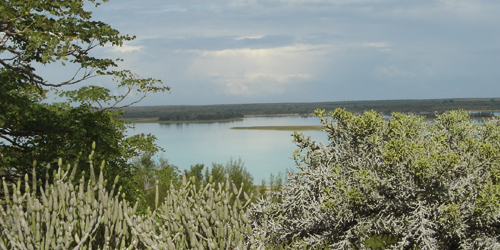
The Mikea Forest is situated in south west Madagascar and stretches over thousands of hectares to the west coast. With unconsolidated sand, it boasts several freshwater lakes and is one of the largest remaining continuous forest blocks in Madagascar, but is also one of the least protected and is threatened by human development.
Some animals habituating the forest are not found anywhere else in the world and some had only been discovered in the 2000’s. Of these, the tenrec, shrew and the ring-tailed lemur had started to disappear as development in the area continued, which is why the court’s decision to stop mining in the area, was applauded by Unicef, the United Nation’s environmental division.
Fifty-nine (59) different snake species had been identified as well as some of the rarest birds on earth. Unfortunately, due to deforestation as a result of agriculture, 16% of the forest had been burnt away over 40 years.