

Alex Rose-Innes
The director-General of the International Renewable Energy Agency (IRENA), Adnan Z. Amin, acknowledged that Africa, with a growing population and energy demands, faced “an enormous energy crisis.”
In IRENA’S published Renewable Energy roadmap 2030, he called for a rapid supply increase on the continent, stating that Africa had a unique opportunity to pursue sustainable energy development as a basis for long-term prosperity. However, he made it clear that it requires a firm commitment to the accelerated use of modern renewable energy sources.

With larger countries such as Egypt, Ethiopia, Kenya, Morocco and South Africa(SA) are leading this effort, some of the smaller countries including Cabo Verde, Djibouti, Rwanda and Swaziland had also set ambitious renewable energy targets.
Africa 2030, IRENA’s comprehensive roadmap for the continent’s energy transition, illuminates a viable path to prosperity through renewable energy development. Part of an ongoing global REmap 2030 analysis, Africa 2030 is built on a country-by-country assessment of supply, demand, renewable energy potential and technology prospects. It highlights possible roles for various renewable energy technologies across the five regions of Africa until 2030.
Amin said that African countries can deploy modern renewables to eliminate power shortages, bring electricity and development opportunities to rural villages, spur on industrial growth, create entrepreneurs, and support increased prosperity across the continent.
“ As a promising sign of things to come, several African countries have already succeeded in making steps necessary to scale up renewables, such as adoption of support policies, investment promotion and regional collaboration,” Amin said in the report.
Africa 2030 builds on a large body of background studies developed in close co-operation with African experts. With momentum building in support of renewable energy, IRENA is committed to further collaboration with governments, multilateral organisations and existing national, regional and global initiatives.
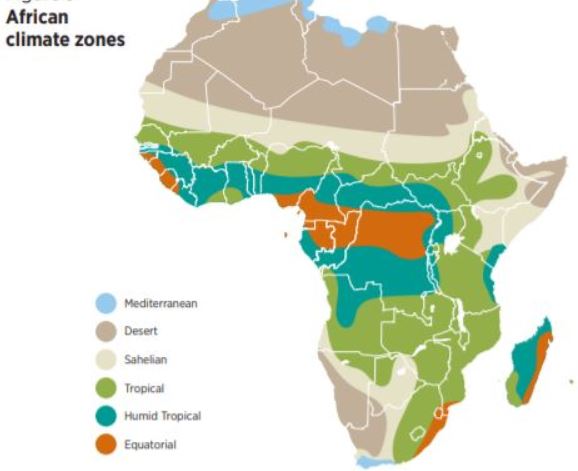
Amin highlighted the fact that Africa has exceptional solar resources which could be harnessed for electricity generation and thermal applications. The desert regions of North Africa and some parts of Southern and East Africa enjoy particularly long sunny days with a high intensity of irradiation. Sahelian and tropical conditions also feature strong solar irradiation. This meant that solar energy could be utilised at various scales, making it suitable from the household and community levels to industrial and national scale operations.
According to research undertaken for ReMap 2030, the African continent is endowed with large renewable energy potential, varying in type across diverse geographic areas. Solar resources are abundant everywhere, while biomass and hydropower potential are more plentiful in the wet, forested central and southern regions. Wind resources are of the highest quality in the north, the east and the southern regions, while geothermal energy is concentrated along the Great Rift Valley. These resources, and the settings in which they exist, can point to country specific renewable energy solutions to fit each state’s strengths and needs.
The resources considered include hydropower, solar, wind and geothermal energy, wind energy and various types of biomass. Biomass falls into three categories – wood fuel, agricultural and industrial residues and energy crops. Africa’s extensive coastline also suggests long-term ocean energy potential, but this is unlikely to be a significant source by 2030. The possible applications for all these resources include power generation, heating and cooling for both industrial and domestic applications, lighting, transport and direct uses of mechanical energy.
With rapid economic growth, changing lifestyles and the need for reliable modern energy access, the continent’s energy demand is set to double by 2030. The use of modern renewable energy technologies is also on the rise across Africa, where countries are uniquely positioned to leapfrog the traditional centralised energy supply model. Renewable energy technologies could be deployed locally, at small scale, opening up new forms of financing and productive uses, as well as broadening electricity access. Another positive is that the costs of renewable technologies are decreasing rapidly and recent project deals for renewables in Africa had been among the most competitive in the world.

While the resource base varies, all African countries possess significant renewable energy potential. The continent’s biomass, geothermal, hydropower, solar and wind energy resources are among the best in the world. Clear policy signals and an enabling framework could produce accelerated renewable energy deployment.
“By making the right decisions today, African countries can usher in a sustainable energy landscape for generations to come,” Amin concluded.