

Alex Rose-Innes
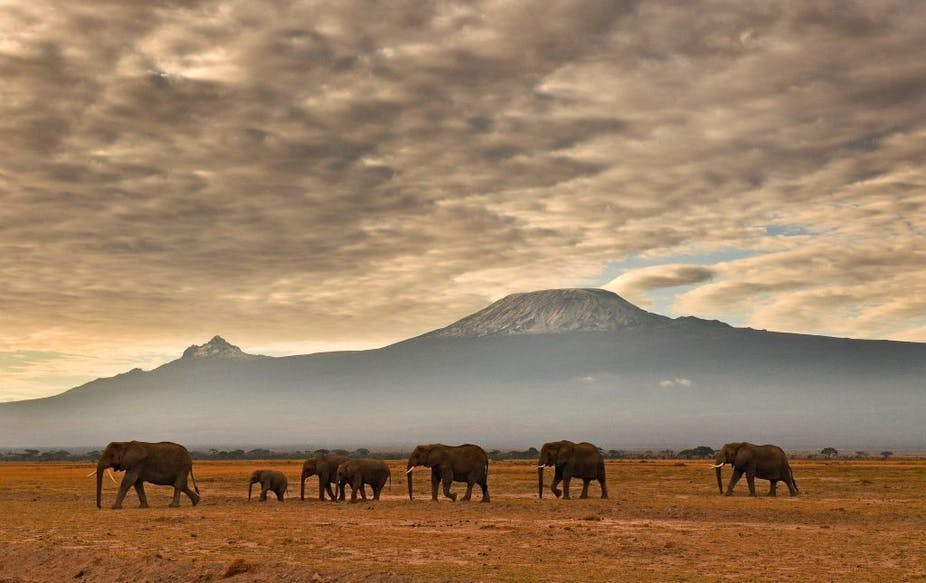
Africa’s tallest mountain, Mount Kilimanjaro, is suffering from the effects of continued urbanisation and development at its base.
Scientists say that this could have far-reaching implications for the existing biodiversity on Mount Kili as it is affectionately known. Areas which used to feature dense natural vegetation are constantly being replaced by intensive agriculture and residential development to accommodate a growing population.
Nowadays, this magnificent mountain, a favourite among climbers worldwide, is almost completely surrounded by developed areas. Wheat farms, commercial sugar cane plantations and rice paddies share space with many smallholder farms and continuously growing, built-up settlements.
Scientists warned that this meant the mountain’s ecosystem is at risk of turning into an ecological island, entirely surrounded by cultivation and development. The Conversation published an article on this issue wherein scientists stated that natural habitats isolated in this way, lead to various species less able to migrate and subsequent less genetic variation and diversity. This has further consequences leaving sensitive ecosystems at the mercy of any environmental change.
Environmental scientists embarked on a study to uncover the long‐term effects of this on biodiversity in an effort to comprehend how important natural vegetation bridges are.
The project included a study of Orthoptera, a group of insects including grasshoppers, crickets and bush crickets, which serve as an early warning system of future biodiversity problems. Any changes to grasshoppers can signal far-reaching effects for other animal groups.
Orthoptera used vegetation between Mount Meru and Mount Kilimanjaro as natural bridges, allowing species in the area to develop to their current diversity levels. If bridges of vegetation between mountains weaken or vanish altogether, larger animals such as antelope, small mammals, snakes and chameleons are at an even higher risk of becoming isolated and becoming extinct in the foreseeable future.
As part of the study of Orthoptera at 500 selected sites on Mount Kilimanjaro and Mount Meru to find out if these insects used natural vegetation as bridges, scientists studied crawling types of this genus. It was found that a high proportion of endemic species in the lower forest areas shared by these two mountains is indeed used by these insect as a land bridge.
It is believed that tens of thousands of years ago, this area was much cooler and wetter in lower areas than it is today. Research findings corroborated the fact that animal and plant species spread out primarily via bridges of vegetation and this latest study showed beyond a doubt that forest bridges between East African mountains acted as important migratory corridors.
It was established that these are not only a prehistoric phenomenon, but had existed and disappeared in certain places more recently. Similar to the missing bamboo belt of Kilimanjaro, this is another example of the long-lasting and accelerating influence of humans on the African landscape.
Examples of important bridges in this area include the wildlife corridors connecting Amboseli and Kilimanjaro National Park or Manyara and Tarangire National Park.
The “Kitendeni Corridor on the northern slop, is another bridge of major importance. It links Kilimanjaro with the Amboseli National Park in Kenya. As a wildlife corridor, Kitendeni is meant to preserve access for elephants and other wild animals to the forests of the mountain’s northern slopes as far as the forests of West Kilimanjaro.
But accelerating human pressure is reducing this corridor. It’s forcing wildlife, especially elephants and buffaloes, to remain longer on Kilimanjaro, having a further impact on the forests.