Alex Rose-Innes
Nigeria is one of the countries across the world with the biggest slums, poverty and waste challenges. It certainly is the worst in terms of these issues on the African continent.
These humanitarian challenges drove Mariam Lawani to start Greenhill Recycling in an attempt to address the extreme poverty, joblessness and mountainous waste in her country.
For her, it was important to prove to her fellow Nigerian residents that waste could be turned into income, which is exactly what puts Greenhill Recycling’s way of addressing the issue, in a category of its own. While others in Nigeria had embarked on successful social enterprises to address waste, Lawani’s model brought additional benefits to the communities.
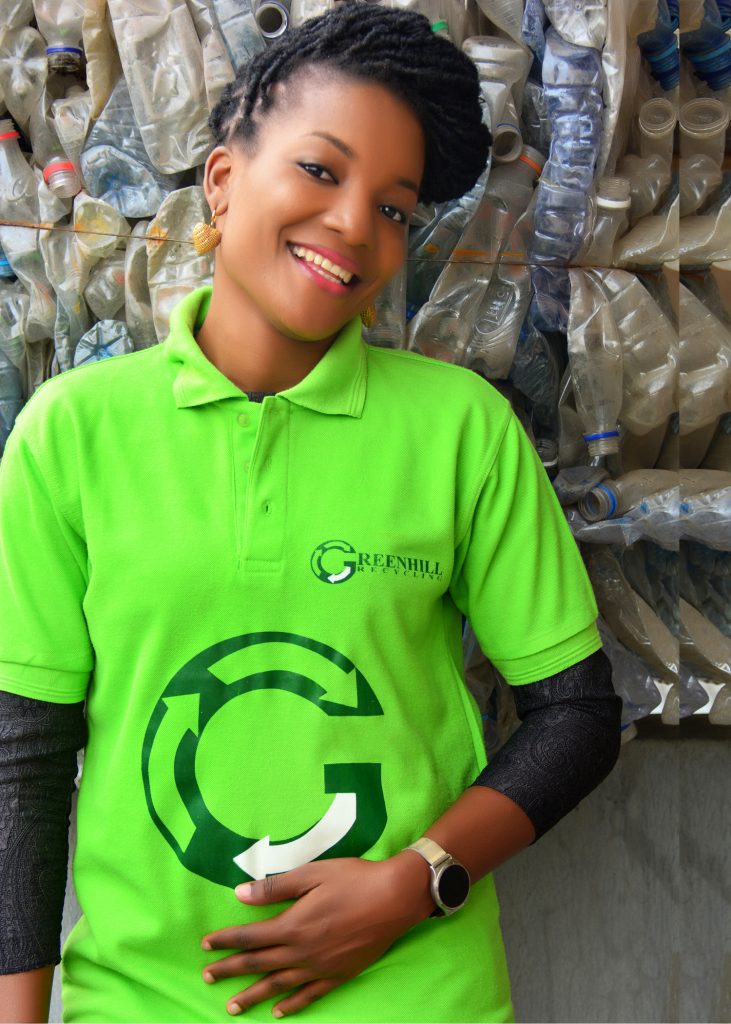
Her recycling model provides households, especially in indigent and rural communities, an opportunity to exchange any type of recyclable waste for valuable items such as groceries or pay utility bills and provide school supplies for children.
At Greenhill Recycling, the waste is processed and baled and then sold to manufacture new products. Before, poor families living on less than $5 per day had struggled with diseases of epidemic proportions as a result of the filthy environment. Most communities used to burn waste, releasing additional carbon dioxide into the already putrid atmosphere.
BLURB: “We harness the power of rural communities to solve waste management problems in Nigeria,” – Mariam Lawani
Lawani realised that her solution to the waste problem should be attractive to the people while also working towards her country’s development goals.
Through the effort of Mariam and her team, tons of recyclable waste had been recovered which otherwise would have ended up in rivers and poor drainage systems. Greenhouses gasses were addressed and malaria-bearing mosquitoes had decreased.
Greenhill Recycling had recently launched 16 drop-off locations within Lagos to make recycling effective, convenient and accessible to residents. When Lawani started her business, only two recycling companies catered for more than 22 million residents in Lagos alone.
Today, franchise opportunities exist for Nigerians or other Africans on the continent, to make a difference to the environment under the able teaching of Lawani. And finally, many jobless people now have a sustainable income and are able to provide for their families.