Alex Rose-Innes
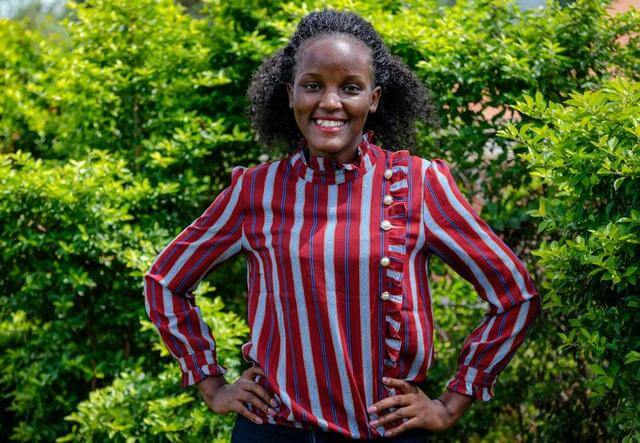
Realising that the increasing temperatures in her country, Uganda, would negatively affect food security on the African continent and being aware of its devastating effects on the environment as a whole, Vanesa Nakate arranged a climate protest at the Ugandan parliament, three years ago.
Since then, Vanessa had founded Youth for Future Africa, heads the global Rise Up Movement’s African branch and was one of the speakers at COP25, the United Nations Climate Change Conference in Spain. The first Fridays For Future climate activist in Uganda she aims to amplify the voices of activists from Africa. She spearheaded the campaign to save Congo’s rainforest, which is facing massive deforestation. This campaign later spread to other countries from Africa to Europe. She is also working on a project that involves installation of solar stoves in schools.
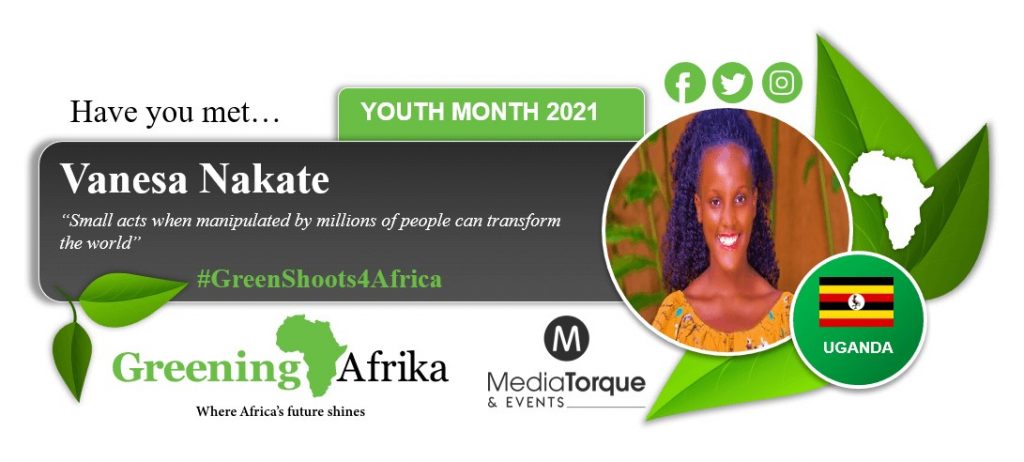
With a Business Administration degree in Marketing, Vanessa was one of young climate activists chosen to speak at the COP25 gathering in Spain and one of 20 global climate activists who addressed a letter to participants at the World Economic Forum in Davos, calling on them to stop subsidising fossil fuels.
Her letter of appeal, in conjunction with other youth climate activists, was on the agenda at the World Economic Forum (WEF) and Vanessa was one of only five internationally selected delegates invited by the Arctic Basecamp to camp with them in Davos during the WEF.
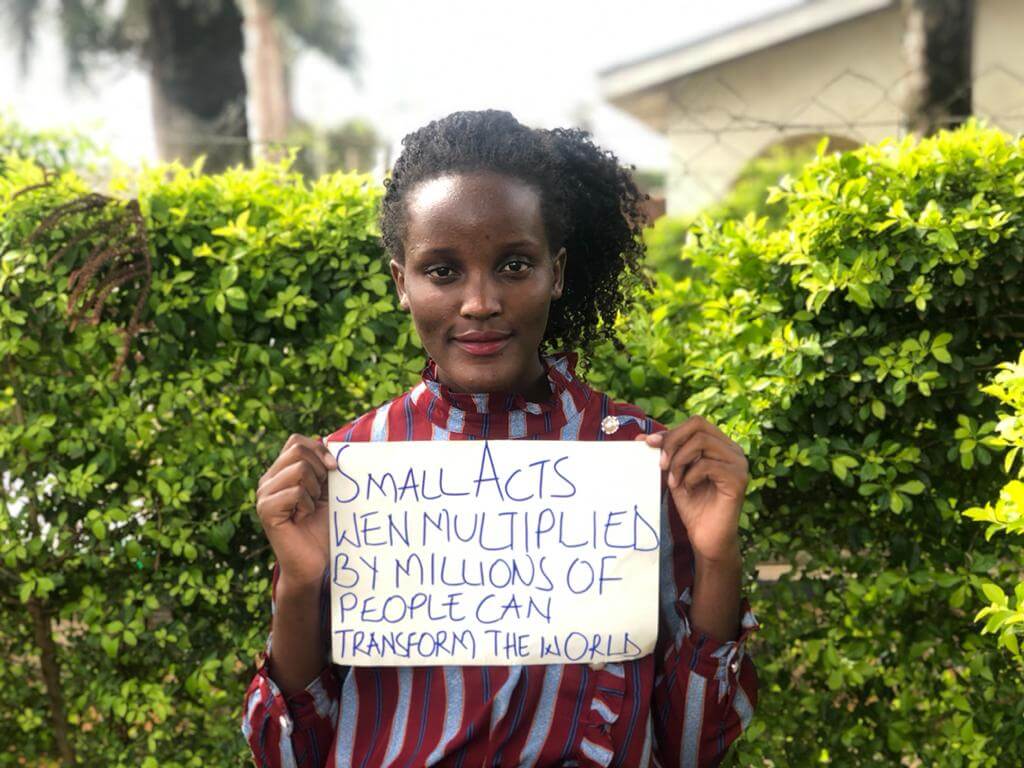
Vanessa said that she is motivated by the need to ensure the survival of the less privileged in her agriculture-dependent country. In her speeches, outreaches and letters, she continually highlights the fact that if urgent action is not taken to stop carbon emissions, her country and Africa in general, would suffer from increasing droughts and floods which would result in further food scarcity on the continent.
This young woman is not fazed by First World country leaders and had become known for her stance that the most privileged are the biggest emitters of damaging emissions. She stresses on international media platforms and during televised programmes that “only the rich would be able to buy food and that the poor in rural communities and villages would suffer even more than they already do.”
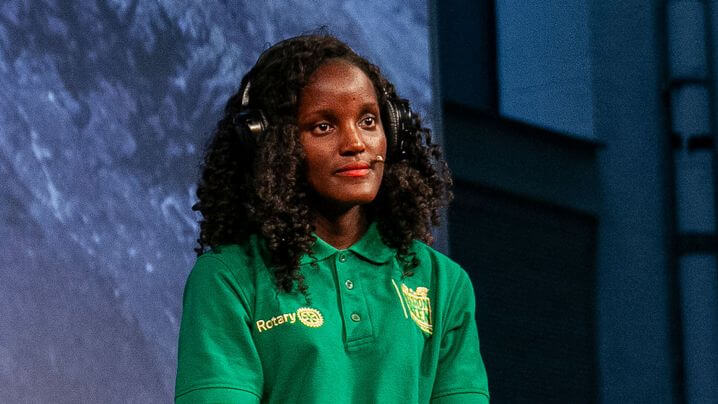
Vanessa Nakate had been in the news recently when uproar broke out after Associated Press cropped her out of a picture taken at the WEF in Davos which was seen as an example to erase people of colour involved in climate change and sustainability news.