

Wetlands are considered crucial in mitigating the severe impact associated with climate change. Among some of their benefits include helping to purify and replenish water sources.
More importantly, they also serve as a “natural sponge against flooding and drought, protect our coastlines and help fight climate change”. This is why the world has designated 2 February as the annual ‘Wetlands Day’ to raise public awareness about the wetlands and the significance of conserving them.
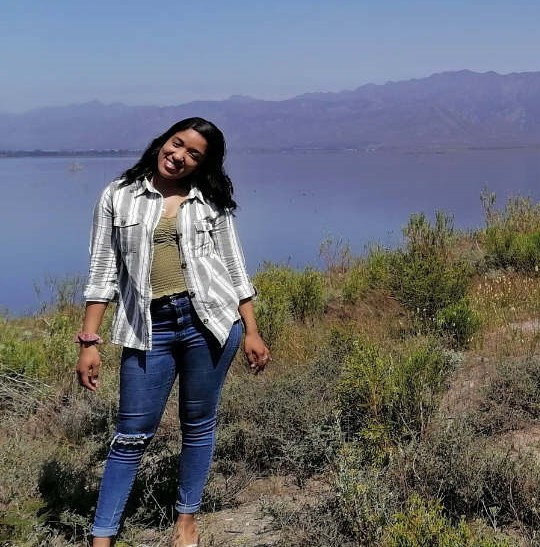
South Africa is lucky to have one of its own wetlands enthusiasts, Miss Daniëlle Seymour. The country boasts around eight “wonderful” scattered across all the nine provinces. Miss Seymour is currently pursuing her Master’s degree in wetlands through the use of GIS and remote sensing to map and monitor wetland ecosystems.
Area of focus
Her thesis focuses on testing remote sensing techniques to efficiently identify, classify, and map ecotones within a valley-bottom, fynbos-embedded wetland in the Theewaterskloof catchment. “I have a special interest in wetland ecology and find using GIS and remote sensing to map and monitor wetland ecosystems exceptionally interesting. As part of my undergraduate training in holistic geography, I have sound knowledge of applied geography and GIS which I have incorporated into my research throughout both Honours and Master’s,” says Miss Seymour.
She strongly believes her research will contribute and improve the “knowledge within the broader wetland community and also to showcase the efficacy of GIS and remote sensing”. “The future is technology, and I do believe that GIS and remote sensing is one of the key ways to monitor, predict and make sound decisions on the conservation and management of the environment,” she adds.
Childhood passion
Miss Seymour’s current academic trajectory was not accidental; it was a fulfilment of a dream she harboured when she was growing up. When she was young, she wanted to become a nature conservationist. This was further reinforced by her passionate geography teacher who encouraged her to take the subject beyond the high school level so that she could make a career out of it. And this is why upon completing her high school she registered for an undergraduate degree with the University of the Western Cape, majoring in geography, environmental studies and tourism.
Taking a gap year
As she was studying her undergraduate degree Miss Seymour developed an interest in wetlands through the use of GIS and remote sensing to map and monitor wetland ecosystems. She then applied for a post-graduate degree – which she completed in 2017 – this time around majoring in environmental management and GIS. She decided to take a gap year to gain some experience by joining the world of work. Luckily, she was awarded an internship with South African National Parks’ Garden Route Scientific Services.
The internship gave her vital practical experience which came in handy during her environmental and conservation studies. After a two-year break, Miss Seymour decided to further her studies by enrolling for geography with the Stellenbosch University. She is currently in the final stages of her Master’s in GIS.
She is grateful to the NRF which funded her studies under its Innovation, Freestanding and Scarce Skills Scholarship. It is through this funding that she was able to study for a Master’s degree. She says had it not been for the NRF’s funding it would have taken her longer to complete her degree.
Role models for young girls
Miss Seymour says what she enjoys the most about her studies is data collection which is critical in creating useful and innovative maps for analysis. She also feels there is a need for more women role-models in STEM because this will generate interest among young girl to take science related studies. She says she considers herself fortunate as she was surrounded by phenomenal women in science starting from high school through to university and when she worked at SANParks.
Durable footprint
She says one way women can leave a lasting legacy and footprint in science is by being good role models and by constantly sharing their stories. This will encourage other girls to follow the science stream as well as know that there is a place for them, she says. “You just need to work hard and continue to believe that whatever you put your mind to, you will achieve,” says Miss Seymour.