Agriculture is not a preferred career among the youth in most African countries. This is despite the worrying record levels of high youth unemployment rates. A survey conducted by Youth in Farming (YiF) about why youth in Africa despise farming or agriculture, revealed interesting yet informative responses. The YiF was formed to guide and provide latest information to young farmers to solve Africa’s agricultural problems.
Not a fancy job
Most young people view farming as a labour intensive profession with very little financial reward; they see it as a career that is backward and far detached from civilisation. They feel farming would not enable them to access material benefits such as beautiful homes, fast cars, fancy and designer clothes, and hi-tech gadgets.
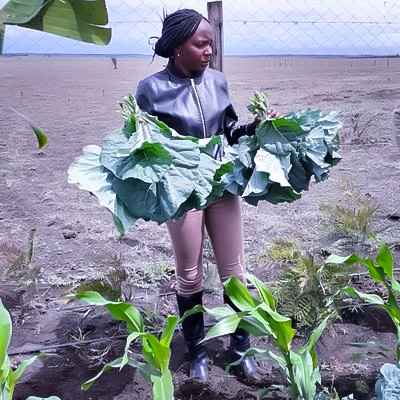
But one of the youths who want to change this perception is 30-year old Catherine Kamanu who decided to leave her cushy banking job in 2013 to delve into horticulture farming. Not only is she enthusiastic about her new-found passion but she also feels it is a sector that can create employment for the multitudes of youth and encourage them to pursue opportunities in agribusiness.
Leasing the land
She is currently growing capsicum, cucumbers and asparagus in a leased eight acres piece of land located at Mathithi area in Murang’a East sub county of Kenya. Kamanu, a mother of one, holds a Master’s degree in finance from the University of Nairobi. Says Kamanu:“I leased a piece of land and started farming as a side hustle in 2013, but later decided to quit my banking job and venture full time into farming.”
Online research
She says she did not have prior knowledge on farming and had to rely on the information she gleaned from online platforms and the local agricultural officer for expert advice and motivation. “I did a lot of research both online and through agricultural officers as farming requires a lot of advice from the experts. I resolved to grow maize, tomatoes and okra in the open field,” adds the mother of one.
However, after several trials, soil tests and a borehole dug to irrigate her farm, Kamanu settled on capsicum farming in her green houses. She also set up a small dam using polyethene papers to compliment the borehole water, thus her farm is ever green in and out of seasons.
Coloured capsicums
Kamanu grows the yellow, red and green capsicum commonly known as hoho, adding the coloured capsicums are mostly used in salads and are increasingly becoming popular with consumers. Similarly, the green ones are used in cooking and fetch way less than the coloured ones whose price is three times higher than that of green capsicum. Kamanu says her biggest market for the capsicums is Nairobi. Sometimes she takes her produce to the buyers and other times buyers come for produce from her farm, she explains.
Kamanu observes that farming is a long-haul occupation and requires someone who is patient in order to reap big from horticulture. Her greenhouse accommodates well over 2,000 plants of capsicum and harvests an average of 300kgs with the price of coloured capsicums fetching high prices at the market. Kamanu’s farm overflows with eager youth whom she mentors on capsicum farming, something that excites her because youth are a long-term investment for the continent.
Farming not for the elderly
She encourages the youth to embrace farming and not be too focused on the elusive white-collar jobs. Kamanu has advice for young people who think frown upon farming: “Farming is not a reserve for the older people, embrace it, start small, be patient, do your research well and it will eventually pay.”