
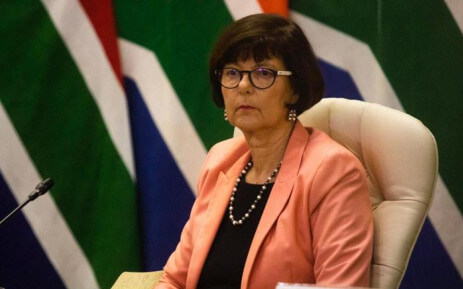
While South Africa remains committed to working with the COP Presidency and all parties to ensure a positive outcome, it also raised objections to some aspects of the decisions taken at the global convention to address climate change. These were the sentiments of Ms Barbara Creecy, minister of forestry, fisheries and the environment, during the informal stocktaking joint plenary by COP26 President in Glasgow, United Kingdom.
Natural disasters
The gathering was a response by world leaders to calls by experts that they should urgently formulate a programme of action aimed at mitigating the impact of climate change. Recently, several countries experienced sudden rise in natural disasters such as spontaneous wildfires, excessive floods and rising temperatures. Experts say countries should drastically reduce the greenhouse gases emissions to below 1.5C to avoid further catastrophes.
There is consensus that developing countries should provide funding for poor countries to embark of initiatives to transition from coal powered energy sources to renewables. South Africa is in line to receive between $200 million and $500 million allocation from the ‘Clean Technology Fund’ to enable it to migrate to cleaner energy sources.
Multilateral processes
Minister Creecy said South Africa remains hopeful that the ‘positive and progressive signals from the summit and side processes will find expression in the formal multilateral process’. She said the country has always highlighted the importance of leaving Glasgow with an outcome that reflects ambition on all three aspects of the Paris Agreement and these are mitigation, adaption and means of implementation.
But she said there are certain specifics such as draft cover decisions that South Africa finds particularly problematic. “This is because there can be no one-size-fits-all and selective approaches to the complex issue of energy transition,” said Creecy.
Just transition
Said minister Creecy: “The selective references ignore the context of international equity and Just Transition nationally, the different national circumstances of Parties and the need for means of implementation support for developing countries that are trying to transition.”
She further said that these [problematic] paragraphs should include the conditionality of support by developed countries to developing countries for a just transition. In addition, these should give developing country parties space to pace their transitions in accordance with their peculiar national circumstances and availability of resources.
Showing leadership
Minister Creecy said South Africa welcomes the decision to embark on a formal work programme on the Global Goal on Adaptation. She acknowledged the willingness by some of the developing countries which have shown leadership in addressing climate far beyond their means even in the midst of the devastating socio-economic impacts of the Covid-19. But, she said, it is important that “enabling means of implementation is available”.
“We need support not only for the implementation of our NDCs, but also the wider ‘Just Transition’ of our economies in the context of poverty alleviation, job creation and sustainable development. In our view the cover decision does not go far enough on means of implementation issues,” she said.