
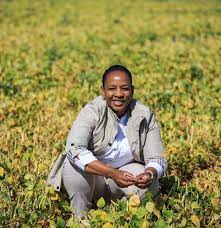
When Miss Lusanda Moletsane was approached to help turn the fortunes of a few failing farms into productive and lucrative business entities, she never thought she could pull it off. Moletsane currently runs Khumo ea Tsebo (a Sesotho name meaning ‘wealth of knowledge’), a wholly black woman-owned consulting services outfit based in Gauteng.
But two years was enough for her to appreciate and embrace agriculture. And within a very short space of time she became the manager of an aggregator farming project where women farmers produce small white beans for the formal market. She had to learn the intricacies of the various farming methods and the practices related to the production of small white beans as well as the associated value chain.
Teaming up with food manufacturer
Soon after taking the helm Miss Moletsane approached Tiger Brands and struck an offtake agreement with the company which buys the small white beans to manufacture canned baked beans. In addition, Tiger Brand’s Enterprise and Supplier Development programme also provided the aggregator project with R10.5 million in funding. Currently, fourteen farmers have joined Miss Moletsane’s aggregator project which spans about 465ha across farmers near Nigel and Bronkhorstspruit.
In 2020 the group started to grow their first small white bean crops. Her main responsibility as the programme manager is to ensure the farmers receive financial and technical assistance to reach their full potential and increase the production of their beans to approximately 1 000ha in the coming year. Plans are also afoot for large-scale diversification into vegetable, maize and poultry farming on around 10 000ha, with about 40 farmers.
Potential to create more jobs
Moletsane says what drives her is the knowledge that there are many farmers who live and work from hand to mouth and her dream is to assist them to build sustainable businesses and join the mainstream economy within the agriculture sector. She says to date the 14 farmers employ over 15 full-time workers and hire seasonal workers as the need arises. Moletsane says the opportunity and potential to create more jobs is huge as the aggregator project grows from strength to strength.
She believes it makes management and financial sense to start with a niche crop such as small white beans instead of maize or other grains. The former, she says, have shorter growing season of four months while the planting season for small white beans is from mid-December to mid-January but depending on the area, this can be extended to mid-March.
Farming structure
Miss Moletsane says they have developed specific criteria for people who want to join the aggregator and that is, only farmers who have certain farming methods already in place are considered. For instance, they should have a farming background and experience in crop production including a farming structure that operates efficiently. She says her biggest challenge is to ensure the farmers comply with the production standards of the project and she has since enlisted the agronomists to assist her. Miss Moletsane is not just managing the small white beans farmers but she herself plants beans on a 120ha of the 465ha as part of the programme. Her ultimate goal is to increase her hectarage depending on the availability of land.
But she says it takes passion and perseverance to be a farmer and advises that those who want to become farmers must be willing to invest in the business and not just expect to receive funding. Although it was tough in the beginning, she is grateful that she was able to persevered and