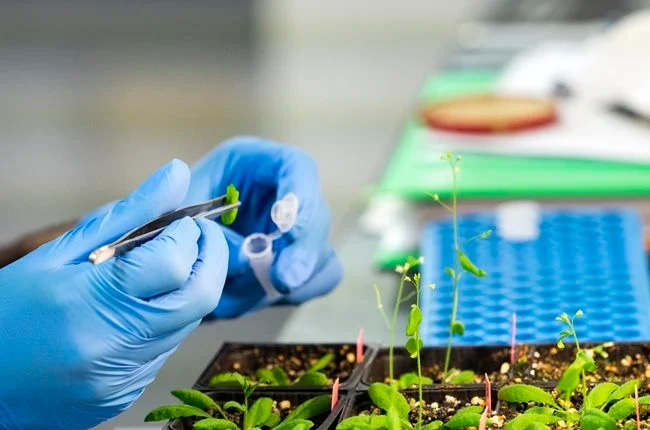
The University of the Free State (UFS), through its department of pharmacology and FARMOVS have joined hands to conduct a multicentre controlled clinical trial of a plant-based product, PHELA, on mild to moderate COVID-19 patients.
PHELA plants are found in most provinces in South Africa (SA) and have been cultivated to control its growth to produce quality raw materials. It is the first SA Health Products Regulatory Authority (SAHPRA)-approved clinical research trial for a possible plant-based treatment for COVID-19.
Experienced clinicians and medical staff
The trial, which is due to commence this month, will see each patient on treatment for 28 days. This is according to the director of Pharmacology at the UFS, Professor Motlalepula Matsabisa. He said the clinical trial will be conducted in the Eastern Cape, Northern Cape and Gauteng and will be conducted by a highly experienced complement of medical vast experience of many active years of clinical trials.
Immune modulator
Professor Matsabisa explained that the main purpose of the trial was to confirm the product could treat COVID-19 and be registered as medication. “We believe the medication works as an immune modulator to modulate the cytokine storm due to COVID-19 and also restores and normalises the patient’s immune system. We plan to have 250 patients who suffer from mild to moderate COVID-19,” he said.
The study is based on the modification of the World Health Organisation’s (WHO) master protocol for clinical trials. FARMOVS, a clinical research company of the UFS Bloemfontein campus, had been selected to implement collaborative initiatives between the two institutions on clinical research, training and other research projects. The two organisations have also partnered on a number of studies to advance clinical research on African Traditional Medicines (ATM).
PHELA explained
Professor Matsabisa, who is also deputy president of the South African Society for Basic and Clinical Pharmacology Society, said the development of PHELA was undertaken under stringent scientific scrutiny for its safety in both pre-clinical and clinical research. The efficacy of PHELA, as both an immune modulator and an anti-SARS-COV-2, has been proven in vitro and in vivo with reproducible results conducted by three independent research institutions and a science council.
According to Prof Matsabisa, PHELA is an herbal product consisting of four medicinal plants. Traditionally PHELA had been designated for use for a historical disease called muyaga, but recently had been scientifically tested and found effective as an immune modulator benefiting persons with a compromised immune system.
Benchmark for future clinical trials
The Prof said he believes the study is a benchmark for all future traditional medicines clinical trial protocols and studies. The studies are expected to start immediately after the product batch manufacturing of PHELA is completed within a month. “The efficacy studies have shown convincingly that PHELA is an immune reconstitution product and does have an effect in killing the SARS-COV-2 virus and most of its variants. PHELA efficacy, therefore, needs to be confirmed through randomised controlled multicentre clinical trials in COVID-19 patients,” Prof Matsabisa explained.
Developing confidence in traditional herbs
Prof Matsabisa said there was ample scientific evidence proving medicinal plants had been used to cure deadly former pandemics such as the Spanish flu, avian influenza and others. He said what is required is rigorous control and efficacy. He emphasised the need to develop and create collaborative work with partners such as FARMOVS and health centres with a strong focus on African medicines, health products and healing. He said SA has some of the best technologies and resources to strengthen the herbal industry and develop sustained consumer trust and confidence in traditional medicines.