African entrepreneurs and innovators are getting known for their ability to solve local problems and bring about socio-economic transformation. New businesses across the continent are providing unique solutions to pressing challenges, strengthening Africa’s competitive capabilities and efforts to diversify its economies.
Innovation in Africa is often hindered by a lack of funding and much-needed strong governance and regulatory structures, business support, mentorship, skills and adequate infrastructure. Despite these challenges, ground-breaking innovations are continuing to arise from Africa, proving that the “Dark Continent” is worthy of global attention.
UAE Award recognising innovators and visionaries
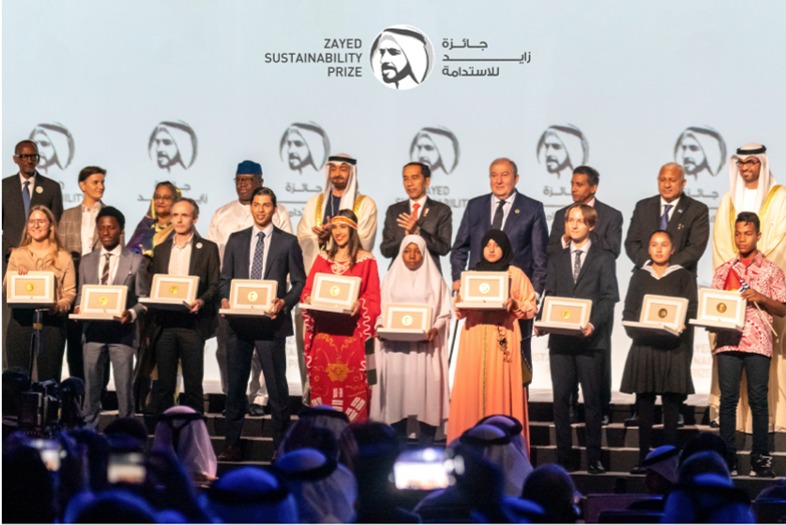
The Zayed Sustainability Prize is supporting sustainable African innovation. It is a United Arab Emirates (UAE) award recognising innovators and visionaries who are committed to accelerating impactful sustainable solutions across five distinct categories: Health, food, energy, water and global High Schools. Sheikh Zayed bin Sultan Al Nahyan’s $3 million prize had, to date, awarded 96 winners whose solutions or school projects have directly and indirectly transformed the lives of more than 370 million people. At its core, the success of these winners lay in innovative ways in which technology, applications and solutions are driving positive changes in people’s lives.
For the Health, Food, Energy and Water categories, organisations had to demonstrate that they are providing access to essential products or services for improved living and working conditions. The Global High Schools category projects are student-led, with emphasis placed on the students being actively involved in the planning, implementation and monitoring processes.
The African winners
Since its inception in 2008, not only individuals, but also NGO’s had been awarded for their drive to better the lives of Africans. The Okuafo Foundation in Ghana’s smartphone application uses AI not relying on an internet connection to diagnose crop diseases at an early stage. This has helped over 30,000 farmers reduce their crop losses and improve their harvest by 50% in Ghana, Nigeria, Togo, and Burkina Faso.
Zola Electric, the 2016 winner, is now the leading renewable energy technology company in Africa, providing power to more than 1 million people, 200 000 homes and businesses across Sub-Saharan Africa, every day. Although an inter-continental company, it largest base is in Africa.
The Sayidina Abubakar Secondary School in Uganda developed an impactful solution to address the lack of access to sanitary products faced by the female students at this rural school. The project, which is expected to benefit 12,000 people within the school and broader community for the next 15 years, harvests raw plant materials from local farms to produce sanitary products.
Other school winners include the Hakimi Aliyu Secondary School Mokwa in Niger, impacting agriculture and energy sectors through its two main student-led projects – a year-round production of different spices and fresh vegetables through sustainable agriculture, in addition to designing and constructing energy efficient cooking stoves to replace those running on fuel, wood and charcoal.
Al Amal Junior High School, the 2020 Global High School winner is generating water using clean energy through traditional water harvesting techniques incorporate rainfall management and effective groundwater storage. This Muslim school had since relocated to the USA.
The African Leadership Academy in South Africa won the 2019 Global Prize for their Living Machine’ project – a device treating 300 000 litres of greywater for use in greenhouses. Their solar power project is also cutting electricity costs; savings used to fund additional renewable energy projects, waste management and best agriculture practices across the continent of Africa.
Call for submissions
The 2023 entries are now open to innovators across Africa, spanning small to medium enterprises (SME’s), non-profit organisations, and high schools, with sustainable solutions in the categories of Health, Food, Energy, Water and Global High Schools.
Apply today by visiting www.zayedsustainabilityprize.com – deadline 6 July 2022. SME’s and non-profits must enter an existing sustainability solution in one of the Health, Food, Energy, or Water categories.
The Global High Schools category invites student-led projects or proposals, based on one or more of the four aforementioned sustainability sectors.