
Climate change and human activities are having a profound impact on the world’s oceans and the latest to feel the effect are the Mediterranean and the Black Seas.
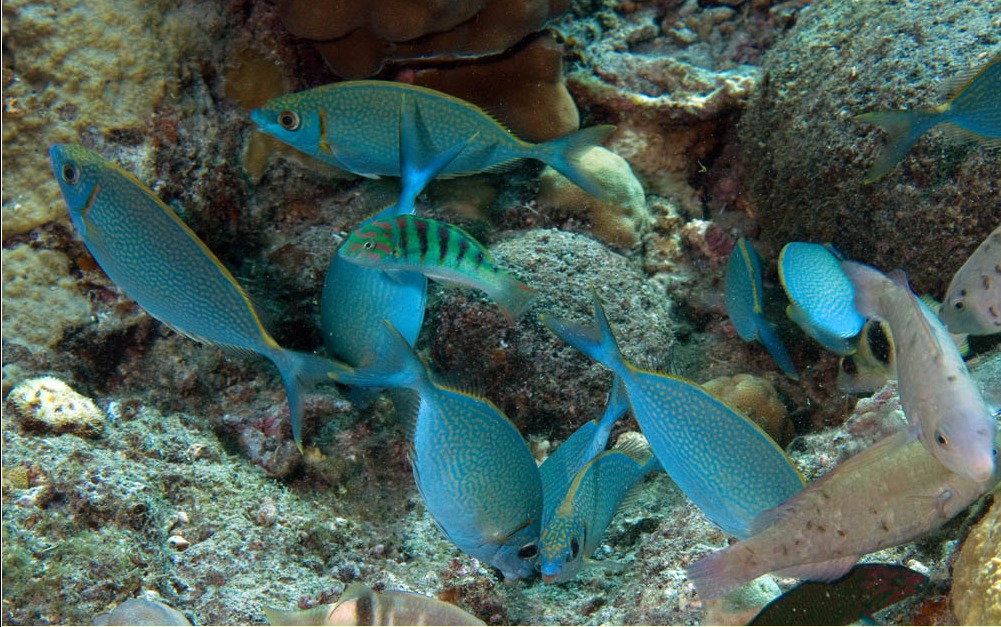
Stefano Lelli, a fishery expert for the eastern Mediterranean working for the General Fisheries Commission for the Mediterranean (GFCM), says that more than 1 000 non-indigenous species have been identified changing the nature of the Mediterranean Sea – invaded by hundreds of fish, jellyfish, prawns and other marine species from outside the region.
The GFCM, a regional fisheries management body, established by the Food and Agriculture Organisation (FAO), is leading efforts to promote sustainable fisheries and aquaculture in the Mediterranean and the Black Sea. It works with fishers, conservationists, scientists and government authorities to better understand the rise in non-indigenous species and assist countries with improving their mitigation and management measures.
Tropicalisation due to Climate Change
“We have witnessed a swift and significant alteration of marine ecosystems which led to several impacts on local communities’ livelihoods. In the coming years, we expect the number of non-indigenous species to continue rising,” Lelli said.
The Mediterranean Sea is undergoing a “tropicalisation” process as water temperatures rise, largely due to climate change. In addition, many species have migrated via well-travelled shipping routes such as the Strait of Gibraltar or the Suez Canal, often attached to the hull of ships or inside them in ballast waters. Other species, such as the Pacific cupped oyster and the Japanese carpet shell, were introduced for aquaculture purposes during the 1960’s and 1970’s and have since escaped and colonised Mediterranean ecosystems.
Once established, non-indigenous species can become more than native ones and alter surrounding ecosystems with potential economic implications for fisheries and tourism or even human health. For example, six poisonous and venomous non-indigenous fish species, such as pufferfish, lionfish and several jellyfish species, are now present in the eastern Mediterranean and can be toxic to humans if touched or ingested.
The GFCM is supporting Cyprus, Egypt, Greece, Lebanon, Israel, Syria and Turkey in the complex task of mapping, monitoring and managing these invasive species, also serving as a forum for affected countries to share information and strategies.
Turning Threat into Opportunity
Fishers across the region had been affected by this trend. However, with the support of the GFCM, new ways are being found to turn these invasions into opportunities.
In southwest Turkey, where invasive species can account for as much as 80% of catches in some areas, fishers are gradually creating new consumer and export markets for species such as lionfish, urchins and Randall’s seabream.
Lebanon is also training fishers to capture non-indigenous species, encouraging consumers to try them. “Rabbitfish, Red Sea goatfish and lionfish are some examples of non-indigenous species becoming a source of income in Lebanon,” said Manal Nader, Associate Professor and Director of the Institute of Environment at the University of Balamand in Lebanon.
In Tunisia, two non-indigenous species of blue crabs, which were threatening traditional fishing, were turned into a lucrative business when the FAO and Tunisian Government helped connect fishers to new markets. The same is happening in Spain and other parts of the Mediterranean, triggering a dedicated GFCM research programme to manage these species.
Miguel Bernal, GFCM Senior Fisheries Officer, said monitoring and mitigating the impacts of non-indigenous species on marine ecosystems are expensive and eradication in the majority of cases is impossible. “When commercialisation and utilisation are possible, either as a source of food, pharmaceutical products or others, commercial fishing has proven to be the most effective tool for addressing this problem.”
Protecting Native Species
To safeguard native species, the GFCM supports the creation of restricted areas. Well conserved areas have proven to be more resilient to the impact of non-indigenous species.
“International and regional cooperation as well as concerted action are needed to tackle non-indigenous species in the Mediterranean and Black Sea,” says Bayram Öztürk, author of the GFCM’s study on non-indigenous species in the Mediterranean.
BLURB:
The impacts of non-indigenous species need to be monitored by all countries in the region. Once a species is introduced, it may be too late to eradicate – GFCM
With the GFCM’s study, non-indigenous species in the Mediterranean and the Black Sea, the Commission is now working with countries in the region to adapt fishing techniques, connect to new markets and help fishers make new livelihoods out of these catches, while also maintaining its crucial work of preserving marine ecosystems through protected areas.