
Akinwumi Adesina, President of the African Development Bank (AfDB) in Abidjan, Côte d’Ivoire, in an interview called the current COP Africa’s COP and explained the way forward to address Africa’s climate challenges.
It was found that as many as 30 million Africans slipped into poverty during 2021 as a result of primarily COVID-19, the climate crisis and the war in Ukraine. Adesina told Africa Renewal during the latest COP 27, held in Egypt, what the continent needs to do to address the situation touched on the role is the AfDB.

The Effect of the Ukrainian War on Africa
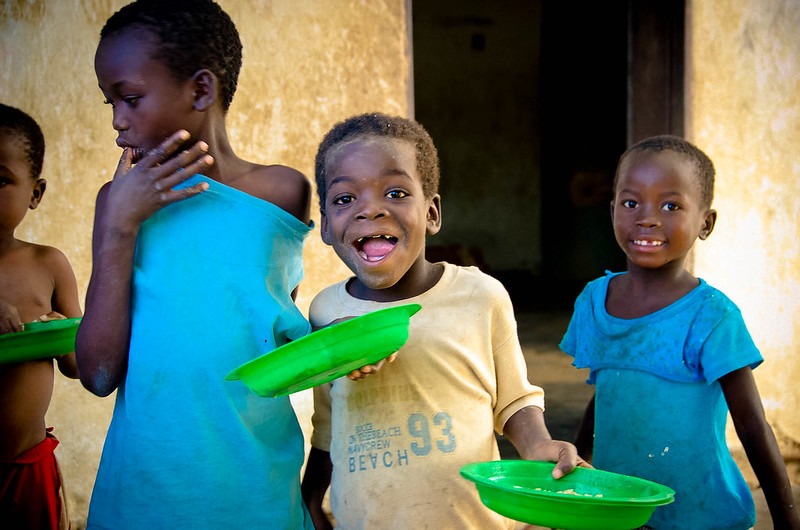
The war in Ukraine led to a global increase in commodity prices, especially so for wheat and maize. In the case of Africa, as a result of the blockage around the Black Sea, Africa will not be able to import about the 30 million metric tonnes of food it needs from Ukraine and Russia. Africa depends on a small country such as the Ukraine for 31% of its maize. Besides food price inflation across Africa, the crisis could potentially lead to a food crisis.
The AfDB has put in place a facility of $1.5 billion to support Africa, through to produce 38 million metric tonnes of food—wheat, rice, maize, and soybean—with a total value of $12 billion. The money will also support 20 million farmers. Within 45 days of setting up this funding, operations for 24 countries valued at $1.13 billion, were approved in response to the war.
Africa’s Dry Season started in November
The continental dry season, starting in November across many parts of Africa, is the time for wheat production. The impact will be felt once production is ongoing.
Ethiopia
The AfDB introduced heat-tolerant wheat varieties in Ethiopia and provided the country with 65,000 metric tons of seed. The Ethiopians increased the cultivated area from just 5,000 hectares in 2018 to 187,000 hectares by 2019/2020. This year, it reached 645,000 hectares. In just three years, Ethiopia became self-sufficient in wheat. In 2023, it is predicted that the country will become a net exporter, exporting 2 million metric tonnes to Djibouti and Kenya. The facility the AfDB put in place is expected to transform Africa’s agricultural sector and boost food production.
Climate Change
Africa loses between 5 and 15% of its Gross Domestic Product (GDP) because of the climate crisis. Adesina gave his input at COP27 on climate change in Africa and how it is affecting the continent.
Africa contributes only 3% to greenhouse gas emissions but suffers disproportionately from its negative impacts. The continent has become drier and even big lakes such as Lake Chad had totally dried up basins. Vast areas had been deserted because of a lack of rain. In the Horn of Africa conflicts between farmers and herders because of water shortages, have become widespread. The Lake Chad basin has literally dried up.
Africa today loses between $7 billion and $15 billion a year to climate change. If the situation is no properly dealt with, it is predicted to be $50 billion a year by 2030. Africa does not have access to the financing it needs to adapt to climate change and meet nationally determined contributions. By 2030, Africa is expected to require between $1.3 to $1.6 trillion to address the effects of climate change.
In 2015, when Adesina was elected, only 9% of AfDB’s total financing was related to climate change. By 2019, it was 38%. Today, it is 41%. AfDB is devoting 67% of its climate financing to adaptation.
“Going to COP27, we must deliver climate adaptation finance at scale. The AfDB and the Global Centre on Adaptation developed and rolled out the African Adaptation Acceleration programme, which is to mobilize $25 billion in climate adaptation finance for Africa. It is the largest-ever effort on adaptation across the globe and is supported by African ministers who have rallied behind the future plans.
Nine out of the 10 countries in the world most vulnerable to climate change are in sub-Saharan Africa. One hundred percent of them are from the African Development Funded (ADF) countries. These countries need $60 billion a year to adapt to climate change but currently only receive $18 billion a year. The replenishment process of the ADF allowed the AfDB to introduce the Climate Action Window which aims to mobilise up to $13 billion in support of these countries.
This money will provide 20 million farmers access to climate resilient technologies for agriculture. In addition, it will provide an additional 20 million farmers access to insurance products such as weather-index insurance against extreme weather patterns of drought or floods. It will assist in rehabilitating a million hectares of degraded land and provide 18 million people with access to water. It will supply 840 million cubic metres of water storage and leverage about $2.6 billion of private finance for adaptation.
“As we go to Sharm el-Sheikh, my message is this: Africa is suffering what it didn’t cause. The developed world, a long time ago, promised $100 billion a year in support of climate finance for developing countries. What we get now is a lot of talk and zero financing. It’s time to pay up because Africa is suffering tremendously from the impact of climate change. It’s Africa’s COP, so let’s deal with Africa’s problems by putting the money on the table,” Adesina said.