Many factors play a role in climate change but some warrant more attention than others. The list below highlights some of the biggest environmental issues of our lifetime.
Fossil Fuels and Global Warming
The last time carbon dioxide levels on our planet were as high as today was more than 4 million years ago. Increased emissions of greenhouse gases have led to a rapid increase in global temperatures, in turn is causing catastrophic events all over the world. The ones which are making headlines show that Australia and the US are experiencing the most devastating bushfire seasons ever recorded. Locusts are invading parts of Africa, the Middle East and Asia, decimating crops and a heatwave in Antarctica of all places, saw temperatures rise above 20 degrees for the first time in history.
Scientists are continuously warning that the planet has crossed a series of tipping points that could have catastrophic consequences – permafrost melt in Arctic regions, the melting Greenland ice sheet and increasing deforestation in the Amazon rainforest.
The climate crisis is causing tropical storms, hurricanes, heatwaves and flooding, more intense and frequent than ever before. Even if all greenhouse gas emissions were halted immediately, global temperatures would continue to rise.
Poor Governance
According to economists, the climate crisis is a direct result of multiple market failures and poor governance. Economists and environmentalists have urged policymakers for many years to increase the price of activities emitting greenhouse gases. This is seen as the largest market failure as high carbon taxes which will stimulate innovations in low-carbon technologies.
To cut emissions effectively, governments should not only increase funding for green innovation to lower costs of low-carbon energy sources, but urgently need to adopt a range of policies addressing each of the other market failures.
Carbon Tax
A national carbon tax is already implemented in 27 countries around the globe, but according to the 2019 OECD Tax Energy Use report, current tax structures are not adequately aligned with the pollution profile of energy sources. The OECD says that carbon taxes are not harsh enough on coal production, although it proved to be effective for the electricity industry.
It is opined that organisations such as the United Nations are not fit to deal with the climate crisis, being assembled to prevent another world war and not fit for purpose. Anyway, members of the UN are not mandated to comply with any suggestions or recommendations made by the organisation. For example, the Paris Agreement, an agreement within the United Nations Framework Convention on Climate Change, says that countries need to reduce greenhouse gas emissions significantly to keep global temperature rise below 2 degrees Celsius by 2100 and ideally less than 1.5 degrees. However, signing on to it is voluntary and there are no real repercussions for non-compliance. Also, the issue of equity remains contentious whereby developing countries are allowed to emit more in order to develop to the point where they can develop technologies to emit less and this allows some countries, such as China, to exploit it.
Food Waste
A third of food intended for human consumption, reckoned to be 1.3 billion tonnes, is wasted or lost. Enough to feed 3 billion people, this accounts for a third of greenhouse gas emissions every year. If this was a country, food waste would be the third highest emitter of greenhouse gases, behind China and the US.
Food waste and loss occurs at different stages in developing and developed countries. In developing countries, 40% of food waste occurs at the post-harvest and processing levels, while in developed countries, 40% of food waste occurs at retail and consumer levels.
In the US, more than 50% of all produce thrown away because it is deemed to be “too ugly” to be sold to consumers, amounting to roughly 60 million tonnes of fruits and vegetables. This leads to food insecurity, another one of the biggest environmental problems on this list.
Biodiversity Loss
The past five decades have seen a rapid growth of human consumption, population, global trade and urbanisation, resulting in humanity using more of the Earth’s resources than it can naturally replenish.
A recent WWF report found that the population sizes of mammals, fish, birds, reptiles and amphibians have experienced an average of 68% decline between 1970 and 2016. The report attributes this to a variety of factors, mainly land-use change, particularly the conversion of habitats of forests, grasslands and mangroves, into agricultural systems.
A recent analysis found that the sixth mass extinction of wildlife on Earth is accelerating. More than 500 species of land animals are on the brink of extinction and are likely to be lost within 20 years, the same number lost over the whole of the last 100 years. Scientists say that without the human destruction of nature, this rate of loss would have taken thousands of years.
Plastic Pollution
In 1950, the world produced more than 2 million tonnes of plastic per year. By 2015, this annual production swelled to 419 million tonnes.
A report by science journal, Nature, determined that currently, roughly 14 million tonnes of plastic make their way into the oceans every year, harming wildlife habitats and animals living in them. The research found that if no action is taken, the plastic crisis will grow to 29 million metric tonnes per year by 2040. If micro plastics are included into this, the cumulative amount of plastic in the ocean could reach 600 million tonnes by 2040.
National Geographic found that 91% of all plastic ever made is not recycled, representing, not only one of the biggest environmental problems of our lifetime, but another massive market failure. Considering that plastic takes 400 years to decompose, it will be many generations until it ceases to exist.
Deforestation
Every hour, forests the size of 300 football fields are cut down. By the year 2030, the planet might have only 10% of its forests left and it could all be gone in less than 100 years.
The three countries experiencing the highest levels of deforestation are Brazil, the Democratic Republic of Congo and Indonesia. The Amazon, the world’s largest rainforest, spanning 6.9 million square kilometres and covering 40% of the South American continent, is also one of the most biologically diverse ecosystems, home to about three million species of fauna and flora.
BLURB
Despite efforts to protect forest land, legal deforestation is still rampant and about a third of global tropical deforestation occurs in Brazil’s Amazon forest, 1.5 million hectares each year.
Agriculture is the leading cause of deforestation. Land is cleared to raise livestock, plant other crops such as sugar cane and palm oil, which are sold. Besides carbon sequestration, forests help to prevent soil erosion as tree roots bind the soil and prevent it from washing away, which also prevents landslides, which had become increasingly common across the globe.
Air Pollution
One of the biggest environmental problems today is outdoor air pollution. Data from the World Health Organization (WHO) shows that an estimated 4.2 to 7 million people die from global air pollution each year and that nine out of 10 people breathe containing high levels of pollutants.
In Africa, 258,000 people died as a result of outdoor air pollution in 2017, up from 164,000 in 1990, according to UNICEF. Causes of air pollution are mostly from industrial sources and motor vehicles, as well as emissions from burning biomass and poor air quality as a result of dust storms.
In Europe, a recent report from the EU’s environment agency showed that air pollution contributed to 400 000 annual deaths in the EU in 2012 (the last year for which data was available).
In the wake of the COVID-19 pandemic, it has been thought that air pollution gases have played a role in transporting the virus molecules. Preliminary studies have identified a positive correlation between COVID-19-related mortalities and air pollution. This could have contributed to the high death toll in China, where air quality is notoriously poor and Covid is once again in 2023, playing havoc with lives and the economy.
Melting Ice Caps and Rising Sea Level
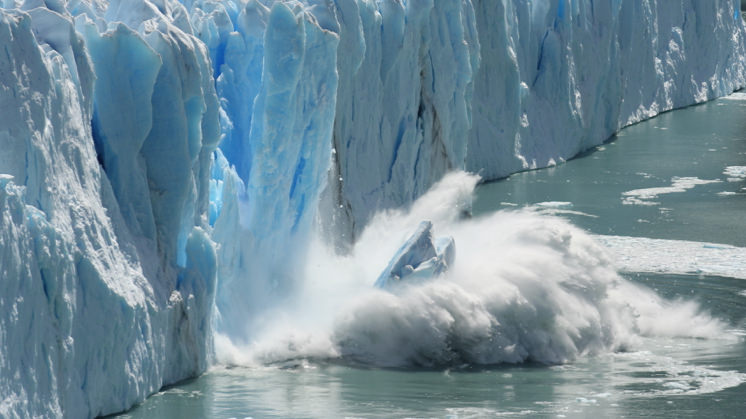
The Arctic is melting twice as fast and sea levels are rising more than twice as quickly as they did for most of the 20th century as a result of increasing temperatures across the globe. Seas are now rising at an average of 3.2 mm per year globally and will continue to rise up to about 0.7 metres by the end of this century. In the Arctic, the Greenland Ice Sheet poses the greatest risk for sea levels as melting land ice is the main cause of rising sea levels.
Last year’s summer triggered the loss of 60 billion tonnes of ice from Greenland, enough to raise global sea levels by 2.2mm in just two months. According to satellite data, the Greenland ice sheet lost a record amount of ice in 2019, an average of a million tonnes per minute throughout the year. If the entire Greenland ice sheet melts, sea level would rise by six metres.
The Antarctic continent itself contributes about 1 millimetre per year to the rising sea level, a third of the annual global increase. Additionally, the last fully intact ice shelf in Canada in the Arctic recently collapsed, having lost about 80 square kilometres (40%) of its area over a two-day period according to the Canadian Ice Service.
Sea level rise will have a devastating impact on those living in coastal regions. According to research and advocacy group Climate Central, sea level rise this century could flood coastal areas which are home to 340 million to 480 million people, forcing them to migrate to safer areas and contributing to overpopulation and strain of resources in the areas they migrate to. Especially at risk are Bangkok in Thailand, areas in the Philippine and Vietnam and Dubai in the United Arab Emirates.
Ocean Acidification
Global temperature rise has not only affected the sea level, but is the main cause of ocean acidification. Our oceans absorb about 30% of carbon dioxide released into the Earth’s atmosphere. As higher concentrations of carbon emissions are released by human activities, so does the amount of carbon dioxide which is absorbed back into the sea.
The smallest change in the pH scale can have a significant impact on the ocean’s acidity with deadly impacts on marine ecosystems and species, its food webs and provokes irreversible changes in habitat quality. Once pH levels become too low, marine organisms such as oyster shells and skeletons could even start to dissolve.
However, one of the biggest environmental problems from ocean acidification is coral bleaching and subsequent coral reef loss. This occurs when rising ocean temperatures disrupt the symbiotic relationship between the reefs and algae living within it, driving away the algae and causing coral reefs to lose their natural vibrant colours. Some scientists have estimated coral reefs are at risk of being completely wiped out by 2050. Higher acidity in the ocean would obstruct coral reef systems’ ability to rebuild their exoskeletons and recover from these coral bleaching events.
Some studies have also found that ocean acidification can be linked to one of the effects of plastic pollution in the ocean. The accumulating bacteria and micro-organisms derived from plastic garbage dumped in the ocean damage marine ecosystems and contribute towards coral bleaching.
Agriculture
Studies have shown that the global food system is responsible for up to one third of all human-caused greenhouse gas emissions, 30% of which derives from livestock and fisheries. Crop production releases greenhouse gases such as nitrous oxide through fertilisers use.
60% of the world’s agricultural area is dedicated to cattle ranching, although it only makes up 24% of global meat consumption.
Agriculture not only covers a vast amount of land, but also consumes a vast amount of freshwater, another one of the biggest environmental problems on this list. While arable lands and grazing pastures cover one-third of Earth’s land surfaces, they consume three-quarters of the world’s limited freshwater resources.
Scientists and environmentalists have continuously warned that we need to rethink our current food system, switching to a more plant-based diet which would dramatically reduce the carbon footprint of the conventional agriculture industry.
Food and Water Insecurity
Rising temperatures and unsustainable farming practices have resulted in the rising threat of water and food insecurity, especially in Africa.
Globally, more than 68 billion tonnes of top-soil is eroded every year at a rate 100 times faster than it can naturally be replenished. Laden with biocides and fertiliser, the soil ends up in waterways, contaminating drinking water and protected areas.
Exposed and lifeless soil is more vulnerable to wind and water erosion due to lack of root and mycelium systems holding it together. A key contributor to soil erosion is over-tilling which is destructive to the soil’s structure and in the long-term leads to soil compaction, loss of fertility and surface crust formation worsening topsoil erosion.
With the global population expected to reach 9 billion people by mid-century, the Food and Agriculture Organization of the United Nations (FAO) projects that global food demand may increase 70% by 2050. Already, around the world, more than 820 million people do not have enough food.
“Unless immediate action is taken, it is increasingly clear that there is an impending global food security emergency that could have long term impacts on hundreds of millions of adults and children.” – UN secretary-general, António Guterres
In terms of water security, only 3% of the world’s water is fresh water with two-thirds tucked away in frozen glaciers or otherwise unavailable for our use. As a result, around 1.1 billion people worldwide lack access to water and a total of 2.7 billion find water scarce for at least one month of the year. By 2025, two-thirds of the world’s population may face water shortages.
Fast Fashion and Textile Waste
The global demand for fashion and clothing has risen at an unprecedented rate and now accounts for 10% of global carbon emissions, one of the biggest environmental problems of our time. Fashion alone produces more greenhouse gas emissions than both the aviation and shipping sectors combined, as well as nearly 20% of global wastewater, (around 93 billion cubic metres from textile dyeing), according to the UN Environment Programme. The world at least generates an estimated 92 million tonnes of textiles waste every year and that number is expected to soar to 134 million tonnes annually by 2030. Discarded clothing and textile waste ends up in landfills, most of which is non-biodegradable, while micro plastics from clothing materials such as polyester, nylon, polyamide, acrylic and other synthetic materials, is leeched into soil and nearby water sources. Monumental amounts of clothing textile are also dumped in less developed countries as seen in Chile’s Atacama, the driest desert in the world, where at least 39,000 tonnes of textile waste from other nations are left to rot.