
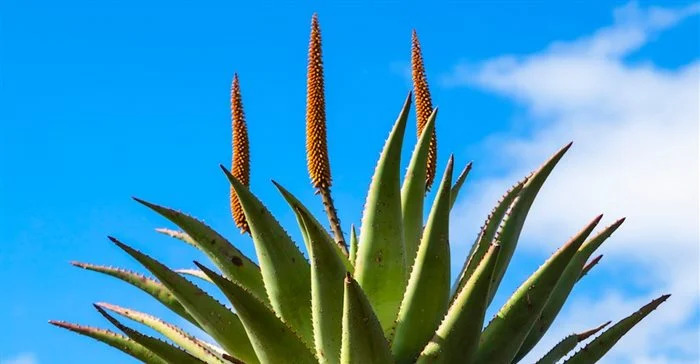
Malaria could be a thing of the past if the study by a team of experts at the University of Pretoria (UP) to find a drug to prevent the transmission of the carrier of malaria was to succeed. The team discovered an aloe plant that could potentially disrupt the transmission of the malaria-carrying parasite, medically known as Plasmodium falciparum, by hindering its life cycle.
According to the WHO’s latest malaria report, in 2021 there were 247 million cases of malaria compared to 245 million in 2020. The report further identified four African countries that accounted for half of all malaria related death globally. These are Nigeria (31.3%), the Democratic Republic of the Congo (12.6%), United Republic of Tanzania (4.1%) and Niger (3.9%).
Stopping proliferation of malaria parasites
One of the researchers involved in study is Sephora Mianda Mutombo, a PhD in the UP’s department of chemistry. She was the lead author of a study published in the Journal of Ethnopharmacology that investigated the indigenous succulent Aloe marlothii for its ability to kill or stop the proliferation of malaria parasites. The study found that natural active ingredients in the roots of this aloe species have anti-plasmodial properties that have the potential to kill all the phases of the malaria-carrying Plasmodium falciparum parasite and block the all-important transmission.

Asexual parasites
Explained Mutombo: “The parasite that causes malaria has a very complex life cycle, which occurs in two hosts: humans and Anopheles mosquitoes,” Mutombo explains. “In humans, the parasite goes through distinctive stages of development in the liver, then the bloodstream by infecting red blood cells. This is known as the asexual intra-erythrocytic cycle of development. A small portion of asexual parasites commit and differentiate into sexual forms of the parasite known as gametocytes [males and females].” These are the terminal parasitic stages of the parasite, which is transmitted to the mosquito when the insect feeds on the blood of an infected person. The sexual cycle of the parasite then takes place in the mosquito, Mutombo added.
Anti-malarial drugs
She said all anti-malarial drugs, with the exception of primaquine, target the asexual stages of the parasites, meaning they kill the parasites during their asexual intra-erythrocytic cycle of development. So an individual who has been treated for malaria with anti-malarial drugs that are currently on the market, Mutombo added, can still transmit the parasite to mosquitos, because the sexual forms of the parasite were not killed. “Therefore, to contribute to the eradication of malaria, we need compounds that will kill the sexual forms of the parasites, thereby preventing the transmission of Plasmodium from human to mosquitos,” she said.
The use of library samples
Southern Africa is known for its rich biodiversity and traditional knowledge, and is a significant source of natural compounds that can be developed for the treatment of malaria. However, no approved treatments from the region have come to fruition. This is unsurprising, however, as it is estimated that out of every 10 000 samples, only one is approved by the US Food and Drug Administration as a drug or pharmaceutical. “In order to increase the chances of success, modern-day drug discovery now relies on the use of a library of samples for a high throughput of biological assaying against diseases such as malaria, together with hyphenated analytical techniques to rapidly identify bioactive compounds,” Mutombo says.
Natural product library
UP’s bio-discovery centre hosts a plant materials repository that contains more than 11 000 plant samples systematically collected throughout South Africa. A natural product library is being built from these samples, which are a collection of extracts, purified fractions and compounds obtained, stored in standardised formats in robotic freezers and readily deliverable to biological screening assays. The information associated with each sample is stored in a database. Mutombo’s work was done on 300 samples from the library in conjunction with modern technologies to assist in rapid identification of anti-malarial drug candidates from plant material stored in the repository.
Malaria a big health burden in Africa
“We can use all of these resources to contribute to malaria eradication, bearing in mind that malaria is still one of the most severe public health problems worldwide, especially in Africa,” said Professor Vinesh Maharaj, deputy dean of research and post-graduate education at UP’s faculty of natural and agricultural sciences, and a co-author of the study.
He continued: “The huge burden of malaria cases and death is carried by the African region, and accounts for about 95% of malaria cases and 96% of malaria deaths. Sadly, children under five years old make up an estimated 80% of all malaria deaths. Clearly this is an African problem and as Africans, we would like to contribute to the solution.”