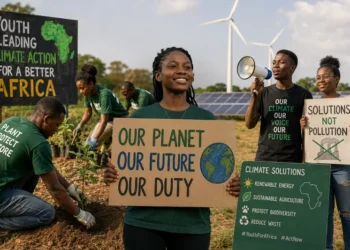
Africa’s young innovators and climate crisis advocates
With the impacts of the climate crisis, even proving scientific predictions about its timeline wrong, countries across the scorched Earth are pursuing all avenues to realise their climate ambitions. A key step is putting younger people at the forefront of climate action. Hosting the world’s youngest population, this is more important in Africa than anywhere else.
The future of humanity and of our planet lies in our hands. It lies also in the hands of today’s younger generation — 2030 Agenda for Sustainable Development, paragraph 53
With African nations pushing for a greener, more sustainable and more inclusive future for all, Africa’s young innovators and advocates are increasingly finding their voices. During Youth Month, GreeningAfrika.com will highlight these visionary youths on whose shoulders the future of Planet Earth rests.
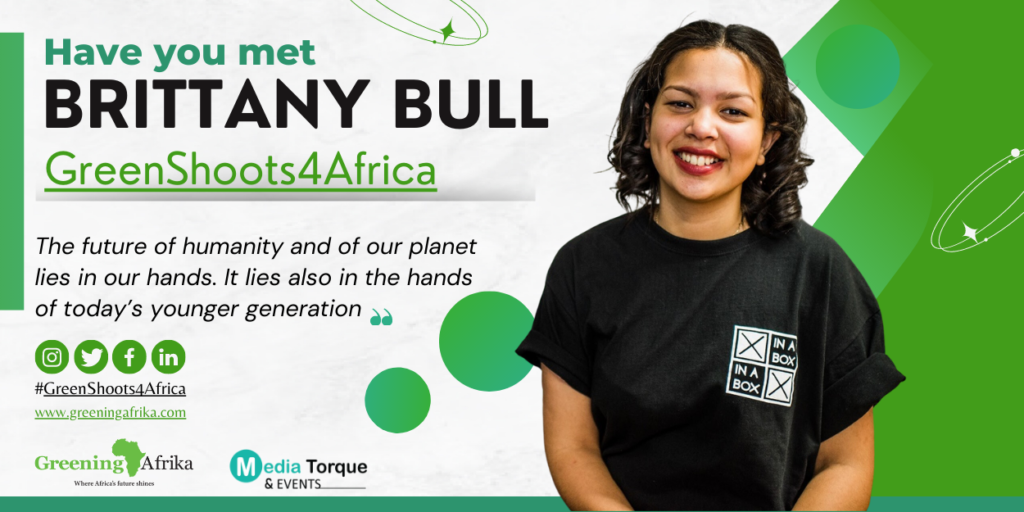
Brittany Bull, 23-year-old South African STEM champion and facilitator of the United Nations Development Programme’s Climate Robotics’ project, joined the pre-COP26 Youth Climate Tour.
She is outspoken on a global platform about the effects of climate change in South Africa, referring to the increase in extreme temperatures and weather events such as the floods in KwaZulu-Natal province; affecting our agricultural sector, which in turn, affects food security.
However, this livewire of a girl, who is only small in stature, admits that the future of the Planet is in the hands of its young people. “As mentor and facilitator with MaxIQ Space and working (STEM) programmes, I have hope for when I see younger minds innovating possible solutions to these problems.
“Seeing school kids come up with even more creative innovative solutions using the Internet of Things, which targets problems close to home for all of us, is remarkable – Brittany Bull

Kevin Ossah (24) is a Togolese climate activist and Co-founder and Executive Director of the Organisation of Young People Committed to Sustainable Development.
Climate change affects Togo through coastal erosion, drought and flooding. At local level, the loss of natural resources, biodiversity and the impact on agriculture, the main source of income for communities, is enormous.
Kevin said that it is urgent to address these issues as he believes that as young they have an obligation to leave a sustainable planet to future generations. “Right now, we cannot be satisfied with the progress on climate action because there is still a long way to go. But we can still hope for a better world as there are solutions,” he says.
He is calling on governments to take sustainable decisions and put in place favourable frameworks for climate action. Non-state actors such as NGO’s, Associations, Foundations, etc. can, in his opinion, implement projects for vulnerable communities, especially young people and women and that these organisations should be supported more than ever.
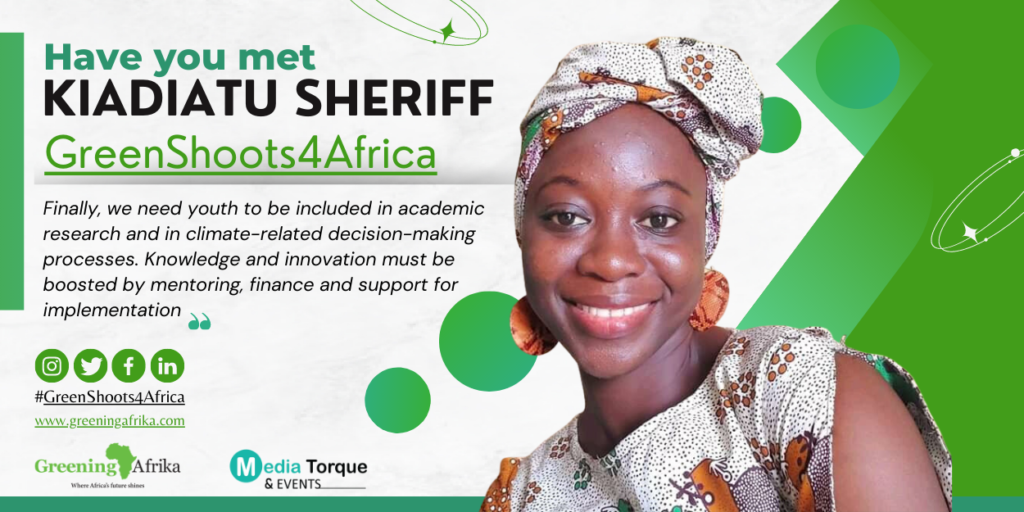
Twenty-five-year-old Kiadiatu Sheriff is a Liberian youth advocate and Co-founder of Liberian Youth for Climate Actions (LYCA), a youth-focused nonprofit organisation to assess green job potential in Liberia with a focus on youth participation and reducing forest degradation.
At the United Nations, she told global delegates that“Liberia is one of Earth’s lungs. Almost the entire population depends on forests for charcoal use and other purposes. This is a problem because burning charcoal releases high levels of carbon dioxide and is a main driver of deforestation.”
The youth in her country accounts for 54% of the population. She is urgently calling for assistance in strengthening capacities in all climate-sensitive sectors and assessing green jobs potential across our economy. This will help address high unemployment among youth, including those with disabilities.
“We need a curriculum in our schools to incorporate topics surrounding climate change, environmental degradation and related issues and we need it paired with hands-on knowledge to prepare young minds for green jobs upon graduation,” she said.
“Finally, we need youth to be included in academic research and in climate-related decision-making processes. Knowledge and innovation must be boosted by mentoring, finance and support for implementation.” – Kiadiatu Sheriff