

Lamé Verre, Fellow of the Energy Institute | Member of the Global Future Council on Energy Transition at the World Economic Forum
In Africa, with a young demographic, a plethora of socio-economic development requirements and energy poverty, amongst other pressing issues, meeting the population’s minimum energy requirements is crucial and existential. These critical issues must be reconciled when mapping Africa’s development path and addressed before the drive to achieve Net Zero emissions.
With geopolitical tensions rising and growing pressures to eliminate hydrocarbons from the energy mix; the continent’s primary concern should be securing energy availability and affordability for its people. Currently, it is estimated that 600 million Africans lack access to electricity, creating significant barriers to health care, education, productivity, digital inclusivity, and, ultimately, job creation.
Therefore, the continent must focus on securing energy access from every source despite geopolitical tensions and increasing pressure to eliminate hydrocarbons. This natural resource is currently abundant but largely underdeveloped, a situation that applies to every country on the continent.
Balancing Decarbonisation and Energy Security
While decarbonisation is a critical global urgency, it should not be pursued at the expense of energy security, national security or economic stability. This is especially true for Africa, which, despite housing one-fifth of the world’s population, is responsible for less than 3% of global carbon emissions. The continent also grapples with extreme energy poverty, with the International Energy Agency (IEA) reporting that 43% of its population lacks access to electricity despite significant untapped hydrocarbon resources. Balancing these two priorities and the need for molecules and electrons with the growth of the continent and its young population is a complex but necessary task.
Compared with the ageing demographics of developed regions, Africa’s youthful population is poised to drive a significant increase in energy demand in the coming years. This growth is not just necessary but also a source of hope, as it will accommodate the aspirations of its young populace. Therefore, it is unjust to expect Africa to forego developing its natural energy resources to mitigate environmental damage caused by 250 years of industrialisation by the Global North. This expectation leaves a whole generation behind and underscores the need for global equity in addressing climate change.
Ensuring a Just Transition
A truly equitable energy transition is not just a necessity but a moral imperative that meets the needs of all countries, necessitating extensive collaboration. It is crucial to strike a balance between traditional and renewable energy sources while considering the growth of Africa’s youthful population. While the continent recognises the necessity of decarbonisation, it also recognises that this cannot be achieved at the expense of its population’s development.
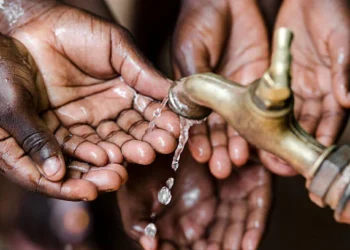
Africa’s unique energy needs must allow it to set its own energy transition pace. The first step is access to primary energy, clean cooking, and clean water – a just transition is both an obligation and a fundamental human right.
According to the UN Sustainable Development Goal 7, ensuring affordable, reliable, sustainable, and modern energy for all is crucial. It is estimated that urban homes should have 100kWh of energy for basic access, which is insufficient to operate a refrigerator. Hence, there are calls to set the modern energy minimum closer to 1,000kWh.
Discussing a just transition for those lacking basic energy access is futile. To reach that starting point, energy demand must rise. However, the current surge in global energy demand driven by Big Tech’s AI integration highlights the injustice of insisting that Africa leave its hydrocarbons in the ground for Net Zero despite having no energy access.
Minimum energy requirements for human development must also come from affordable, reliable, and lower-carbon power. While the move to renewables is noble and necessary, another vital energy transition is the move from no energy to “some energy.” The developing world asks that everyone have access to the same amount of energy required to power a refrigerator, which is not too much to ask.
Collaborative Efforts for a Just Transition
Traditional energy companies must work with emerging clean-energy firms, and the Global North must align its energy transition demands with the Global South’s primary energy needs.
A truly just transition requires countries at different development stages to collaborate on understanding and addressing each other’s needs. International events such as the forthcoming Africa Oil Week (AOW) in Cape Town in October provide a platform for these critical dialogues so all stakeholders can navigate the path to net zero while ensuring energy security and affordability for all.
Celebrating its 30th year, AOW: Investing In African Energy, running from October 7 to 10 at the Cape Town International Conference Centre, will highlight opportunities across the energy transition value chain for the continent by the continent. The conference will focus on responsible exploration and production, gas monetisation, and future fuels. It will connect industry leaders, shape policy, and catalyst investment.