The Lapalala Wilderness School’s rhino initiative aims to empower the next generation of conservationists
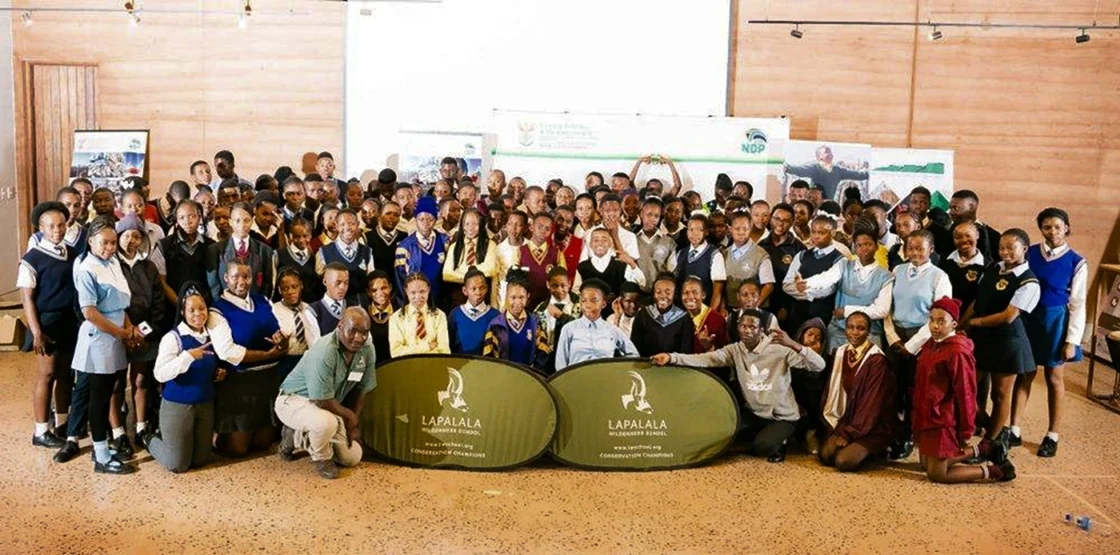
Every year, in the heart of Limpopo’s Waterberg region in South Africa (SA), the Lapalala Wilderness School brings grades 10 and 12 learners together to raise awareness about one of the world’s most endangered species, the rhino, to coincide with World Rhino Conservation Day which is celebrated annually on 22 September.
Rhinos are considered ecosystem engineers because their grazing habits help shape the landscape and support biodiversity. The animals are also key to ecotourism — responsible tourism that looks after the environment and people — drawing visitors from around the world and generating much-needed revenue for local economies.
Bursaries
At this year’s event the Department of Forestry, Fisheries and Environment(DFFE) awarded a four-year bursary to two learners; Kgaugelo Marema, a grade 12 pupil at Mapanolla Secondary School in Mokopane.
“When you go to a competition, you go with two mind-sets — one is for disappointment and the other is for winning,” Kgaugelo said. “So when they called out my name to receive the cheque, I felt like the world opened a door of success for me.” She said winning the competition instilled in her the confidence to achieve anything she sets her mind to, regardless of her background or circumstances.
For Kgaugelo, the bursary is not just an opportunity for higher education, but also a pathway out of the problems in her community, which include substance abuse and poverty, into a brighter future to which she can hopefully make a contribution.
The school’s director, Mashudu Makhokha, highlighted the effort learners put into their presentations despite the hardships they face. Some had to borrow school uniforms just to participate in the event, a stark reminder of the socio-economic inequalities still prevalent in SA. “Even when you see the presentations, it is a true reflection of an unjust society because we don’t have equal resources or exposure,” Makhokha said.
However, he said, that they are very grateful to host these kids who have gone above and beyond, against all odds. Uniform or no uniform, they prepared a speech in a language that is not their mother tongue.
He said the bursary not only provides financial relief but also offers these learners a future free from the immediate concerns of tuition fees and other financial concerns. “It is very difficult to go to university without knowing where the money that will cover your tuition fees will come from, particularly if you look at your mom who is not working.”
In addition to covering four years of university education, the bursary includes two years of work experience, ensuring the students are well-prepared for their future careers. “Knowing that their tuition fees are covered and that they have two years of work experience waiting for them is such a joy. It means that they can walk tall into university, ready to succeed,” Makhokha said.
Rhino Conservation
The Lapalala Wilderness School’s long-term vision is to see more graduates from underprivileged communities become zoologists, ecologists and scientific services managers, contributing to wildlife conservation efforts in the areas they come from. Its focus is to equip young people with the tools to protect and preserve SA’s natural heritage.
The urgency of rhino conservation is underscored by recent statistics released by the DFFE, which showed that in the first half of this year, 229 rhinos were poached, only slightly down from 231 during the same period in 2023. Of these, 191 were killed on state properties and 38 on private reserves.