

Article re-published under The Conversation’s Sharing Licence
Image: David Sekayinga
Lake Victoria in Africa is Turning Green
Lakes, natural and man-made, provide water, food and habitats for wildlife, as well as supporting local economies. Around the world, though, there’s a growing threat to lakes: toxic bacteria which turn the water green just as in stagnant ponds. It’s caused by tiny organisms called cyanobacteria and can be deadly.
Cyanobacteria thrive in warm, sunny lakes and ponds containing excess nitrogen and phosphorus nutrients derived from fertiliser, manure and sewage. When conditions are right, cyanobacteria multiply rapidly and form smelly green scums on the water’s surface.
Known to science as cyanoHABs (cyanobacterial harmful algal blooms), the scums are harmful to livestock, wildlife, pets, people and aquatic organisms like fish. Toxins make untreated water unsafe to drink, swim in, or even touch. Sometimes they can become suspended in air and be inhaled. CyanoHABs also harm ecosystems by depleting oxygen, killing off whatever lives in the water and disrupting food webs and fisheries.
CyanoHABs are a global threat and receive considerable scientific attention in North America and Europe. Blooms are becoming more widespread worldwide because rising temperatures promote cyanobacterial growth and more intense rainfall delivers nutrients from the landscape. Only effective management of nutrients can reverse this trend.
The African Problem
The problem is understudied in Africa’s main lakes, including Lake Victoria. Past research on cyanoHABs has mostly used microscopy to study the kinds found there, but microscopy cannot differentiate between toxic and non-toxic cyanobacterial cells.
A large project team of scientists have been studying the socio-economic and environmental effects of cyanoHABs in the Winam Gulf region of Lake Victoria in south-western Kenya. Their latest study identified which cyanobacteria were the most abundant in the gulf and which ones were producing the main toxin of concern.
These findings can improve public safety:
- local authorities can monitor for specific cyanobacteria and warn residents to stay away when blooms are present
- cyanoHAB prevention practices (nutrient reduction, land-use practices) can target the cyanobacteria that cause the problem.
Greening of lakes
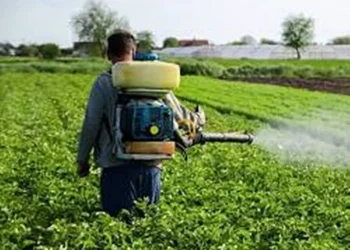
Lake Victoria now receives large influxes of nutrients because of growing lakeside populations and land-use changes. Nutrients from agriculture, industry and urbanisation fuel the growth of cyanoHABs.
CyanoHABs occur in many basins in Lake Victoria but are highly concentrated in Kenya’s shallow Winam/Nyanza Gulf. Changing nutrient and temperature conditions can also alter which types of cyanobacteria dominate the gulf and the types and levels of toxins in the water. Lakeside communities that rely on the gulf for drinking water and domestic tasks are at risk of exposure to cyanoHAB toxins.
CyanoHAB in the Winam Gulf. Photo by George Bullerjahn (BGSU)
Past research on cyanoHABs has mostly used the oldest of microbiological techniques — microscopy — to classify the types of cyanobacteria in the gulf. This cannot differentiate between toxic and non-toxic cyanobacterial cells.
Our latest study adds to a growing number of recent studies the team has carried out in and around Lake Victoria. In this study, their research vessel stopped at over 31 sites to collect scientific samples and data. The samples were later analysed for DNA. This analysis produced near-complete genome sequences – that is, the set of all genes in the DNA – for organisms at each sampling site.
Past reports identified Microcystis as the dominant cyanobacteria in the Winam Gulf. This latest research, however, found Dolichospermum was the most abundant type in major cyanoHAB events there. This finding might be due to recent environmental changes in the region.
Microcystis to microcystin is a liver-damaging toxin that can kill livestock, wildlife and humans, especially those whose immune system isn’t working well. In Winam Gulf, it’s often more abundant than the health limits set by the WHO. The study also found that Microcystis occurs mainly in murkier river mouths where green scums are not visible, making scientific monitoring and public alerts even more important.
Local authorities can now monitor for these cyanobacteria and warn residents to stay away when blooms are present. The findings also mean that authorities know which cyanobacteria to target in prevention efforts like reducing the amount of phosphorus and other nutrients entering the gulf.
A model for what is to come
Rapid human population growth and settlement around lakes and their watersheds is leading to high levels nutrients in lakes around the world. This results in excessive growth of algae and aquatic plants. This danger is likely to increase with global warming because warm temperatures promote algal blooms.