
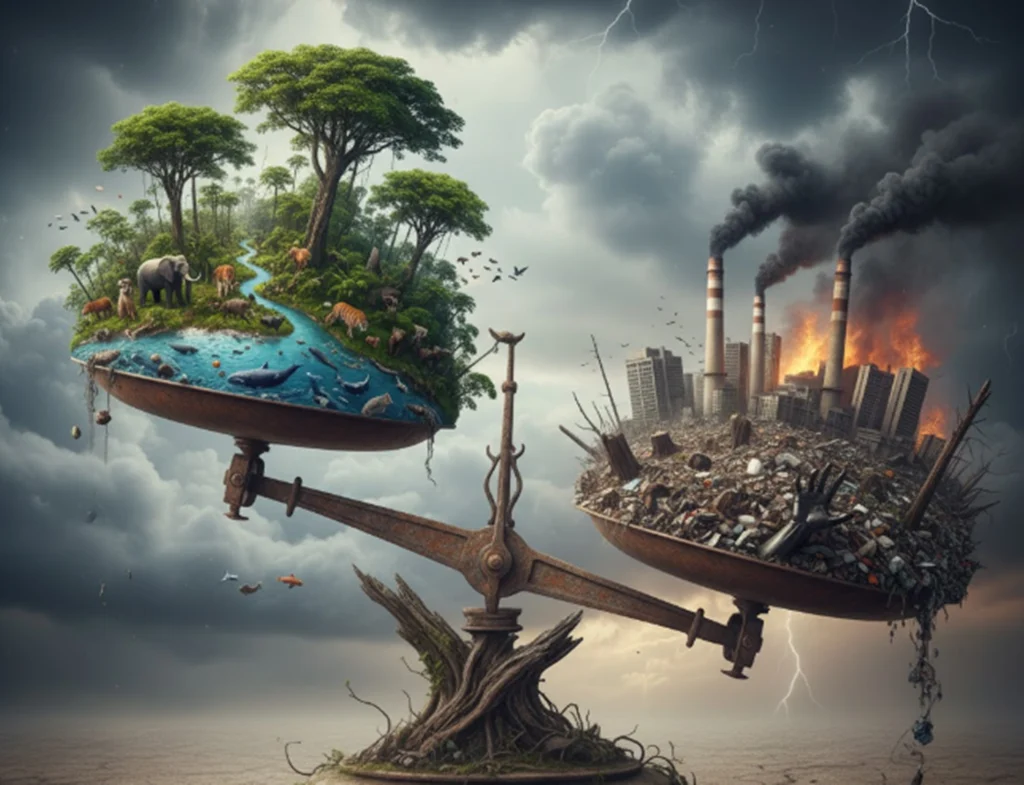
Surging temperatures worldwide have not only pushed coral reef ecosystems past the climate ‘tipping point’, researchers are predicting a future that cannot be rolled back.
“The Earth is closer than ever to reaching roughly 20 planetary tipping points, our new reality.” – Steve Smith, social scientist at the University of Exeter in the UK and lead author on the latest report.
Arctic seals face extinction and birds are in decline globally, according to the new Red List. Melting sea ice and deforestation are continuing to drive many species toward extinction, with the latest Red List of Threatened Species showing that more than a quarter of all animals, plants and fungi, are at risk.
Three species of Arctic seals face extinction due to global warming, while half the planet’s birds are in decline due to habitat loss. However, the return of the green sea turtle shows how, with coordinated conservation efforts, things can be turned around.
The new research offered one glimmer of hope, as populations of the green sea turtle are rebounding thanks to conservation efforts. Found in tropical and subtropical waters worldwide, it is now listed as of least concern rather than endangered, as populations have increased by around 28% since the 1970s.
Decades of conservation action have mainly focused on protecting nesting females and their eggs and curtailing trade and the unsustainable harvest of turtles and their eggs. The report notes the efforts in Ascension Island, Brazil, Mexico and Hawaii as particularly successful, with some populations rebounding to close to pre-commercial exploitation levels.
But it warns that the species is not in the clear yet, as much of its habitat is still vulnerable to coastal and marine development and climate change is also having an impact.
The Red List, produced by the International Union for Conservation of Nature (IUCN), is the most authoritative global assessment of species extinction risk. Released at the IUCN World Conservation Congress in Abu Dhabi, the updated database includes 172,620 species of which 48,646 are threatened with extinction.
“The Red List records symptoms of extinctions,” said Jon Paul Rodríguez, chair of IUCN’s Species Survival Commission, told CNN. “It’s like a thermometer when you are sick… you’re measuring something that tells you there’s something wrong; we have to act. The forces behind degradation of biodiversity are big and they’re widespread and strong,” but it’s not that we don’t know what to do, it’s just that there are fewer of us with fewer resources that are needed.”
The Red List is updated regularly to refresh existing assessments and include species assessed for the first time. The last update was in March 2025. The database is the first step in developing conservation strategies and taking action. Resources are limited money should be invested where it would have the biggest impact. The Red List is a key piece of information to do that.
The research highlights the plight of Arctic seals, which rely on sea ice for breeding and raising their pups, and use it to rest and access foraging areas. As the Arctic has warmed four times faster than the rest of the world, sea ice is rapidly retreating. As a result, the hooded seal is listed as endangered and the bearded and harp seals are near-threatened.
Thinning sea ice will also threaten other seal species, walruses and marine mammals in the region and would have a wider ecosystem impact, affecting the food web as species such as polar bears have fewer seals to prey on.
“Protecting Arctic seals goes beyond these species; it is about safeguarding the Arctic’s delicate balance, essential for us all,” said Kit Kovacs, co-chair of the IUCN Species Survival Commission Pinniped Specialist Group and biodiversity research leader at the Norwegian Polar Institute, in a statement.
The update also included a significant reassessment of the state of the world’s birds, which involved thousands of experts over a nine-year period. It found that 61% of birds species are in decline globally, up from 44% in 2016. This is mainly due to habitat loss and degradation, driven especially by agriculture and logging.
Madagascar, West Africa and Central America were highlighted as at-risk regions, due to the loss of tropical forest. Some threatened species, such as the black-casqued hornbill, found in West and Central Africa, are also under increased threat due to hunting and wildlife trade.
Hornbills are a key example of the vital role birds can play in the wider ecosystem. In some areas, they are collectively able to disperse up to 12,700 large seeds per kilometre each day, making them critical in maintaining healthy and diverse ecosystems and restoring degraded areas. Birds also serve as pollinators, pest controllers and scavengers.
Ian Burfield, global science coordinator at BirdLife International, the IUCN Red List authority on birds, said in a statement that the findings show “how deep the biodiversity crisis has become” and he urged governments to take strong action.
The IUCN World Conservation Congress is held once every four years and is an opportunity for conservation leaders, academics, Indigenous peoples and decision-makers from government and business to work together on improving the natural environment. This year’s event in Abu Dhabi was the first time the Congress has been held in the Gulf region and Emirati Razan Al Mubarak is the current IUCN president.
Now, all eyes are on next month’s UN Climate Change Conference (COP30) held in Brazil. Climate and biodiversity are regarded as two sides of the same coin: damaging biodiversity affects the climate, improving biodiversity helps with the climate. It is hoped this conference would influence discussions and thinking of those at the climate COP.”
Lorem ipsum dolor sit amet, consectetur adipiscing elit. Ut elit tellus, luctus nec ullamcorper mattis, pulvinar dapibus leo.