Alex Rose-Innes
In a COVID world, with international policies and economies in constant flux, what exactly is the lowdown on achieving sustainable green development in Africa, a continent where poverty and a lack of proper education are the heart of growing economies? Add to that a predicted population growth and food and water scarcity, where does it leave the people of this vast and beautiful part of Earth? Without the usual blabber and politically correct noises, what do the experts say?
With stake holders in the much espoused green economy having been identified as social workers, pollutions controllers and risk analysts, what the green economy ultimately boils to, without all the bells and whistles, is an ideal situation of interlinked outcomes – growing economic activity and subsequent buy-in from African governments with regards to energy and health.
With this piece, focusing on South Africa (SA), analysts at UNEP will show that there are no definite answers. However, with the political will, SA could become a catalyst in driving sustainable change towards a better future for the continent and its peoples.
With scientific proof that despite economic development, social progress and environmental preservation, the economy and society at large remained highly unsustainable. There is no doubt that the transition to an inclusive green economy would engender a huge disruptive shift to adhere to a totally new model of development.
Industrial policy was identified as core to this process to maximise the transitional benefits while minimising associated risks. It boils down to a fine balancing act between short-term trade-offs and threats and long term success. Changing current industrial policies would necessitate a total mind shift. This report reviewed SA’s industrial policy from an inclusive green economic outlook and investigated the inclusive role of industry. The rationale behind the long-term objectives needs co-operation to bring benefits across the region. UNEP’s document however makes it clear that this had not happened yet, despite the laudable National Development Goals.
The Institute for Security Studies in Africa (issAfrica) said in its latest analysis that the impact of COVID-19 had made thinking about the future more important than ever. The analysis by the African Futures and Innovation (AFI) team predicts that the pandemic would undo several years of development progress on the continent. It had also raised questions regarding Africa’s ability to withstand future disasters, especially those linked to climate change.
The AFI team, affiliated with issAfrica, used current societal, environmental and economic trends on the continent to anticipate scenarios and in advance prepare needed outcomes such as ways of recovering from COVID-19 while enhancing environmental sustainability.
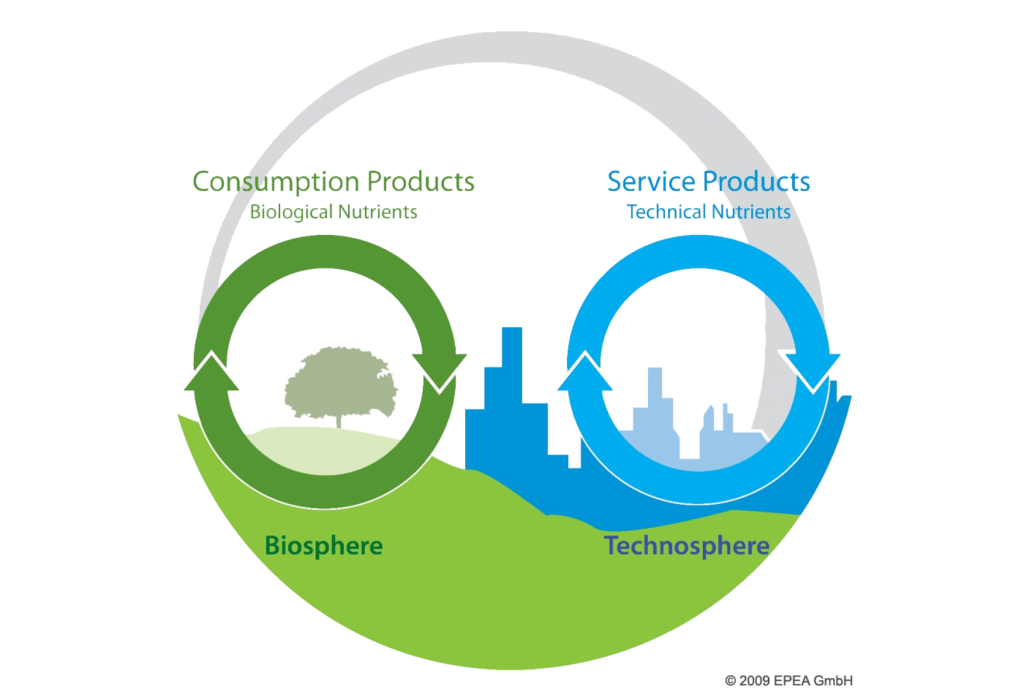
In its global paper, scientists at the organisation provided insight into a circular economy which deviates from the existing linear take-make-waste extractive systems. The paper also provided examples to a number of avenues which could be followed towards a circular economy. As part of a plan to devise a strategy, the electricity industry, agriculture, urban infrastructure including transportation, plastics, manufacturing and textiles were cited as areas where the greatest impact could be made.
Many existing initiatives are aimed at moving to the circular economy in Africa such as the Switch Africa Green Programme promoting the use of biogas technology, E-waste management, organic agriculture, green manufacturing and eco-industrial parks. Partner countries include Burkina Faso, Ethiopia, Ghana, Kenya, Mauritius, SA and Uganda.
Greater use of renewable energy can help move away from carbon-intensive power sources to create low-carbon economies. It is estimated that Africa’s electricity demand would more than triple in the next 30 years and renewables are predicted to have the largest share of the generation mix at 67% by 2050.
In conclusion, UNEP’s and SA governmental framework document proved beyond a doubt that SA’s transition to an inclusive green economy is under way, but that the road ahead is a long and complicated one. The transformation of economic and societal systems favouring more sustainable development models had definitely started at policy and on ground levels.
UNEP said that tremendous opportunities existed for further aligning industrial development and green economy policies in SA towards a just transition to green industrial development. To foster action, the findings of this review would be disseminated to government officials, politicians, private sector representatives, labour unions, civil society and citizens at large to engage with its evidence and recommendations. The onus is now on government structures as the development of Master Plans creates a unique opportunity to initiate a transition towards a green industrial development in the country. It would also provide the necessary impetus to further bridge existing knowledge gaps and trigger implementation.