
Over the past few months, African start-ups and inventors were lauded and awarded among the best across different global stages.
AGG at COP27
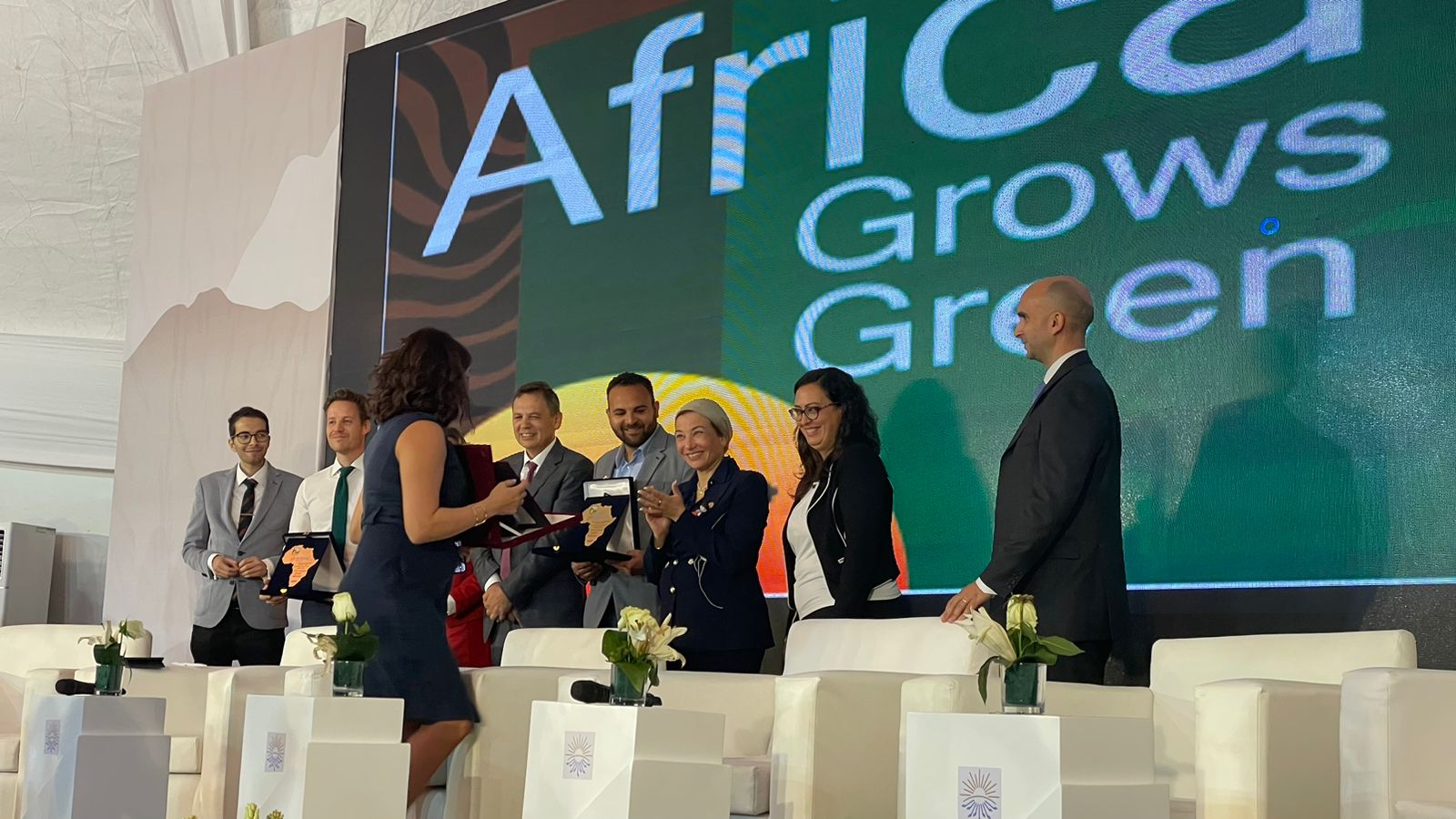
Africa Grows Green (AGG) announced their winning start-ups during COP 27 which presented an ideal platform to boost and celebrate sustainable initiatives and highlight the unique talents of Africans.
Winning projects included five from Egypt; four from Africa and four from the USA, Netherlands, Canada and Spain. With part of Egypt spanning the northeast corner of Africa , it in effect brought Africa’s prize winners to nine in total.
Reem Abd El Meguid, Co-Founder of AGG, said: “I’m very pleased that we are finally celebrating today true talents and potential future leaders who are adamant about creating impact and achieving footprint for a more sustainable world”. Jo Griffiths, Co-founder of GSA Africa, commented: “The Global Start-up Awards (GSA) Africa is about unearthing the next generation technology pioneers to lead us into delivering climate change and development solutions that will drive meaningful impact for Africa and the globe.
Ramon Lopez, Distrito Digital Climate Change Program Director, said: “Solutions for the mitigation and adaptation to climate change should be designed with a global perspective but having an impact on the local markets. The judges made it clear that they planned to commercialise solutions across borders and to extend globally through investors.”
More than 200 local and global start-ups participated in the competition in Egypt including Europe, Asia, America and Africa. The evaluation committee included 12 juries from Egypt, USA, Spain, and the Republic Democratic of Congo.
More African wins for agri-tech innovators
Six African agri-tech innovators have been named winners of the eighth edition of Pitch AgriHack, securing a share of US$45,000 to invest in the growth of their ventures.
The 2022 Pitch AgriHack saw a 30% increase in completed applications with entries from 37 African countries. The winners hailed from all four corners of the continent and had the chance to present their businesses to delegates at the African Green Revolution Forum (AGRF).
“They are the front line in our food systems revolution” – Dickson Naftali, Head of Generation Africa at Pitch AgriHack and panel member
Competing in three open competition categories – Early-stage, Mature- or Growth-stage, and Women-led – the Pitch AgriHack winners and runners-up were allocated cash prizes of US$10,000 and US$5,000 respectively. A fourth invite-only category known as the AYuTe Africa Challenge, will award grants up to US$1.5 million later this year to scalable ventures that are already generating measurable impact for Africa’s smallholder farmers.
The Early-Stage winner was Imen Hbiri of Tunisia’s RoboCare in Tunisia, a patented multispectral disease detector, while runner-up was Donald Mudenge of Zimbabwe’s Mbeu Yedu, which digitises Community Seed Banks to give smallholder farmers access to greater seed-varieties.
The Mature and Growth-Stage winner was Hamis El Gabry of Egypt’s Mozare3, an agri-fintech company connecting small farmers to the agriculture supply chain. Allan Coredo of Kenya’s FarmIT, which combines crop mapping and market linkages through a digital agricultural platform to help vegetable farmers, came second.
Female Winners
The Women-led Agribusiness winner was Esther Kimani of Kenya’s Farmer LifeLine Technologies, which helps farmers to get ahead of pests and pathogens with a proprietary disease detection device. 78% of Kenya’s entire population are farmers. Runner-up was Anaporka Adazabra of Ghana’s Farmio, which has developed a Smart Greenhouse package and changing the face of urban farming.
“Our goal is to catalyse impact,” said Dickson Naftali, Head of Generation Africa at the Pitch AgriHack Winners Showcase and Innovators Panel at the AGRF Summit, of which next year’s summit will be hosted by Tanzania. “All of the people on stage today are making the business of farming easier, more productive and more predictable for smallholder farmers. They are the front line in our food systems revolution.”