Agritech is a growing industry in today’s connected world, and it’s time for today’s farmers to harness its potential for improved decision-making, production, access to markets, and new investment opportunities. The implementation of smart farming technologies helps producers and growers to achieve the highest potential in their farming activities, and, if you’re farming isn’t getting smarter, you’re getting left behind. This article looks at 5 technological devices set to revolutionise agriculture in 2023 and beyond.
#1 Smart soil health measurement tools
We recently engaged with PES Technologies to learn more about the future of soil health measurement. They’ve developed a tool that turns soil testing into a five-minute process. Instead of soil samples being sent off for lab testing, the PES device works as a point-of-care diagnostics machine works in the medical field. The device is hand-held and battery-powered, controlled using a smartphone app. It reports on a comprehensive range of biological, chemical and physical soil health indicators, including microbial biomass and soil organic matter content. You can analyse soil samples right then and there in the field without any sample preparation.
Once you know about the biological community in action (comprising ratios of bacteria, fungi, viruses, nematodes, etc.) you’ll have a better idea of the right products to use to balance the soil and create the best possible conditions for plants to thrive.
#2 Cloud-based data platforms
Cloud-based platforms like Continuum Ag’s TopSoil Tool are able to aggregate soil health data and deliver unbiased recommendations to provide farmers with direction and freedom to make agronomic decisions that drive higher yield and higher profit along with environmental sustainability. Farmers can create custom recommendation algorithms that factor in existing soil biology and assess opportunities to improve regenerative farm management. From a management perspective, farmers can use the data to review anything from test results to soil organic carbon levels, biological activity, and plant-available nutrients, as well as create scouting reports and track as-applied data while in the field.
#3 Handheld bionutrient spectrometer
How do you pick your produce in the supermarket? Do you choose whichever apple looks juiciest and most perfect? The truth is that the produce that looks the most appetizing isn’t necessarily the best for us nutritionally; often it’s pumped with artificial fertilisers and pesticides to give it that perfect appearance. So, how do you go about finding the most nutritious food?
The next technology device is one for farmers and consumers: a bionutrient spectrometer is a hand-held device that can be used to measure the nutrient density in food and crops, along with carbon in the soil. Spectroscopy technology can discern the makeup of materials using a noninvasive flash of light. Buyers will be able to use the device to test crops before purchase. The widespread adoption of this kind of technology should also shift the drivers governing crop production; if retailers have the ability to demand a certain quality from their suppliers, growers will be incentivised to improve the quality of their produce (which can only be achieved with regenerated, healthy soils).
#4 Satellite crop monitoring
The main advantage of aerial satellite imagery is its ability to provide a bird’s eye view of your farm, helping you gain big data to manage multiple fields, cut costs on resources and make reliable decisions. Images from above can be colour-synthesized to identify crop growth, soil erosion, pest infestations, nutrient deficiencies, diseases or irrigation issues. Farmers can also use zoning to create VRA (Variable Rate Application) maps for differentiated seed planting and fertilising. Thanks to the data retrieved from satellite imagery and vegetation indices, farmers can save time and resources on tracking all field activities, and quickly make changes when a potential issue is identified.
#5 Drone imagery
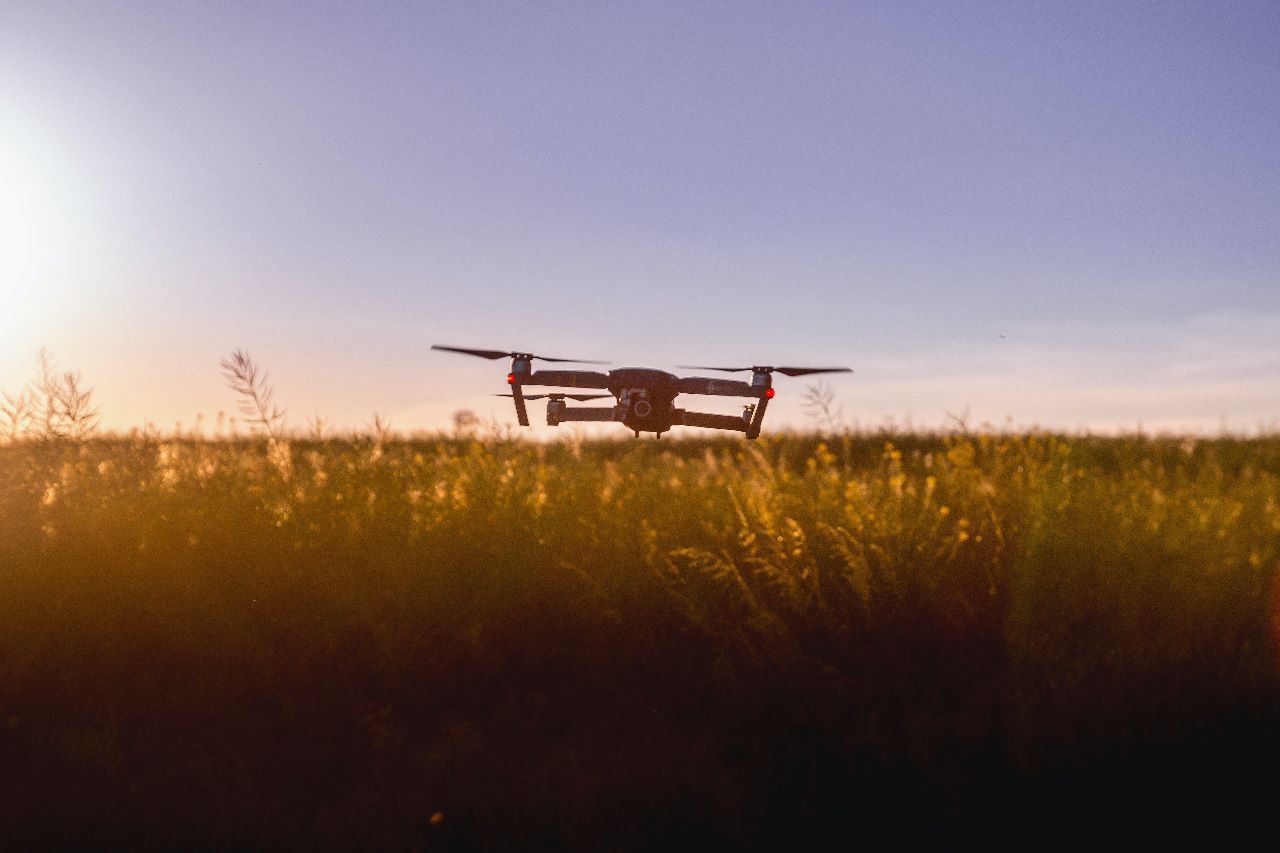
Where satellite-based data groups crops together and aggregates the results, drone-powered farm insights can provide a higher level of detail. In fact, drone-based data is superior to on-foot inspections since drones can use thermal and multispectral imagery to deliver data at a level unseen to the naked eye. High-resolution drones are thus the recommended data source for the purposes of precision farming for specialty crops. Combined with artificial intelligence (AI) analysis, drone imagery can provide actionable data on plant health in near real-time so that farmers can optimise and protect their yields.
You can’t manage what you can’t measure
With the rapid proliferation of smart technology, there’s a lot more that farmers can measure, and thus a lot more that they can manage to improve their operations, productivity and profitability. Armed with this data (quite literally) in the palm of your hand, you can use this technology to increase yields and reduce costs. Failure to do so is, quite frankly, the equivalent of using a Nokia 3310 in 2023.