This year has already seen severe natural disasters across the world, including devastating floods and forest fires, which serve as reminders of the planet’s fragility and the importance of addressing the impacts of climate change. Nature-based solutions can play a critical role in mitigating climate change and offer a range of benefits to both people and the planet.
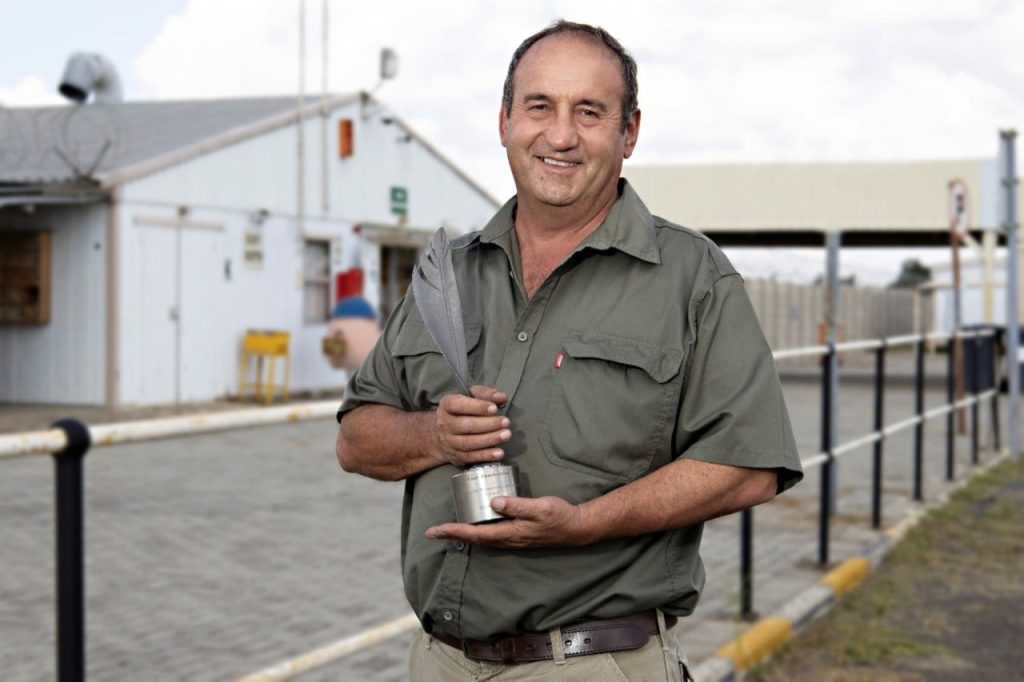
Prof Paul Oberholster – Director of the Centre for Environmental Management at the University of the Free State (UFS) – and his team played their part by researching nature-based solutions as an alternative to treating acid mine drainage (AMD) and domestic wastewater. Freshwater algae as a phycoremediation solution approach have the potential to help society and the environment in several ways.
Prof Oberholster, winner of the NSTF-Water Research Commission (WRC) Award for his contribution to water resource management in South Africa in 2021, says nature-based solutions also play a vital role in realising the Kunming-Montreal Global Biodiversity Framework (GBF), which was adopted during the United Nations Biodiversity Conference (COP15) on 19 December 2022 in Montreal, Canada. The GBF sets global targets for 2030 that aim to effectively conserve and manage at least 30% of the world’s lands, inland waters, coastal areas, and oceans, prioritise ecologically representative and well-connected systems of protected areas, restore at least 30% of degraded ecosystems, reduce the loss of areas of high biodiversity importance, cut global food waste in half, and significantly reduce over-consumption and waste generation.
What are nature-based solutions?
According to Prof Oberholster, nature-based solutions are approaches that utilise natural ecosystem processes, functions, and structures to address a variety of planetary health challenges, including climate change. These solutions involve protecting, restoring, regenerating, and sustainably managing natural ecosystems, such as forests, wetlands, and oceans, to enhance their ability to store carbon, regulate water flow, reinstate ecosystem services, and provide habitat for wildlife.
The significance of nature-based solutions regarding climate change adaptation is multifaceted. Firstly, natural ecosystems are essential for regulating the earth’s climate, as they absorb and store carbon dioxide from the atmosphere, which helps to mitigate the effects of greenhouse gas emissions.
Secondly, nature-based solutions can help to reduce the vulnerability of human communities to the impact of climate change, such as flooding, drought, and extreme weather events. Thirdly, nature-based solutions can provide multiple benefits beyond climate change adaptation, such as enhancing biodiversity, supporting sustainable livelihoods, and improving human health and well-being.
Prof Oberholster’s work
Algae-based treatment systems use bio-stimulation applications and natural processes to remove pollutants from water, which can be more cost-effective and produce less waste. Traditional treatment methods for AMD and domestic wastewater often rely on using chemicals or energy-intensive processes, which can be expensive and have negative environmental impacts.
“Algae-based treatment systems can help mitigate the environmental impacts of AMD and domestic wastewater by removing pollutants such as heavy metals and reducing the acidity of the water. This can help restore the ecosystem and protect public health. Similarly, algae-based treatment systems can remove nutrients from domestic wastewater, reducing its environmental impact and preventing eutrophication, which can harm aquatic life,” says Prof Oberholster.
Clean water and sanitation, forestry (plant life and agriculture), and climate change are part of the 17 Sustainable Development Goals (SDGs) making Prof Oberholster’s research much more important.
Significance of nature-based solutions
According to him, there are several reasons why we should make more use of nature-based solutions. It can help reduce our carbon footprint and mitigate the impact of climate change. It can help protect the environment and promote biodiversity. By reducing waste and pollution, we can preserve natural resources and ecosystems and ensure they remain healthy and vibrant for future generations.
Dr Yolandi Schoeman, a postdoc student of Prof Oberholster, says the significance of nature-based solutions is multifaceted and includes environmental, social, and economic benefits. Nature-based solutions can play a critical role in mitigating climate change by sequestering carbon, enhancing carbon sinks, and reducing greenhouse gas emissions. By protecting and restoring natural ecosystems, we can enhance their ability to store carbon, which in turn helps to mitigate the effects of climate change.
“These solutions are also important for climate change adaptation. Nature-based solutions can also help to reduce the vulnerability of human communities to the impact of climate change, such as flooding, drought, and extreme weather events. By regenerating natural wetlands and floodplains, for example, we can help to reduce the risk of flooding, while reforestation can help to prevent soil erosion and landslides,” says Dr Schoeman.
According to her, rewilding is another key reason why nature-based solutions are critical in the process of regenerating natural ecosystems. Through rewilding, habitat can be reinstated for a wide range of plant and animal species, lost species guilds can be restored by giving them space to thrive, population enhancement can be enabled, and key native species can be reintroduced as essential ecosystem builders. By protecting, regenerating, and restoring these ecosystems, we can help conserve biodiversity and prevent species loss, ultimately securing our own survival on earth.
Meet a Limnologist, Paul Oberholster (NSTF-South32 Award Winner):
UFS research initiative relating to nature-based solutions
The UFS has a number of ongoing research initiatives and projects focused on nature-based technology solutions, including projects focused on climate adaptation in water resource management, establishing the water-climate-food-rewilding-land nexus as a planetary health ‘stock-take’ of ecosystems, reducing water usage, reinstating connections as coupled human and natural systems, enabling rewilding, and increasing water efficiency.
The UFS is also involved in research that addresses water pollution through developing and implementing nature-based systems such as hybrid constructed wetlands, phytoremediation and phycoremediation, regenerating natural wetland systems and riparian buffer zones, bio-remediation, design of bio-intelligent systems, integrating grey and green infrastructure, and the use of big data and analytics in the design and management of nature-based solutions for water, according to Dr Schoeman.
Ecological Engineering Institute of Africa
Prof Oberholster is leading a globally significant initiative that has recently been established at the UFS – the Ecological Engineering Institute of Africa (EEIA). The EEIA’s managing members include scientists and engineers from across the world, including Egypt, Ghana, Greece, and the United States of America (USA).
Prof William Mitsch, an original co-founder of the EEIA, is also a managing member. Prof Mitsch, regarded as the best wetland scientist in the world, is also known for his positions as director of the Everglades Wetland Research Park, the United States National Ramsar committee chair (to name but a few), and is an ecological engineer who was the co-laureate of the 2004 Stockholm Water Prize.
The EEIA intends to promote interdisciplinary collaboration in advancing the field of ecological engineering in Africa and globally, and to encourage research in this innovative field. The EEIA’s goal is also to establish a fully functional research and training facility, to develop various undergraduate and postgraduate curricula, and to provide international accreditation to ecological engineers.