Acid Mine Drainage in SA – A Looming threat
South Africa’s mining industry has played a pivotal role in its economic development. However, a hidden consequence of this legacy lies beneath the surface – acid mine drainage (AMD). This toxic cocktail of polluted water poses a significant threat to the country’s water resources and environment.
Understanding the Problem
AMD arises from the interaction of water, air and the iron pyrite (FeS2) present in exposed rock surfaces from abandoned or operational mines. Pyrite, when exposed to oxygen and water, undergoes a chemical reaction, generating sulfuric acid and releasing heavy metals such as iron, aluminium, manganese and uranium. This acidic and metal-laden water then seeps into groundwater or flows into surface water bodies, creating a chain of environmental damage.
The Devastating Impact
The consequences of AMD are far-reaching and severe:
- Water Contamination: AMD pollutes both surface and groundwater, rendering them unfit for human consumption, agriculture and industrial use. This not only threatens the health of communities but also puts immense strain on already limited freshwater resources;
- Ecological Damage: The acidic and metal-laden water devastates aquatic life. Fish populations decline, biodiversity plunges and entire ecosystems suffer as the delicate balance of water bodies is disrupted.
- Public Health Risks: Exposure to AMD through contaminated water supplies can lead to various health issues. Heavy metals accumulate in the body, causing skin irritation, respiratory problems, and even cancer in severe cases;
- Infrastructure Degradation: Acidic water corrodes metal infrastructure, including pipes, bridges, and dams, leading to costly repairs and potential safety hazards.
A Toxic Legacy
Acid mine drainage is the toxic legacy of more than a century of gold mining on the Witwatersrand. During mining activities, water gets pumped to the surface so mining can take place. When the mining stops, water is no longer pumped and the mine void fills with water. It mixes with sulphide minerals in the rocks and with exposure to air, acid mine water is formed.
This is harmful to humans, plants and animals because it is acidic and carries heavy metals, atoms that emit radiation and salts in hazardous concentrations.
The Eastern Basin, as other mining basins on the Witwatersrand, has a legacy of acid mine drainage problems. In 2022, the Mail & Guardian reported on how broken abstraction pumps at the government’s R2 billion acid mine drainage treatment plant in Springs, were causing the acid water level to rise underground, posing a threat to water quality.
- The treatment plant is supposed to pump between 70 and 100 million litres of polluted water a day to maintain the level and to protect dolomite and groundwater sources before it is neutralised and discharged into the Vaal River system;
- A former senior government official has warned that the current water level is about 65m and this is concerning because there is a chance it could get reach aquifers. This could affect water quality from a farming perspective and landowners who rely on groundwater for their domestic consumption and daily needs.
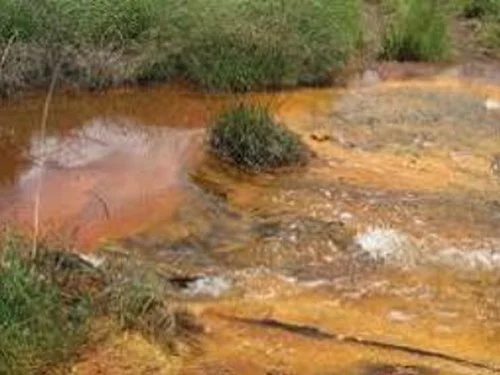
SA, with its rich history of gold mining, faces a particularly acute AMD problem. The Witwatersrand Basin, home to Johannesburg, is a prime example. Abandoned gold mines and poorly managed tailings dams continuously release AMD, polluting the surrounding water systems such the Vaal River and impacting downstream communities. The Tweelopiespruit, a once vibrant stream, now flows with a rusty orange hue, a stark testament to the devastating effects of AMD.
(Image: ResearchGate)
Tweelopiespruit (TLS) flowing out of Aviary Dam, Krugersdorp
Current Efforts and Future Challenges:
Combating AMD requires a multi-pronged approach:
- Prevention: Implementing stricter regulations and best practices in mine closure and tailings management is crucial to prevent AMD generation at the source;
- Treatment: Various technologies exist to treat AMD, including neutralizing the acidity and removing heavy metals. However, these processes are often expensive and require ongoing maintenance;
- Resource Recovery: Exploring the potential to extract valuable metals from AMD, transforming it from a pollutant into a resource, holds promise for long-term management.
Despite ongoing efforts, significant challenges remain:
- Funding: Implementing effective AMD treatment and prevention strategies requires substantial financial resources, which can be a major hurdle for government and mining companies;
- Long-term commitment: AMD is a chronic problem, demanding long-term management and monitoring to ensure its lasting control;
- Community Engagement: Raising awareness about the dangers of AMD and engaging affected communities in solutions is crucial for effective management.
SA’s Ticking Time Bomb
Acid mine drainage is a ticking environmental time bomb in SA. Addressing this issue requires a concerted effort from government, mining companies and the public. By prioritizing prevention, implementing effective treatment strategies, and exploring innovative solutions, SA can mitigate the devastating consequences of AMD and safeguard its precious water resources for future generations.