Alex Rose-Innes
With declining bee populations, the Food Agriculture Organisation (FAO) of the United Nations (UN) warned that it posed a humanitarian crisis with regards to global food security and nutrition and urged countries to step up efforts to protect our crucial allies in fight against hunger.
Not only bees, but other pollinators such as butterflies, bats and hummingbirds, are increasingly under threat from human activities. Intensive farming practices, mono-cropping, excessive use of agricultural chemicals and higher temperatures associated with climate change are considered the main reasons for wiping out entire crops dependent on pollination.
José Graziano da Silva, FAO’s Director-General, said that the absence of bees and other pollinators would wipe out coffee, apples, almonds, tomatoes and cocoa plantations and urged countries to shift to more pollinator-friendly and sustainable food policies and systems.
BLURB
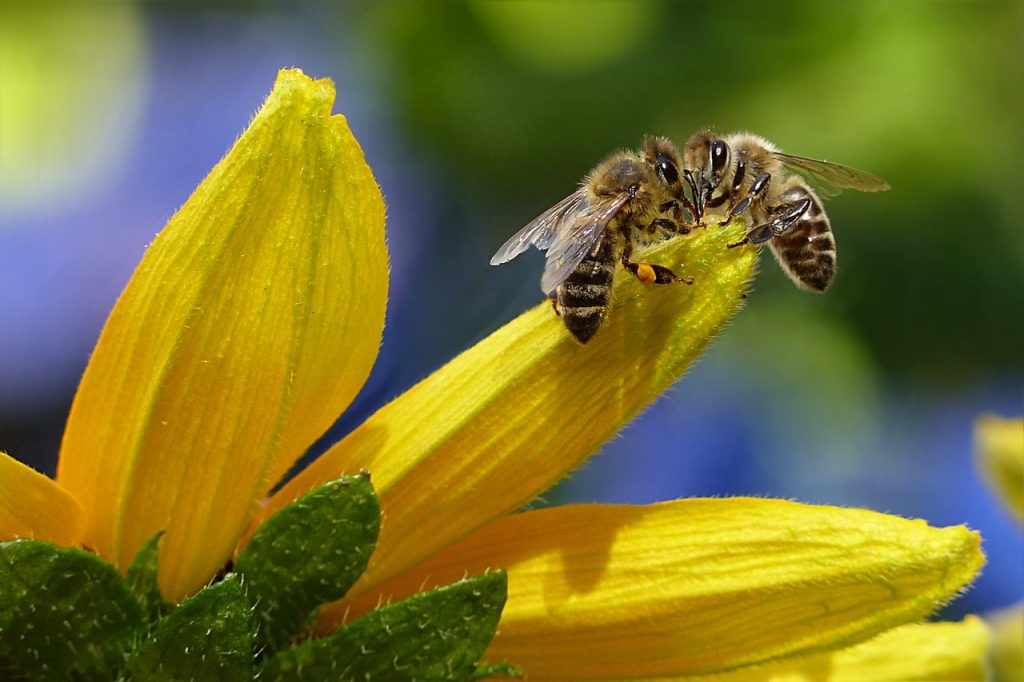
Every individual, by planting more flowers in the garden, can ensure the future of this hard-working species.
Bees and other pollinators such as birds and bats, affect 35% of the world’s entire crop production. It increases outputs of 87 of the leading global food and affect many plant-derived medicines. As many as two-thirds of the world’s crop plants rely on pollination to produce healthy fruits and seeds for human consumption. Pollination benefits human nutrition, enabling not only the production of an abundance of fruits, nuts and seeds, but also more variety and better quality.
Pollination is a fundamental process for the survival of global ecosystems. Almost 90% of the world’s wild flowering plant species depend, entirely, or in part, on animal pollination. More than 75% of the world’s food crops and 35% of global agricultural land are dependent on pollination which contributes to food security and are considered key to conserving biodiversity.
To raise awareness of the importance of pollinators, the threats they face and their contribution to sustainable development, the UN designated 20 May as World Bee Day. The theme for this year’s celebration, (the fourth) is “Bee engaged – Build Back Better for Bees,” aimed at protecting bees and other pollinators necessary to global food supply and elimination of hunger in developing countries.
The event would call for global co-operation and solidarity to counter the threats posed by the COVID-19 pandemic to food security and agricultural livelihoods while at the same time, prioritising environmental regeneration and pollinator protection. It will be an occasion to raise awareness of how everyone can make a difference to support, restore and enhance the role of pollinators.
The Convention on Biological Diversity had made the conservation and sustainable use of pollinators a priority. In 2000, the International Pollinator Initiative (IPI) was established (COP decision V/5, section II) at the Fifth Conference of Parties (COP V) as a cross-cutting initiative to promote the sustainable use of pollinators in agriculture and related ecosystems. Its main goals are monitoring pollinators decline, addressing the lack of taxonomic information on pollinators, assessing the economic value of pollination and the economic impact of the decline of pollination services and protect pollinator diversity. The South African Agricultural Research Council (ARC) had already in 1999 founded The African Pollination Initiative.
On the 20th of May 2021 and follow the conversations on social media using the hashtags #WorldBeeDay #Savethebees!
*20 May coincides with the birthday of Anton Janša, who in the 18th century pioneered modern beekeeping techniques in his native Slovenia and praised the bees for their ability to work so hard, while needing so little attention.