Alex
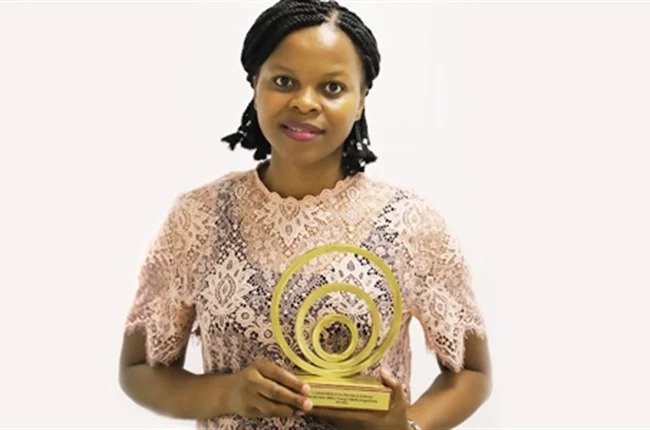
Theresa Mazarire, a third year doctoral student from Masvingo village in Zimbabwe, has been named one of 20 laureates of the International Awards L’Oréal-Unesco For Women in Science in sub-Saharan Africa. She is recognised for her work in combining environmental science and public health to map and control malaria mosquitoes.
The laureates were selected from 440 applications in 17 African countries and the awards are given to women involved in novel scientific research to aid communities in sub-Saharan Africa.
Mazarire (31), joined Wits University in 2016 to pursue her science Master’s degree in geographic information system mapping and remote sensing. She is currently based at the Vector Control Reference Laboratory, National Institute for Communicable Diseases (NICD) in the Virology Department at the School of Pathology at Wits.
It was her doctoral research focusing on malaria vector (an organism carrying and transmitting infectious disease, similar to malaria mosquitoes) control which won her the recognition.
“I used geo-technology to study the interaction between the environment and mosquitoes. My research seeks to analyse the geographical phenomena that contribute to mosquitoes’ prevalence and spatiotemporal distribution,” she says. This is done by applying remote satellite sensing data to map climate, land cover and ecological variables promoting the emergence or survival of malaria vectors in an environment. According to her, the success of vector control strategies depends on timely and accurate knowledge of the spatially and temporally distribution of vectors.
Speaking to City Press, Mazarire said that after completing her honours in environmental sciences, she had wanted to pursue a path less travelled and Wits University had offered her the platform to grow her skills.
“After I completed my Masters of Science, I decided to challenge myself more by pursuing a doctorate in the science discipline of health issues. Seeing the impact of malaria in the world and the massive deaths in the African region and how it is still claiming lives, I was motivated to apply technological tools I had obtained from my Masters degree by assisting strategies engaged in the fight against malaria,” she said.
Her PhD research forms part of a bigger project in which male mosquitoes are mass-reared in the laboratory, sterilised and released into the wild. As they mate with native wild females, the offspring cannot transform malaria.
The road has not always been easy for Mazarire, who said she had a tough upbringing and was raised by her grandmother after her parents had passed away when she was seven years old.
“I grew up in a village where a girl child was not given equal opportunities to explore her capabilities academically an, considering that I was raised by an old grandmother, access to resources was always a challenge. However, I am grateful for the support I got from my siblings and grandmother. When I pursued my tertiary education in South Africa, studying for a Master’s of Science as an international student, it was not always easy, especially when it came to getting funding.” Mazarire said she was fortunate enough to receive a helping hand from her siblings.
She is jointly supervised by Dr Givemore Munhenga, a principal medical scientist in the Vector Control Reference Laboratory and Prof Solomon Newete, a senior researcher at the Agricultural Research Council – Natural Resources and Engineering at Wits.
Mazarire said malaria transmission in South Africa was seasonal with cases rsiing in October, peaking in January and February and waning towards May.
“In South Africa, malaria is mainly transmitted along the border areas and is endemic in some parts of Limpopo, Mpumalanga and KwaZulu-Natal.”