The need for global legislation to curb air pollution
Alex Rose-Innes
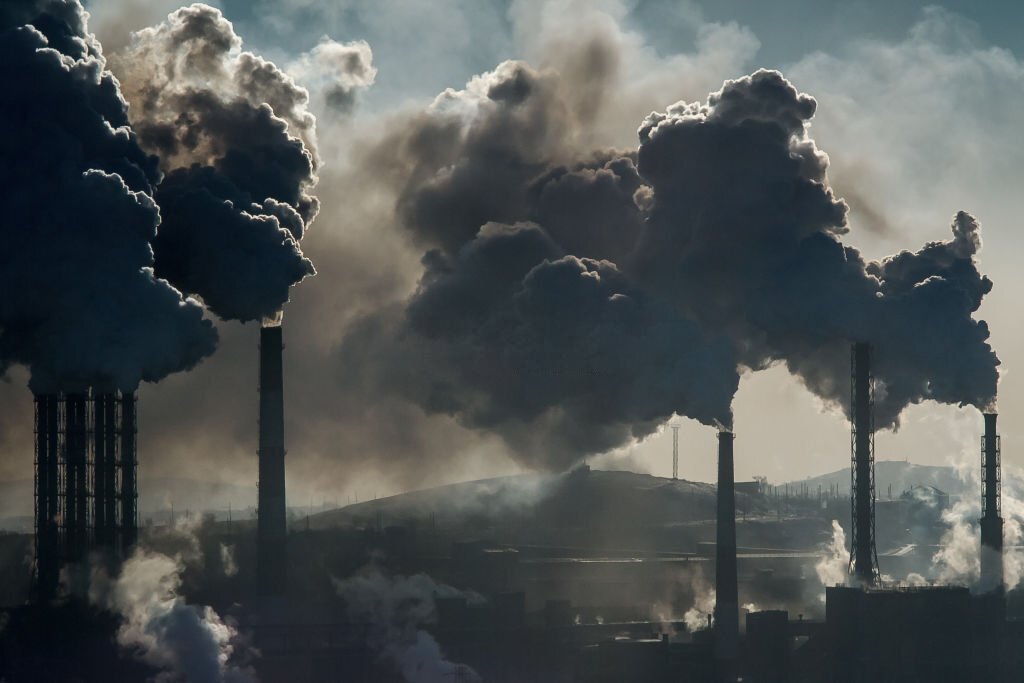
There is no denying that air pollution is the greatest environmental threat to global public health. The World Health Organization (WHO) recently issued stricter recommendations on safe air pollution levels in a bid to curb the millions of premature deaths and loss of healthy years of life as a result. New studies showed that air pollution caused over one million deaths in Africa in 2019 and globally, more than 7 million deaths annually.
Why legislation is needed
A United Nations Environment Programme (UNEP) report shows how countries are addressing air pollution through legislation, measured against a robust air quality governance model, developed as part of the research. While the report draws attention to progress made in many countries, significant challenges remain in protecting human health and well-being and address the triple planetary crisis.
Patricia Kameri-Mbote, lead environmental law and governance expert at UNEP, acknowledged that air pollution globally kills more people than COVID-19. While she lauded all efforts to address air pollution, she also called for increased effort and more focus at a global scale as air quality continues to deteriorate.
In an UNEP interview session, the appeals court ruling in France on extradition of a suspect over concerns about air quality was discussed for its future significance. It was the first time pollution was considered in a court decision. The French court decided that, given the extreme levels of air pollution in the man’s home country, returning him there would endanger his already frail health. The court made a direct link between human life and the environment and in so doing, reinforced the broader agenda of the right to a healthy environment.
While many countries have set ambient air quality standards, many fall short of providing for every person’s right to be protected from environmental harm such as air pollution. This case is considered a good basis for encouraging countries with less developed environment and health legislation, to speed up enactments relating to human rights to a healthy environment.
Most countries surveyed in the UNEP report have air quality standards within a legislative instrument. While this indicated a global trend in legislating air quality standards, many national air quality regimes do not have the resources and necessary measures to achieve public health or ecosystem health objectives. Legislation could enable citizens to hold government institutions responsible for air quality and can also establish processes for monitoring, enforcement and public participation in air quality control which could have significant impacts.
There are also many reasons why air quality standards are not incorporated in legislation. As the World Health Organization (WHO) 2005 guidelines admitted, one issue is lack of prioritisation of public health in air quality law. Many countries also do not perceive air quality as a problem.
It is a challenging task for public authorities to embed air quality standards in legislation. Social and economic choices must be made to meet air quality standard levels and assessment and information requirements are needed. Without an international regime on air quality standards, embracing different national laws could also be a barrier to adopting contemporary approaches. Many countries need further guidance.
Why are laws in many countries without weight?
Guideline values set by the WHO were designed to protect human health from the harmful effects of air pollution, but are not binding on states. Despite the UNEP report finding that indoor and outdoor air pollution was among the leading avoidable causes of diseases and death globally and the world’s largest single environmental health risk, in the end, it is still a matter of public health.
The WHO guidelines reflect a high degree of scientific consensus with global authority, which can be used as benchmarks to inform legislation and policy. In certain instances, air quality standards in national laws do not comply with WHO air quality guidelines, reflecting a transitioning process to more stringent standards over time, subject to political and economic circumstances.
Kameri-Mbote opined that air quality laws should follow a robust air quality governance system informed by science, i.e. setting requirements for institutional responsibility, monitoring, accountability, planning and sanctions, as well as public participation and human rights.
The UNEP’s Law Division works with countries to develop, implement and strengthen laws and institutions for environmental management and sustainable development. Through the Fifth Montevideo Environmental Law Programme’s digital backbone, UNEP Law and Environment Assistance Platform (LEAP), countries can submit requests for assistance to improve their air quality laws.
UNEP and other stakeholders had been advocating for a shift from a carbon-based to a green economy. In a green economy, employment growth and higher incomes are driven by public and private investment allowing reduced carbon emissions and pollution, enhanced energy and resource efficiency and prevention of biodiversity loss. Tightening air quality laws would contribute to this shift and to achieving the sustainable development goals, including SDG8 on decent work and economic growth.
Enforcement mechanisms to ensure air quality standards are met are complex to design, but various approaches taken by some countries show possible options for others to explore.
The UNEP report showed the need for enhanced co-operation between countries to effectively control air pollution across borders. Global treaties on air pollution include the Vienna Convention, the Montreal Protocol, the Climate Change Convention, the Kyoto Protocol, the Paris Agreement and the Stockholm Convention. At regional level, there is also a Pan-European Air Pollution treaty, which had been particularly successful in encouraging European countries to pass laws on cross-border air pollution.
There is no doubt that international agreements play a mammoth role in the success of decreasing air pollution, but ultimately it would need political will and be up to individual governments. The UNEP report found that without an international regime on air quality standards, the many different national laws could also be a barrier to adopting contemporary approaches. Currently, no international treaty requires or encourages countries to adopt air quality standards. The report found a definite case for a complementary global treaty.
Strengthening air quality laws and regulations is one key policy action to significantly improve air quality. Ambient air is not yet legally protected everywhere. If countries are supported to have robust air quality laws, global air quality can be improved. This can only be achieved by leaving no one behind, especially the African continent, universally thought of as the Eden of the Modern World.