

Pollution in its varying forms is a major course of climate change. But exactly what does it mean? The Oxford Dictionary explains it as “the presence in or introduction into the environment of a substance with harmful or poisonous effects.” Also called environmental pollution, it refers to any form of energy, (solid, liquid, or gas), released into the environment at a rate faster than it can be dispersed, diluted, decomposed, recycled or stored in some harmless form.
A 2016 World Health Organisation report showed that almost 8% of total deaths in the world were due to air pollution with respiratory diseases, hypertension, heart attack, cognitive and mental illness already triggered by air pollution.
Types of pollution
Types of pollution include air and light pollution, litter, noise pollution, plastic pollution and soil contamination, radioactive contamination, thermal-, visual- and water pollution. The major types are classified as air pollution, water pollution and land pollution. In all its forms, pollution has negative effects on the environment and wildlife and often impacts human health and well-being.
Although environmental pollution can also be caused by natural events such as forest fires and active volcanoes, pollution generally implies that the contaminants have an anthropogenic source, a source created by human activities.
The history of pollution
Pollution has accompanied humankind ever since people first congregated and remained in any one place on earth for a long time. Ancient human settlements are frequently recognised by their wastes; shell mounds and rubble heaps. Pollution was not a serious problem as long as there was sufficient space available for each individual or group. However, with the establishment of permanent settlements by great numbers of people, pollution became a problem.
Cities of ancient times were often noxious places, fouled by human wastes and debris. Starting around 1000 CE, the use of coal for fuel caused considerable air pollution and the conversion of coal to coke for iron smelting beginning in the 17th century exacerbated the problem. In Europe, from the Middle Ages well into the early modern era, unsanitary urban conditions favoured the outbreak of population-decimating epidemics of disease from plagues to cholera and typhoid fever. Through the 19th century, water and air pollution and the accumulation of solid wastes were largely problems of congested urban areas. But, with the rapid spread of industrialisation and the growth of the human population to unprecedented levels, pollution had become a universal problem.
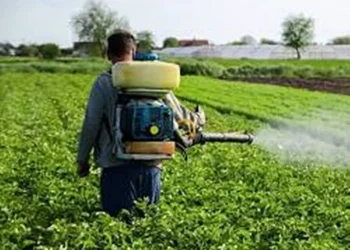
By the middle of the 20th century, an awareness of the need to protect air, water, and land environments from pollution had developed among the general public. In particular, the publication in 1962 of Rachel Carson’s book Silent Spring, focused attention on environmental damage caused by improper use of pesticides such as DDT and other chemicals accumulating in the food chain which disrupt the natural balance of ecosystems on a wide scale. In response, major pieces of environmental legislation, such as the Clean Air Act (1970) and the Clean Water Act (1972; United States), were passed in many countries to control and mitigate environmental pollution.
How to control pollution
Great efforts are undertaken to limit the release of harmful substances into the environment by way of air pollution control, wastewater treatment, solid-waste and hazardous-waste management, recycling. Unfortunately, attempts at pollution control are often surpassed by the scale of the problem, especially in less-developed countries.
Noxious levels of air pollution are common in many large cities, where gases from transportation, heating and manufacturing accumulate and linger. The problem of plastic pollution on land and in the oceans has only grown as the use of single-use plastics burgeoned worldwide. In addition, greenhouse gas emissions, such as methane and carbon dioxide, continue to drive global warming and pose a great threat to biodiversity and public health.
Today biologists are trying to save sea turtles from becoming victims of artificial lighting and research has discovered how houseplants can potentially remove Volatile Organic Compounds and other indoor air pollutants. Many had started upcycling plastic bags.
The situation in and around Africa
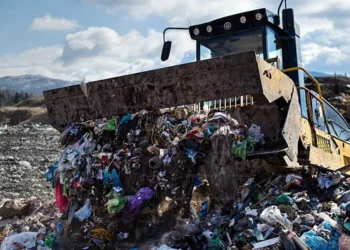
Plastic waste in oceans, on beaches and in rivers is killing ocean life and eradicating fish stocks with fish being the primary food source for many poor coastal countries. Africa and its oceans had become the dumping ground for the rest of the world with the coast around our continent flooded with used tech products. Million litres of sewage is pumped into our ocean by municipalities with no proper sewage, drainage and waste removals services in poor areas across Africa.
Because of the highest population growth in the world, poverty on the African continent and lack of environmental education are responsible for deforestation and cooking fires with its concomitant health hazards and infant death and disease. Instant fashion, for which especially China is known, is creating additional landfills across Third World countries.
How global COVID lockdown benefited the Planet
As the transmission of novel corona virus (COVID-19) increased rapidly, the world adopted lockdown with restriction of human mobility. The imposition of quarantine stopped all the commercial activity affecting the various important environmental parameters directly connected to human health.
As all types of social, economic, industrial and urbanisation activity shut off, nature took advantage and showed improvement in the quality of air, cleaner rivers, less noise pollution, undisturbed and calm wildlife. COVID-19 became the opportunity for the earth to build a clear blue sky and clean the air. Birds and wildlife were seen as never before, even venturing into urban areas, their former habitat before humans came along.
During this global lockdown, the sight of clear skies created a sense of optimism among the people towards a clean and better environment. Pre-COVID-19, the world suffered from a high level of urban air pollution with major sources of pollution such as transport, industries, power stations responsible for the increased output of all these pollutants. During lockdown, dangerous emissions dropped to within “satisfactory range” according to scientists. After only three weeks, the world’s highest pollution emitting countries, such as India, had experienced a noticeable reduction of different air pollution.
Science and technology to combat pollution
Under the Clean Air Act, science is the foundation for setting health-based air quality standards for certain common air pollutants. In implementing the Clean Air Act, significant scientific information on air pollution effects is collected and serves as a clearinghouse of data on emissions, air quality and air pollution controls. The Environmental Protection Agency scientists and technical experts in the United States are conducting state-of-the-art analyses of air pollution problems and policies using a variety of technical tools to protect the environment and human health.
The necessity of innovation on the African continent
Air pollution killed a million people on the African continent in 2019. Africa could be spared a host of respiratory illnesses, including COVID-19, through cleaner air. However without proper air pollution data across the continent which could influence policy is of poor quality or inaccessible.
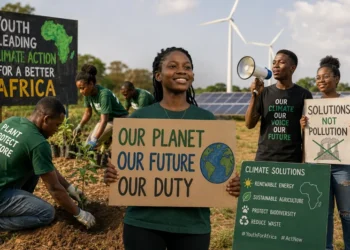
Strong community activism, especially among the youth, often succeeds in holding governments accountable for reducing air pollution and various environmental groups had taken the South African Government to court over violations of the constitutional right to clean air.
In Africa, such court challenges might seem like a non-event in a sea of other challenges. There is lack of substantive capacity for air quality measurement. Only seven of 54 African countries have reliable, real-time air pollution monitors, according to a 2019 UNICEF report. Ground-based, real-time data helps to capture fluctuations in air quality, important to improve public awareness and educate people to alter their behaviours and thereby reducing air pollution. Addressing this challenge will require a co-ordinated and concerted effort to address air pollution on the continent.
This highlights the need for accessibility of innovations such as low-cost sensors, cloud computing and data science tools. Scaling of such interventions will require commitments from both public and private sectors to improve the air quality monitoring capacity across the continent. In addition, achieving the co-benefit of improving health will require academic partnerships and transdisciplinary research to better understand air pollution exposures and how air quality influences healthy behaviours.