Ntokozo Happy Msiza’s petite physical frame and quiet demeanour belie her enviable academic achievement: an MSc degree and a PhD loading. This places her firmly within a cohort of exceptionally gifted young female students who are studying towards their doctorate degrees before they even hit the ripe age of 30.
Academic journey
Ms Msiza was born in Nelspruit, in Mpumalanga, but grew up in the Kingdom of eSwatini and she is currently in her first year of her PhD in Animal Science. She started her primary and high school education at Greendale Combined School after which she enrolled for a BSc Animal Pasture Science in 2014 at the University of Fort Hare (Alice Campus. She graduated in 2019 and the same year after her graduation she registered for an MSc in Animal Science at the North West University (Mafeking Campus). Upon completing her MSc degree in 2021, she enrolled for a PhD Animal Science, still at the North West.

Early influences
Ms Msiza attributes her consistent academic journey to her late grandmother and the entire family and relatives who encouraged her to work hard in her studies. Having grown up and lived in a semi-rural area and farming community, pursuing a career in agriculture was inevitable. Her passion for farming took root as she used to keep chickens and also grow tomatoes and butternut in the family yard.
Areas of focus
“My current research focus is on the use of planted pastures which include grasses and legumes as a manner of sustaining farming systems through conservation of degraded rangelands and an alternative feeding resource for ruminants,” says Ms Msiza. She says she went for cultivated pastures because she believes that planting pastures would groom her into becoming an expert who would be able to contribute towards improving animal nutrition. Msiza says through her research she is able to educate farmers with limited resources to “cultivate pastures that could potentially sustain their animals throughout the year, mostly during the dry winter months as a means of closing the feed shortage gap”.
Published author
She says one of the highlights of her career was becoming a published author. Says Msiza: “Never, in my wildest dream had I ever thought that my name would be found on Google scholar. I have published seven (7) articles with 13 citations to date – and more are coming.” She also gets to participate in local and international conferences where she presented her MSc work; in 2019 she took part in the 5th Arid Zone Ecological Forum (AZEF) Conference in Kimberley, Northern Cape South Africa. “I attended The Joint XXIV International Grassland and International Rangeland Congress, Nairobi Kenya-virtually in 2021. This year I am attending the 57th Annual Grassland Society of Southern Africa (GSSA), and I will be presenting my PhD work, adds Ms Msiza.
Green and sustainable environments
Ms Msiza says there is awareness on sustainability both in Africa and the globe, but this is not enough. She says the world should display the same unity to address green issues and the climate change like it did o fight the Covid-19 pandemic. She says South Africans should use the recent floods that hit KwaZulu-Natal, Eastern Cape and some parts of North West and the Cape Town’s ‘Day Zero’ as lessons to adequately prepare for climate change and environmental sustainability.
Grasses and legumes
She says her current academic work is making a valuable contribution towards green issues because they encourage farmers to use grasses and legumes as they do not require the use of nitrogen fertilisers. She says through her research work she is looking at the production potential of using vetch legumes as an alternative feed source. “The legumes are able to fix nitrogen into the soil, which then means there is no need for fertilizers. If farmers can be able to do intercropping (planting a grass and a legume) this can help improve the soil health, soil fertility and forage yield. This enhances the nutritional quality of the grass and the also supplementing the nutritional needs of the animals,” says Ms Msiza.
Youth involvement
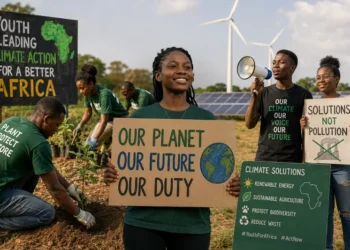
Ms Msiza recommends active youth participation in particular young females to promote sustainable development of the environment. Ms Msiza says science exhibitions, often hosted by universities including the popular EskomExpo, are ideal to fulfil this objective. Competitions, science documentaries or even televised shows are also very vital platforms to expose young people to a wealth of information and also encourage them to think critically and come up with innovative solutions.