
Researchers from the University of Pretoria (UP)’s Social Insects Research Group (SIReG) in the Department of Zoology and Entomology, discovered during their recent laboratory-based study that small hive beetles trapped inside a honeybee nest are capable of tricking their captors (bees) to feed them even some of the nutritious food spared for the queen. The breakthrough findings of the study were published in the Journal of Experimental Biology.
African honeybee
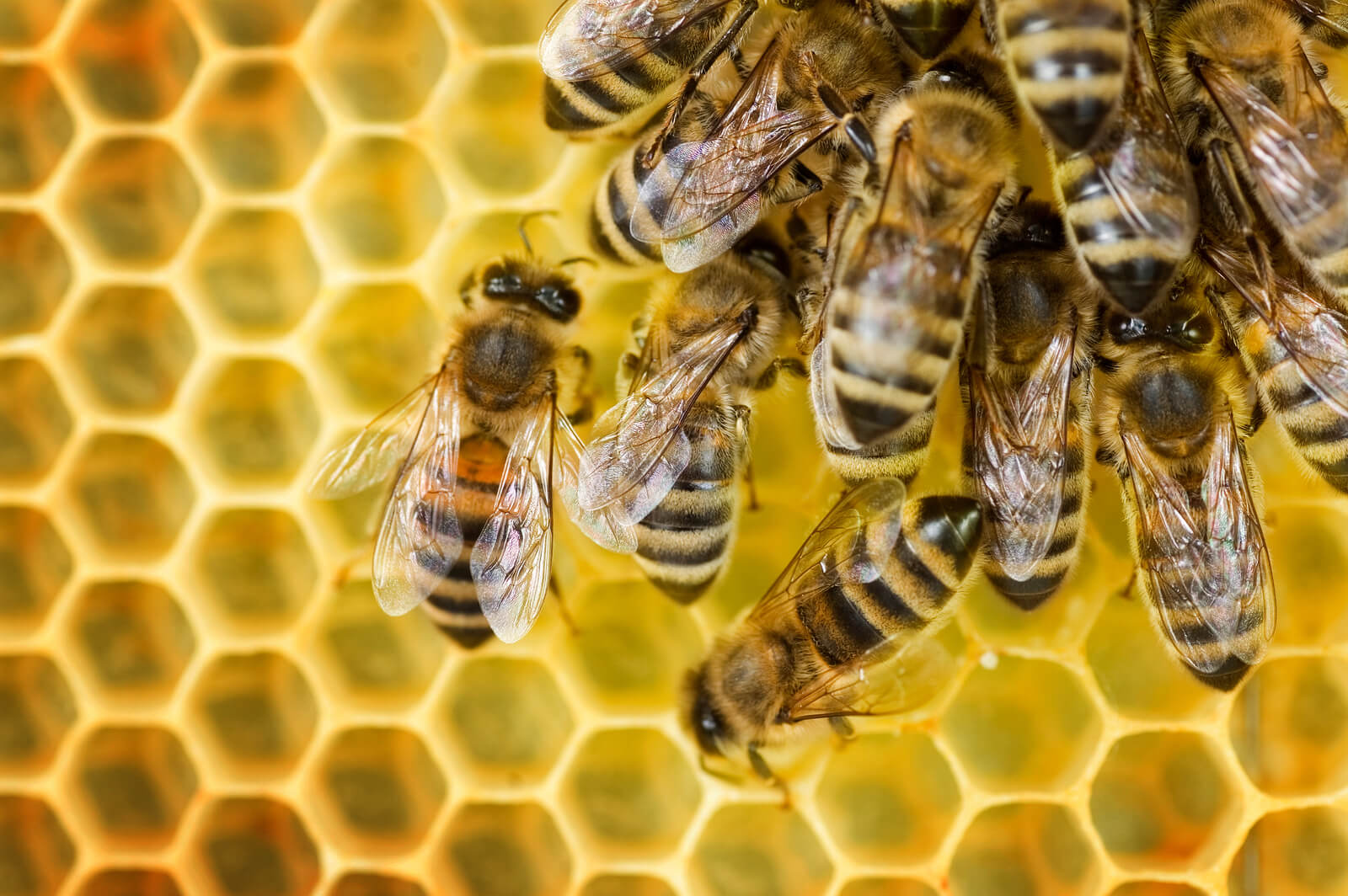
According to the researchers, the small hive beetles, scientifically referred to as Aethina tumida, often attack bees’ nests to feed on pollen and honey stores and to lay eggs. While some honeybee colonies move away to start all over again elsewhere, African honeybee subspecies have develop a tactic to herd the tiny insects into inaccessible cracks and corners of the nest where they can be harmless. Within a week or so, the bees cunningly create a wall around the beetles using propolis – a particular kind of resin that they collect.
Cunning strategy
The leader of the SIReG, Professor Christian Pirk explains that once the bees have walled the beetles inside they then deploy another sophisticated guarding strategy to further limit the movement of the beetles. Professor Pirk has been an expert in this area for 22 years, having been involved in the first research into the social interaction between theseinsects particularly how bees keep the parasitic beetles in check. He says the strategy of bees feeding instead of fighting them has probably evolved because they are difficult to kill, adding they have a hard exoskeleton and are also fierce defenders. During his PhD years, Professor Pirk discovered that during their entrapment by the bees, the small hive beetles use so-called behavioural mimicry to trick their captors into feeding them.
Hungry fellow worker
Explained Professor Pirk: “They behave in such a way that they are perceived by the honeybee workers as being a ‘hungry fellow worker’.” He said this induces trophallactic feeding (the exchange of liquid food, usually between nest mates) from their honeybee captors. This involves the bees feeding the beetles some of the carbohydrate-rich contents in their crops. This enables the beetles to survive for months.
Zoë Langland, one of Professor Pirk’s protégés, also discovered recently that the beetles also dupe their guards into serving them with the very best and the high-value, protein-rich jelly that worker bees secrete from their glands and feed to the queen, larvae and other nest mates. To demonstrate this, Langland relied on the use of radioisotopes during an experiment with bees from the UP apiary located in Innovation Africa @UP campus. Langland’s experiment further showed that female beetles are good at this as they can induce worker bees of all ages to feed protein to them. On the other hand, male beetles actively avoid interaction with older and aggressive bees.
Jelly-like substances
Langland highlighted the importance of protein saying they are necessary for the survival, growth and fertility of insects. Langland explained further: “Honeybees obtain protein from pollen. Nurse bees consume and digest it, then distribute the protein to the rest of the colony by secreting a jelly-like substance from their hypopharyngeal glands. Small hive beetles are the only species known to mimic honeybee trophallaxis and successfully coerce worker bees to share carbohydrates and a limited resource such as protein, which is essential for the bee colony’s own survival and reproduction.”
Fascinating evolutionary questions
According to Professor Pirk, their studies also looked into how social insects communicate. He said since 2000 their studies have revealed that small hive beetles are able to tap into the communication between honeybees and benefit from it. He said based on their studies, these beetles are not problematic in their native sub-Saharan Africa.
However, those that are found in countries such as the USA, Australia and Europe cause significant damage to honeybee colonies. “The fascinating thing is that these countries have the same species of honeybees, just different subspecies, and these seem to react differently. Understanding the interaction between these beetles and honeybees is one of the most fascinating evolutionary questions,” said Professor Pirk.