

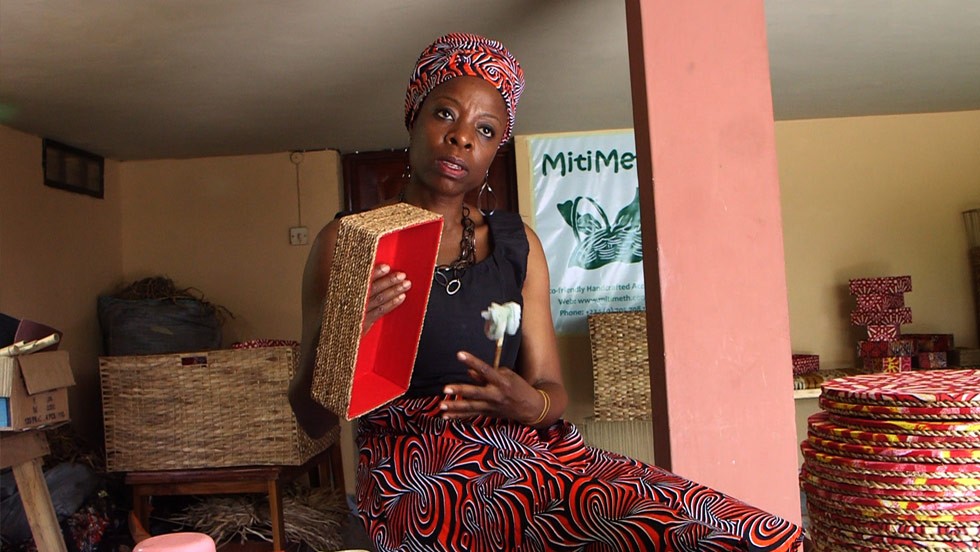
Achenyo Idachaba-Obaro, born in the US to Nigerian parents, is an entrepreneurial go-getter who used to travel regularly between these two countries. While in the US, she carved herself a successful career as a computer scientist and a successful business analyst.
Heading back home
For a very long time, Idachaba-Obaro has wished to return to her motherland and this materialised in 2009 when she finally relocated to Nigeria. It was a decision that shocked many as at the time she held a lucrative job at the US-based oil conglomerate, ExxonMobil. Two years after her arrival in Nigeria, Idabacha-Obaro formed MitiMeth, an award-winning social enterprise company that focuses on turning waste and creating livelihoods for youth and women by transforming invasive aquatic weeds and other agricultural remnants.
Clogging waterways
Aquatic weeds are a nuisance to most localities across the globe and government spend a lot of money trying to remove them. One of such popular aquatic weeds is water hyacinth which is notorious for clogging dams and waterways in most urban and rural parts including Nigeria. They grow quickly and can suffocate and overwhelmed huge tracks of valuable vegetation near water sources such as dams and lakes. In Nigeria where most states rely on water-based transportation network system, the water hyacinth blocks and disrupts this infrastructure and can also lead to substantial loss in the fish population.

Engaging local labour
Idachaba-Obaro learned through a research about the Southeast Asian communities that were also once troubled by the water hyacinth. And to resolve the challenge, these communities harvested the weed and wove it into useful marketable products. She adopted the idea and started to engage the local artisans in the Ibadan area who have unmatched weaving skills and experience. She also networked with academic institutions such as the local Ibadan University to tap into their expertise and resources. MitiMeth has also forged alliances with several organisations involved in the same struggles across the globe. Its objectives are also aligned with the United Nations’ Sustainable Development Goals.
Impacting lives
MitiMeth started to produce home and personal accessories and other utilitarian gadgets for the local market. Through the initiative, not only is MitiMeth resolving one of the age-old environmental problem posed by the water hyacinth but it also transformed and impacted the living conditions of communities lying near the rivers. Idachaba-Obaro says at the time “most of the various weed clearing activities in Nigeria have not been sustainable. Our approach to making the transformation of invasive aquatic weeds a sustainable and beneficial community based economic activity makes MitiMeth stand out as a special cause-based brand.”
Nigeria’s #1 choice
Idachaba-Obaro says currently MitiMeth has trained well over 400 women from communities across Nigeria and Ghana to make eco-friendly home décor and lifestyle products from the water-based weeds. They also derive a similar fibre material from other related sources such as typha grass, banana bark, coconut shells and bamboo culms. “Our vision is to create environmentally and economically thriving handicraft producing communities and to become Nigeria’s #1 choice in sustainable natural fibre products,” says Idachaba-Obaro. Through MitiMeth, she also hosts and facilitates Craft Innovation Workshops in rural communities where they empower mostly women and youth with skills to generate income by exploiting locally available resources.
Upcycling benefits
According to Adachaba-Obaro, MitiMeth’s ‘upcycling’ activities include:
- promoting resource recovery (making use of unused renewable resources available in abundance on Nigeria’s waterways and in the Agricultural sector)
- creating access to waterways
- reducing the impacts of evapo-transpiration
- creating an enabling environment for artisanal fishing activities and
- providing alternative skills and income generating opportunities within the impacted communities.
Receiving positive recognition
At the last count MitiMeth had a team of 13 full-time employees between its Ibadan and Lagos hubs, a few volunteers and more than 100 home-based artisans. MitiMeth is tangibly transforming lives and the environment in Nigeria and has received wide recognition and positive coverage from a number of publications including Lionesses of Africa. It also received accolades and awards such as the 2015 Tony Elumelu Foundation Award, the 2014 Cartier Women’s Initiative Award, the 2013 YouWIN Award, the 2013 Local Raw Materials Content Award.
Curbing rising youth joblessness
According to Idachaba-Obaro, her aim is to continue to position MitiMeth as the Nigeria’s number one choice in creating environmentally and economically sustainable and handcrafted weave products. In the long-term, she says, they are aiming to be a “leading manufacturer and retailer of artisanal luxury products made from natural, organic, and ecologically sound fibres”.
In addition, she says, in the face of increasing youth unemployment and the rapid rural-urban migration across Nigeria, MitiMeth is looking to partner with like-minded to “support vocational craft training, the establishment of common facility centres and facilitate market linkages and access”.