

South Africa’s key greenhouse gas (GHG) indicators show that there has been a gradual decline of about 0.8 percent net emissions between 2000 and 2020. The net GHG emissions in CO2 equivalent were 446 million tonnes in 2000 and declined to 442 million tonnes in 2020. South Africa is obligated as a member to communicate detailed inventory to the United Nations Framework Convention on Climate Change (UNFCCC).
Covid-19 impact on GHG emissions
However, the net GHG emissions declined markedly by 5.9 percent between 2017 and 2020 mainly due to the Covid-19 pandemic which brought to a complete halt the country’s key economic activities. This is according to the minister of forestry, fisheries and the environment, Ms Barbara Ceeecy when she published South Africa’s National Greenhouse Gas Inventory Report (NIR).
Aligning with global trends
Creecy said the decrease in the net emissions of GHG emissions is in line with global trends as contained in the GHG emission inventory for 2021 submitted by developed countries to the UNFCCC in April this year. She said: “The GHG inventory is central to tracking the implementation of South Africa’s Nationally Determined Contribution (NDC). We are proud of the robust format of our monitoring which has been developed over the past 15 years and includes both public comment and independent verification and is designed to support domestic and international reporting obligations.”
Human activity, a major cause of GHG emissions
The report also covers sources of greenhouse gas (GHG) emissions, and removals by sinks. It showed that among the causes of major greenhouse gases from human activity are:
- carbon dioxide (CO2)
- methane (CH4)
- nitrous oxide (N2O)
- perfluorocarbons (PFCs) and
- hydrofluorocarbons (HFCs).
Indirect greenhouse gases included in the report for information purposes are carbon monoxide and oxides of nitrogen.
Four broad emission sectors
Creecy said emissions estimated in the report are for four broad emission sectors:
- energy
- industrial processes and product use (IPPU)
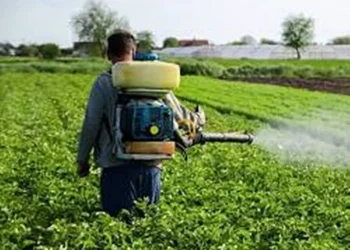
- agriculture
- forestry and
- other land use (AFOLU) and waste.
Well established reporting programme
Creecy said South Africa is one of the few countries that promotes transparency in compiling its inventory and publishes it for public comment as well as subjecting it to a UNFCCC-style review process. This measurement, reporting, and verification (MRV) system is supported by a well-established emissions reporting programme, known as the South African Greenhouse Gas Emissions Reporting System (SAGERS), she said. She added that the process includes corporate governance to ensure that key state data custodians share relevant data and information for inclusion in the report. “All these process elements have improved the quality of GHG Inventory significantly,” she said.
Biggest sources of GHG emission in SA
The biggest sources of GHG emissions in South Africa are, according to Creecy’s observations:
- power generation
- transport
- industrial fuel use
- fugitive emissions from processing of fuels and
- livestock and waste management.
Return to pre-Covid-19 emission rates
Even though the emissions profile declined between 2017 and 2020, she said, preliminary assessment using data from the SAGERS system for 2021 shows that some of the emission sources have increased compared to 2020 levels. This implies that from 2021 onwards the most carbon intensive assets are likely to return to pre-COVID emission rates and this trend has been observed internationally, she added.
The role of carbon sinks
“This 8th GHG inventory also highlights the role carbon sinks play in lowering the net greenhouse gas emission profile for the country. Over the next two decades, South Africa will have to increase its carbon sinks in order to reach the long term-goal of a net-zero carbon economy and society by 2050”, Creecy said. She concluded by saying that afforestation, reforestation, reversing of land degradation and grassland management are key activities to achieve this long-term objective.
Access the » 8th National GHG Inventory Report [PDF – 11.6 mb]