
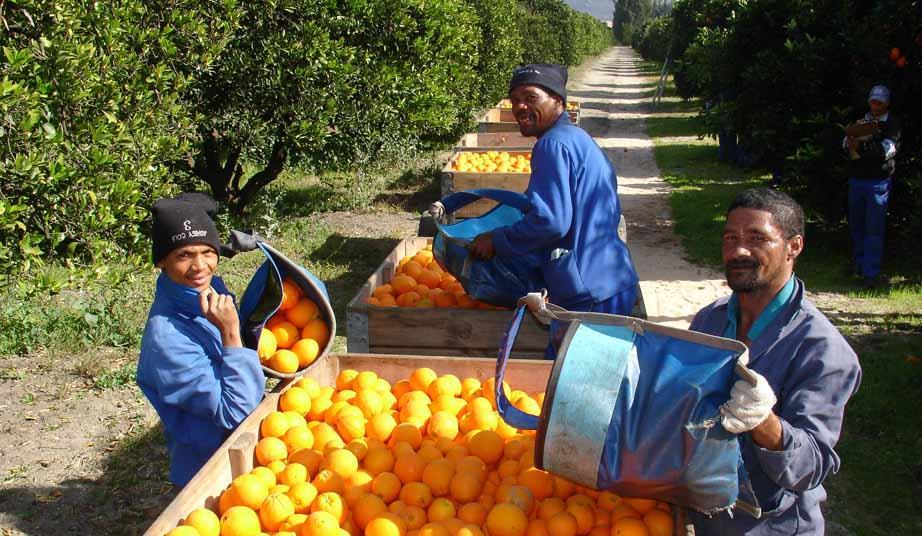
South African citrus farmers are calling for an urgent government intervention in its dispute with the European Union (EU) at the World Trade Organisation (WTO). This after a bloc of European countries introduced a raft of regulations related to citrus black spot (CBS), commonly known as “black spot” – a fungal disease which leaves dark spots on fruits. According to the Citrus Growers Association of Southern Africa (CGA), the imposition of these new requirements does not only threaten the survival of the industry but it will also lead to job bloodbath in the sector.
Poor logistics and irregular power supply
The CGA said the EU’s plant health rules could cut South Africa’s orange exports to Europe by 20% this year. According to the CGA the existing pest and disease control measures introduced by the citrus industry are highly effective. In a statement, CGA’s special envoy on market access and EU matters, Deon Joubert said, South African farmers are currently experiencing inconsistent electricity supply, poor logistical infrastructure and increasing input costs and therefore cannot afford to absorb the additional R2bn ($106.98m) annual cost to manage CBS risk.
Said Joubert: “The CGA calls on the South African government to work with the industry to put a stop to these CBS regulations and fight for South African jobs and revenue. Declaring a WTO dispute is truly a matter of urgency.” He added that the citrus trade with EU currently sustains a total of 70,000 jobs in South Africa, which in turn generates about $800m annually in annual export earnings.
Last minute reprieve
In June 2022, the department of agriculture, land reform and rural development (DALRRD) has secured a last minute reprieve for the farmers that allowed citrus growers to export their harvest to the EU markets. This after the EU blocked consignments of fruits from South Africa because they did not meet a new regime of its newly revised phytosanitary regulations.
The EU further said that the new measures are intended to regulate the risk associated with false codling moth infestations (FCM), a pest commonly found in sub-Saharan Africa. The refusal to allow the consignment, according to the CGA, resulted in large volumes of containers, valued at R500 million, being stranded at various harbours across Europe. In addition, the EU required the South African citrus to be cooled to between -1˚C and 2 ˚C for at least 25 days before being allowed to enter the EU.
Deepening the industry’s woes
In his reaction, after lodging complaints with the WTO last year, Justin Chadwick, CGA’s chief executive offer, slammed the requirements as unjustified, impractical and discriminatory on South African oranges. The sector had roped in the department of Trade, Industry and Competition (DTIC) to negotiate with the EU. Failure to reach a deal between the EU and the CGA would see the WTO refer the dispute to its appointed settlement panel. But CGA prefers the dispute to be settled before it is escalated to the WTO’s settlement panel. The concern is that once the dispute is referred to the panel it will take not less than two years to resolve it and this would further deepen the industry’s misery.
Protecting the Spanish citrus market
Observers and commentators including CGA view the EU’s new regulations as politically motivated machinations aimed at crippling the South African citrus market. South Africa is the world’s second largest exporter of fresh citrus after Spain. Furthermore, it is believed the EU wants to appease Spanish farmers who held a march to challenge the Spain’s left-of-centre government ahead of early election held last August in Spain.