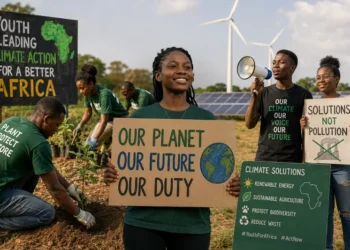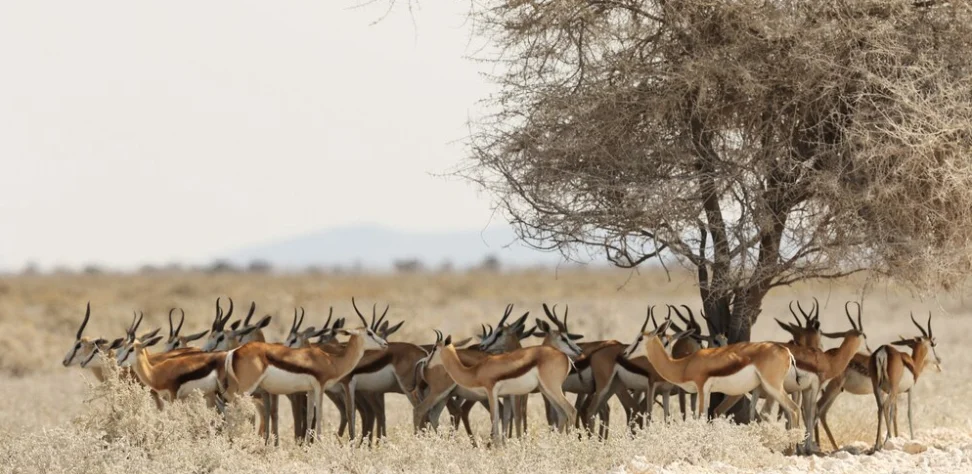
Africa’s wildlife attracts considerable foreign investment via funding for conservation efforts Contributors range from multilateral institutions and bilateral funding agencies to private foundations, philanthropists, zoos and non-governmental organizations (NGO’s) Reliable data on the scale and composition of donor funding are scarce, but external support makes up a substantial proportion of the total funding for wildlife conservation with donor contributions accounting for 32% of protected area (PA) funding in Africa, reaching 70–90% in some countries.
Wildlands and conservation areas provide critical resources for local people who benefit from using wildlife, grass, water, fire wood and non-timber forest products. During times of distress such as economic downturns, people rely more heavily on such resources. In addition, Africa’s wildlife provides important cultural and heritage values for multiple ethnic groups and charismatic species have extensive symbolic value internationally. The continent’s wildlife also holds considerable ‘existence’ value—value people derive from simply knowing it exists.
The State of African Wildlife Conservation
The backbone of African conservation efforts is made up of 7,800 terrestrial PA’s covering 5.3 million km2, 17% of the continent’s land area. PA coverage in some countries, (notably in southern and East Africa), far exceeds the global average. In parts of Africa, vast trans frontier conservation areas transcend national borders, creating protected landscapes spanning hundreds of thousands of square kilometers.
Most PA’s are state-owned and managed by government wildlife authorities, often with substantial support from tourism and hunting operators. Increasingly, conservation NGO’s and private sector entities cooperate with governments to manage state-owned PA’s through collaborative management partnerships (CMP’s).
In addition, conservation efforts on private and community lands have grown in recent years, expanding wildlife habitat, buffering PA’s, reducing edge-effects, improving ecosystem representation, securing seasonal migration areas and meaningfully engaging and benefiting rural communities that live with wildlife.
In Namibia, community conservancies account for 170,000 km2 and in South Africa, game ranches cover 205,000 km2, both exceeding the land area encompassed by state PA’s. Community-based conservation (CBC) programmes have grown in the last 20 years, supporting millions of rural African livelihoods.
Despite impressive political commitment to conservation in Africa, the continent suffers severe and persistent funding shortages hindering management effectiveness. Africa’s state-owned savannah PA’s with lions face recurrent budget deficits of US$1.2 billion per annum, rendering wildlife susceptible to threats, while forest PA’s are likely no better protected.
Key threats include habitat loss, degradation, fragmentation, encroachment, poaching and climate change. These factors, combined with poor governance, poverty, increasing human populations and illegal wildlife trade, continue to drive wildlife declines across the continent. The loss of large mammals compromises ecosystem function. Thus, with few localised exceptions, African conservation was in crisis even before COVID-19 hit. The pandemic was expected to amplify the crisis to catastrophic effect.
Environmental impacts of the COVID-19 crisis
Researchers have documented some positive environmental outcomes of the COVID-19 pandemic. For example, reduced industrial activity and mechanised transport have lowered emissions and air pollution worldwide. Certain Asian countries, (notably China and Vietnam), have taken steps to restrict trade threatening wildlife. If regulated and enforced over the long term, such restrictions could reduce poaching in Africa for illegally sourced products supplying Asian markets. Gabon has banned consumption of bats and pangolins following the COVID-19 crisis. Transport restrictions due to lockdowns also curbed trade in wildlife products and provided respite for PA’s suffering negative impacts of tourist congestion.
These positive environmental outcomes are likely temporary and prone to reversal when travel restrictions ease and countries return to business as usual. Conservationists argue that the net environmental impact of the COVID-19 crisis in Africa will be strongly negative because the crisis creates a ‘perfect storm’ of reduced funding, lower conservation capacity and increased threats to wildlife and ecosystems. Wildlife conservation arguably faces its most serious challenge in decades.
Reduced Conservation Funding
Governments face severe budget crises driven by the economic fallout of the COVID-19 pandemic and the cost of relief measures. Shortages will compel policymakers to cut anything perceived as ‘non-essential’ such as African wildlife authority budgets, already grossly inadequate, risk being slashed further, jeopardising wildlife and wildlands.
While previous shocks, for example, the 2014 Ebola epidemic and the 2008 financial crisis, markedly reduced tourism in some African countries, the negative, continent-wide impacts of COVID-19 on the industry were unprecedented in scale and severity. Some 90% of African tour operators have experienced more than 75% declines in bookings.
Because tourism is the largest contributor to PA financing in some countries, lost revenues have major ramifications for state wildlife authorities, private concessionaires and landowners and community conservation programmes. Decreasing tourism revenue threatens millions of jobs and peripheral industries, severely impacting the livelihoods of some of the continent’s poorest people For nations less reliant on wildlife tourism for conservation (for example, in the forest biome), the impact will be lower. However, if the industry is slow to bounce back, under-visited PA’s developing nascent tourism products may be the last to see visitors.
Beyond tourism revenue losses, reduced donor funding for African conservation over the next 1–2 years and possibly longer due to flagging economies and shifting priorities, are expected. During the previous global financial crisis, total charitable giving in the United States dropped by 7% in 2008 and 6.2% in 2009 and conservation endowments declined in value by 40%.
The current economic downturn and stock market volatility, to an even greater degree, may reduce capacity of private donors, corporations and foundations to give philanthropically. Restrictions on travel and gatherings have caused cancellation and postponement of key conferences and conservation fund-raising events. Many zoos were closed and reduced revenues are expected to limit support for in situ conservation efforts. The pandemic will also shift focus from conservation towards humanitarian causes.
Some bi- and multilateral donor agencies increased funding to developing countries in response to the 2008 financial crisis, but the extent of the economic and humanitarian challenges is such that any additional funding would likely be directed at those realms. Some emergency conservation funding is being organised in response to the crisis, though it will likely fall far short of offsetting losses.