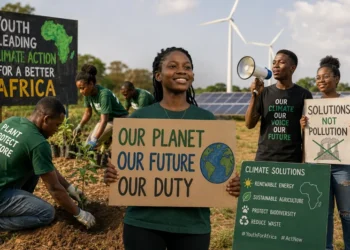


There is an urgent need to provide all students with the knowledge and skills they need to support climate justice and well-being, thrive in the green economy and develop sustainable behaviours.
Climate Education
In the most recent World Bank publication, it calls for mandatory climate education. While there are glaring shortcomings and disparages in the South African (SA) state schooling system, other countries have already incorporated climate education standards into their curricula. While SA struggles ahead with uneducated teachers, joblessness and teaching even young teenage students the basics of reading, the task of educating the masses will rest of the soldiers of private institutions and NGO’s, both locally and internationally.
However, as advanced First World Countries are with regards to The Next Generation Science Standards (NGSS), EARTH.org maintains that these standards do not provide students with an interdisciplinary understanding of the causes, solutions and impacts of the climate crisis. New UNESCO data from 100 countries shows that only 53% of the world’s national education curricula make any reference to climate change.
Do Students Want to Learn More About Climate Change?
Almost 93% Cambridge International students who responded to a survey on social media are ‘concerned about climate change’, with over 75% voting for more climate change education as a way of helping them make better informed choices on travel, food and energy. In free-text answers, students stressed the importance of integrating such education across the school curricula because learning about climate change from a young age is essential for preparing future generations to tackle environmental challenges. Eighty per cent (80%) voted for more opportunities to learn about climate change at school or college. The two-week survey, which ran across Instagram, Facebook, LinkedIn and X at the start of April, gathered responses from 303 students aged 14 to 18.
Not only did most of students say they want to learn more about how climate change will affect the future, they also called for teacher and parent education.
Directly discussing climate change and using Social Emotional Learning to explore coping strategies can help young people increase positive emotions regarding the subject. Comprehensive climate education will expand a student’s understanding of climate justice and equity, an analysis of how climate change disproportionately impacts women, marginalised communities and indigenous people, would provide invaluable insight.
The Green Economy
The rising demand for green skills requires governments and schools to act now to ensure green jobs will be filled in the future to help the world achieve net zero by 2050. Children start to make decisions about potential career paths at a young age. All young people with knowledge and skills need to benefit from this economic revolution. Forty-four percent (44%) of 59%of those who learned about climate change in school have taken action to address it.
Columba Climate School – Green Muscle Memory
Earthday.Org created the term green muscle memory to describe learned behaviours becoming instinctive and occurring with little conscious effort to move us toward net-zero carbon emissions. Climate Education leads to meaningful behavioural changes.
According to one study, if 16% of secondary school students around the world, in middle and high-income countries, studied climate change, it would result in cutting almost 19 gigatonnes of CO2 by 2050. Students who took climate action in the past year were more than twice as likely to be interested in taking further action. Those completing a one-year university level course on climate change exhibited a significant and lasting reduction in individual carbon emissions with an estimated decrease of approximately 2.86 tonnes of CO2 per year per student.
The transition to a net zero emissions environment by 2050 will create new industries worth $10.3 trillion to the global economy with a massive market for green goods and services. According to the World Economic Forum (WEF), employers estimate that four in ten workers will need to be reskilled for the green jobs of the future. Nearly half of young people felt they did not have the right skills for a successful career in the green economy.
How to Advance Climate Education
WEF calls for:
- teacher training, in the form of guides, workshops and local conferences, should demonstrate how to incorporate climate education into all subject areas;
- State officials to introduce legislation that develops mandatory K-12 climate education in their state and create an office of climate education to manage its implementation and evaluation.
- Leaders in government, business and education should identify and promote the mutually beneficial outcomes of climate education, including green skills and green technology and provide the funds to implement climate education.
- Districts, teachers, parents and students should call on politicians to support climate education.
In the end we will conserve only what we love; we will love only what we understand; and we will understand only what we are taught. — Baba Dioum, Senegalese forestry engineer