

Forty (40) million hectares of African forest, the “lungs” of the planet, have been destroyed over the last ten years. Deforestation on the continent is the highest in the world and threatening not only Africa’s but the entire planet’s future.
African leaders understand the urgency to act and making ambitious commitments to restore their forests. Almost every African country signed the Convention on Biological Diversity (CBD); others have joined the Bonn Challenge, the regional African Forest Restoration Initiative and the Great Green Wall Initiative.
During COP meetings, African delegates are keen to act, but, as Rachel McMonagle, Programme Director, Climate Change at Landesa said in an article in Terraformation, the livelihoods of millions of people who depend on these forests are at risk. This is the result of not including rural people in conservation efforts. McMonagle called for “inclusive and gender-responsive planning and safeguarding mechanisms.”
While laudable, these programmes to restore millions of hectares of African forests in less than a decade would come at cost; the expansion of protected areas excluding local environmental stewards, Indigenous peoples, local communities and smallholder farmers who rely on local natural resources for their livelihoods.
Fortress Conservation in Forests
Not only African governments, but globally, countries often resort to establish protected areas by cordoning off millions of hectares of forest and wilderness from human use and access. This “fortress conservation” model believed to be part of historical prejudice against indigenous peoples and rural communities thinking that the term “wilderness” means uninhabited.
Failing to safeguard the land and forest rights of indigenous communities would jeopardize livelihoods and undermine global efforts to combat climate change. Indigenous peoples and local communities have proved to be knowledgeable stewards and protectors of land and forests. The Rio Conventions specifically addressed this as part of its change, biodiversity and desertification concerns.
Certain governments and organisations have slowly started to include the rights of Indigenous peoples and local communities in conservation efforts, but it has been on a small scale and not considered urgent. Forest restoration commitments by a few sub-Saharan African countries are raising serious concerns about the land and forest rights of rural communities within these forested areas.
Kenya and Liberia, for example, have committed nearly 10% of their land area for forest restoration. This could negatively impact natural resource access for 2.5 million Liberians and more than 38 million Kenyans.
A similar commitment in densely populated Rwanda covers an astonishing 77% of the country’s land, potentially impacting 11.3 million Rwandans in a country of 13.8 million people.
Funding, Protecting and Equitable African Forest Planning
Foreign investment in carbon offsets adds pressure to forest rights of rural communities. A recent report stated that Liberia was to sign away one-tenth of its land to a UAE-based company in a carbon offset schemes. The governments of Angola, Kenya, Tanzania, Uganda, Zambia and Zimbabwe are set to follow suit.
Offers of billions as foreign investment are difficult for governments in low- and middle-income countries to deny. However, underlying these are severe long-term economic and social consequences where land and resource rights are denied.
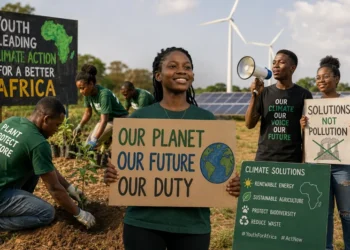
A rights-based conservation approach putting local communities at the centre of sustainable land management plans is an equitable solution and considered by environmentalists as best option for the planet. Governments can achieve better conservation and climate outcomes when they empower local communities, indigenous peoples, women and youth to lead restoration, conservation, and climate action initiatives.
These outcomes are because of local communities’ and Indigenous peoples’ use of land. Traditional land management techniques in and around protected areas often have a positive impact on local biodiversity.
Fortress conservation efforts seldom receive adequate funding from governments, resulting in ineffective patrol efforts against poachers, loggers and others seeking to exploit the resources of the protected area. Indeed, forests designated as national parks or protected areas are vulnerable to land invasions and illegal logging at rates higher than forests stewarded by Indigenous peoples and rural communities.
The Ethical Interconnection
Humans have existed within wilderness areas for thousands of years, sustainably managing and using natural resources as part of a balanced ecosystem. Victoria Tauli-Corpuz, the UN Special Rapporteur on the Rights of Indigenous Peoples, describes as this as an ethical interconnection with nature.
These African forests sequester billions of tonnes of carbon, important for the well-being of people worldwide. Africa’s forests and natural areas are an indispensable collective resource.
By Alex Rose-Innes