

Image – SANParks
Alex Rose-Innes
South African National Parks (SANParks) is moving from a position of fortress conservation where national parks are “islands of privilege, often in a sea of poverty” to one where conservation is inclusive and the catalyst for improved livelihoods. “We are deliberately becoming inclusive and that is not going to be easy,” said its chief executive, Hapiloe Sello, at the recent unveiling of SANParks’ Vision 2040.
“It’s easier to say it, but far more difficult to implement it.” – Hapiloe Sello
Vision 2040 – SANPark’s New Strategy
Vision 2040 took 18 months to draw up and involved consultation with parks’ neighbours, traditional leaders and healers, young people, conservationists, tourism practitioners and other businesses, as well as heritage and marine specialists. The strategy reimagines the role of conservation as a catalyst of redress, economic advancement and job creation, as well as the institutional fitness of SANParks.
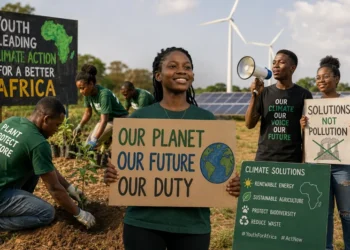
“This model of conservation will promote social justice and inclusivity by guaranteeing that all communities, particularly the disadvantaged and marginalised, have fair and equitable access to opportunities and resources” and every South African has a “stake in conservation,” a statement from SANParks read.
Sello said Vision 2040 is “the culmination of conversations and consultations with over 1 600 people from across the country; people from all walks of life. So this was not a vision born in a boardroom by SANParks on its own. It’s truly a co-created vision.”
Vision 2040 – SANPark’s Seven Scenarios
Seven scenarios were developed for different future situations.
Scenario one was the worst-case scenario where SANParks would collapse by 2040 because of insufficient funding and corruption at all levels. Most parks become neglected, leading to large-scale poaching and development, causing significant biodiversity and heritage loss. The work that SANParks does, only benefits select areas and individuals. The primary driver is the lack of political will and support for conservation. When this happens, conservation progress would be reduced, biodiversity loss, staff resigning, inefficiencies and declining public support. This scenario is not viable due to the harm it causes to people and nature.
Scenario two focused on keeping things the way they are, characterised by a lack of agility and planning. Climate change means droughts would increase, straining water resources. Other conservation agencies combat poaching and manage parks with new technologies, but SANParks does not, resulting in persistent and increased poaching. SANParks staff is demotivated because poachers have better technology than they do.
Tourism declines as SANParks fails to meet the changes in traveller needs, leading to reduced income. In this scenario, invasive species spread, disrupting ecosystems and providing no benefits to nearby communities. This scenario is driven by resistance to change and a lack of innovative funding strategies. It is not viable due to its negative consequences for the organisation and slow decline in conservation.
Scenario six centred on an “if it pays, it stays” approach. It would mean that SANParks prioritises profit over conservation, neglecting its duties to communities and conservation. The focus on profit leads to the dominance of private parks controlled by powerful groups, side-lining smaller entities.
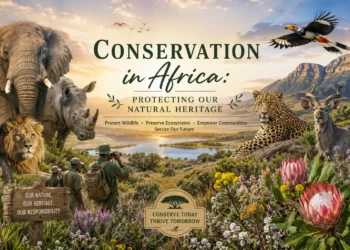
The preferred scenario — scenario seven — is that by 2040, all people in SA will live in harmony with nature, with the country becoming a model for other countries to follow. It builds unity with within communities, creating strong partnerships that are much wider than the footprint of national parks.
Nature, heritage and conservation are important to every South African and link healthy people with thriving nature. Large areas of land, with national parks at the centre, other conservation landscapes and even areas without legal or formal protection covering ecological, cultural and heritage sites, bring communities together.
At heart it is the roll-out of Mega Living Landscapes, huge interconnected areas set to break the myth that conservation is solely the playground of scientists and environmentalists according to a statement from SANParks. Protected areas will no longer be islands. This approach will foster co-existence, inclusivity and sustainable development, ensuring that most South Africans participate in conservation efforts.
Traditional healer, Amanda Gcabashe, praised the “ground-breaking” process underpinning the strategy. “SANParks was deliberate and intentional in its inclusiveness about making sure that you opened the doors to people who don’t normally have access to policy conversations”, she said. “For once, somebody has bothered to ask, what do you think? Where do you think we should be going?”
SANParks board chairperson, Pam Yako, said: “We interact with nature and the conservation of nature in various ways. Others are actively involved; the people who work in conservation, including SANParks staff, our neighbours around the parks, private reserves and even communities around the parks.
But there are also some of us who just want to come to the park and relax and take a break and there are also some of us who need to come to the park for a spiritual connection.” Vision 2040, Yako said, was born from a deliberate effort to “bring all of us in our diversity, in our different interests, towards a common vision, that is a little bit ambitious, but it’s achievable.”
Narend Singh, the deputy minister of forestry, fisheries and the environment, praised the “very inclusive exercise” and hoped that other government departments and state-owned entities would “take a leaf out of SANParks’ book to emulate this kind of inclusive discussion.” Vision 2040 is not merely about strengthening the country’s conservation efforts “which we must do”, it is also about how we use the unique mega diversity of this beautiful country to contribute meaningfully to the improvement of people’s lives and engender social cohesiveness. It is about shifting the needle in terms of shared economic growth and job creation in a manner that promotes a much stronger embrace for nature.”
He said Vision 2040 is part of SA’s contribution to an element of the Kunming Montreal Global Biodiversity Framework to expand its conservation estate to ensure that 30% of the land and 30% of the sea be placed under protection by 2030. SANParks would embed Vision 2040 in its plans and integrate it as part of its performance reporting.