Community-led conservation drives in northern Cameroon’s rugged Faro landscape, (Faro-Bénoué-Bouba Ndjida landscape) near the Nigerian border, are successfully addressing climate change ecosystem threats. Bordering the Faro National Park (FNP), a sanctuary for forest elephants, lions, antelopes and other endangered species, faces significant threats to its rich biodiversity.
These landscapes also face human-induced issues such as seasonal cross-border movement of livestock, poaching, illegal gold mining and wildlife trafficking. Communities along the Faro River endure extreme weather conditions – devastating floods, prolonged droughts and extremely hot temperatures.
Community-Led Conservation
The African Wildlife Foundation (AWF), in partnership with the Center for International Forestry Research and World Agroforestry (CIFOR-ICRAF) and with support from the European Union, is working with local communities to revitalize Faro’s ecosystems. This initiative, started in 2017, focuses on strengthening community resilience around FNB through sustainable and nature-friendly solutions.
Amadou Aboubakar, AWF’s senior community development officer for the Faro landscape, said empowering communities and restoring ecosystems are central to the initiative. “It targets Faro’s semi-arid regions, aiming to restore degraded landscapes and improve local livelihoods. AWF leads community engagement and conservation efforts, while ICRAF contributes expertise in agroforestry and sustainable agriculture.”
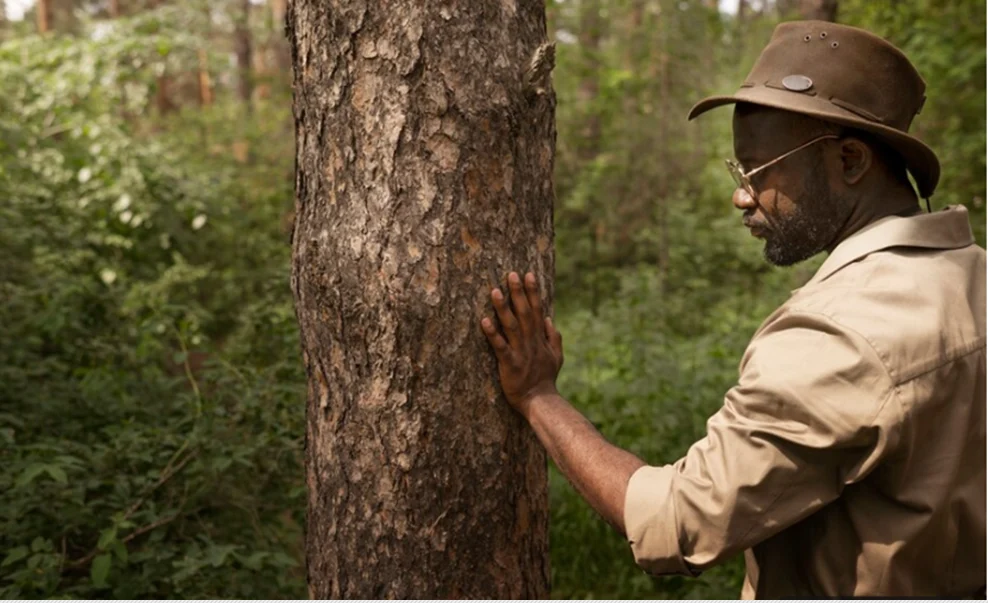
The project combines tree planting with community education, distributing resilient tree species such as baobab, cashew, African mahogany, mango and moringa, selected for their ability to thrive in harsh conditions. More than 40,000 trees had so far been planted
Faro Success Stories – Rural Resource Centres
In 2021, AWF and ICRAF established the Tchamba Rural Resource Center, playing a pivotal role in promoting sustainable agriculture and conservation. It also serves as hub for various community-driven initiatives aimed at greening the semi-arid landscape and supporting conservation-friendly livelihoods. It offers business management training as well, enabling more than 100 villagers to start micro-enterprises. The centre’s nursery has distributed indigenous tree and fruit seedlings to local communities.
“With AWF’s help, 27 women and seven young men, including myself, revitalized our millet farming businesses. They installed a solar-powered water point and provided a large storage facility, ensuring reliable water access for farmers,” said Haoua Laraba, president of the Tchamba Rural Resource Center
Since the onset of this initiative, AWF has engaged more than 1 million people in Faro through community meetings, awareness campaign, and school-based environmental education programmes. This outreach has transformed local attitudes toward conservation, enabling the community to recognize their vital role in long-term survival and not just seeing trees as firewood. Ecosystems are regenerating; fodder is more abundant, benefiting both people and wildlife.
Youkouda Koeranga, traditional ruler of Tchamba, said “the AWF has rekindled our community’s love for trees. The increase in tree planting is especially welcome as droughts and soil degradation had worsened due to deforestation.”
According to Saliou Atikou, a member of the Tchamba community, when AWF began its work in Faro, only two dedicated tree farmers were active in the region. Today, that number has grown to at least 11. “Before learning sustainable fruit farming techniques from AWF, my trees took six to eight years to bear fruit. Now, they fruit in three to four years, with significantly higher yields,” he said. He currently sells his mangoes and oranges at the local market, earning a steady income to support his family of six.
Sustaining the Momentum
Abdoulaye emphasized the community’s commitment to continuing the fight against climate change even after AWF’s initiative ends by using use AWF’s technical knowledge to raise awareness about ecosystem protection. “We have taught women and youth how to produce and multiply plants and established ‘Nature-Lovers’ clubs in schools to promote tree planting and environmental stewardship from an early age.”
The clubs, supported by AWF, have been established in five schools across Tchamba, Fignole and Voko. Students participate in tree planting and other ecosystem-friendly activities, learning about the interconnectedness of life and the importance of protecting their natural heritage.
The reforestation efforts in Faro are vital to restore habitats and safeguard endangered species. By planting trees and restoring ecosystems, the project has enhanced wildlife conservation efforts, mitigated impacts of extreme weather and promoted biodiversity, thereby ensuring a sustainable future for the region.