
Alex Rose-Innes
Late blight regularly wipes out entire crops of rural, subsistence farmers in East Africa and sometimes a third of global potato harvests.
The poor and marginalised African communities in East Africa had for a long time been battling to provide food and a small income for their families, but had seen their crops destroyed on a regular basis.
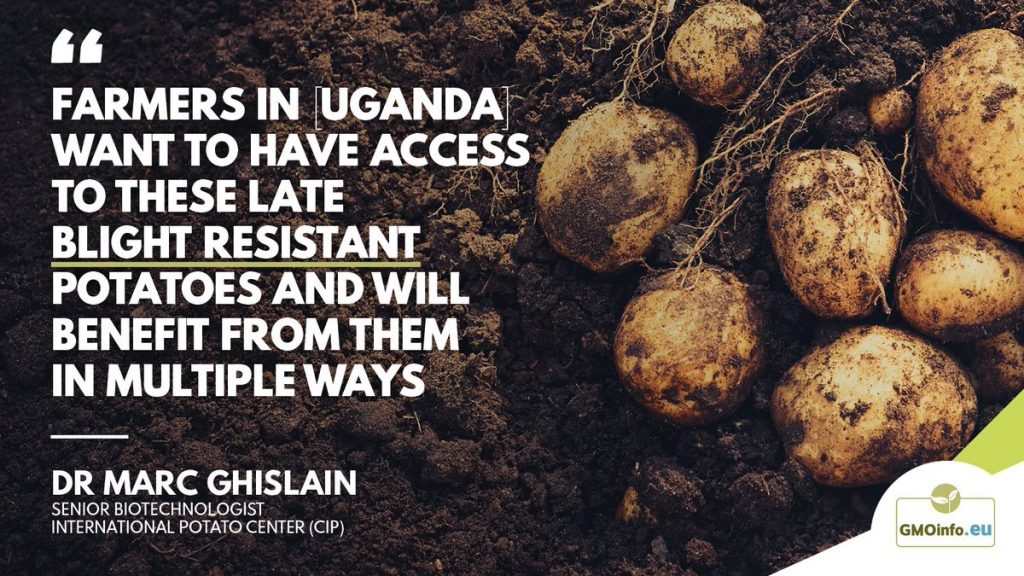
But, this could change very soon as the National Agricultural Research Organisation (NARO) in Uganda’s researchers had successfully developed a more resistant strain of potatoes. By applying the latest molecular techniques, late blight resistant genes had been transferred to the new stronger vegetable variety.

Working hand in hand with the International Potato Centre, NARO had created the 3R Victoria which is almost identical to the current potato crops grown in eastern Africa, but had enhanced the original with three new genes that would render it completely resistant to the late blight pathogen.
In Uganda, about 300,000 smallholder households grow potatoes for subsistence and income, the disease destroys as much as 60% of a farmer’s potato crop, a collective annual loss of approximately USD 129 million. In Ethiopia, an estimated one million farmers grow potatoes with 70% of the country’s arable land is ideal for its cultivation.
According to Tadessa Daba, Director of Agricultural Biotechnology Research Directorate at the Ethiopian Institute of Agricultural Research, potatoes could be the key to fighting malnutrition. One billion people across the world consume it, making potatoes the third most important food crop globally after rice and wheat. With potatoes providing a low-fat source of carbohydrates, it only has a quarter of the calories of bread which many of the poor in Africa cannot afford and is a much healthier option.
Daba said that potatoes and root crops could offer a significant advantage over other staple foods such as rice and wheat. It could produce more food on smaller patches of arable land and needed less water, but at the same time offers huge potential with increased productivity. Because potatoes are produced by African farmers for the African market, prices are not subject to international trade fluctuations. As Africa works to eradicate poverty and hunger, he believes that potatoes could be the answer.
Why a genetically enhanced potato?
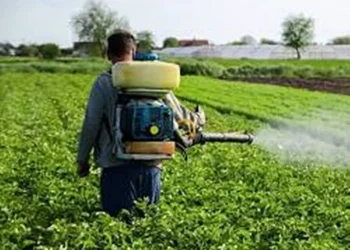
To this day, subsistence farmers have to regularly use expensive fungicides to control late blight in the humid climate of eastern Africa. As much as 25% of the smallholder’s total harvest income goes towards pesticides. Besides decreasing the already meagre income of rural farmers, it also negatively impacts the environment.
The new 3R Victoria variety totally eliminates the need for fungicides and means potato farmers could grow crops during the heavy rain season, when late blight is most prevalent.

According to the United Nations, with each field destroyed by late blight, food security, already a major issue in Africa, suffers. Especially during 2020, the continent’s ability to feed itself was further impacted by a variety of human and crop diseases, not to mention the pandemic. The UN said that COVID-19 could increase poverty and hunger for millions more.
The one obstacle for rolling out bio-engineered crops is that the 3R Victoria and other genetically enhanced crops could only be farmed where proper regulations are in place and with the necessary funding. Ethiopia and Nigeria had already proved significant benefits from bio-engineered crops and in Nigeria, a pest-resistant cowpea variety had increased yields by 20%.
Since the 1990’s, bio-engineered crops had generated an estimated USD186 billion in higher yields and extra production in six western countries, but none in Africa. This is mostly due to on-going regulatory debates about safety, environmental impact and social consequences of modern agriculture. These concerns can only be addressed with constructive dialogues, information sharing, proper education and building trust among partners.
The UN said that while western countries were quicker to ensure supportive regulation, the African continent’s notorious lack of capacity and political will, compound the problem of developing a coherent regional framework. .
The future lies in building partnerships between research organisations with technology capacities and national agricultural institutes to develop bio-engineered crops adapted to local conditions. Working closely with farmers and other stakeholders, the UN hopes to build the necessary trust to foster adoption of new, modern techniques.
Daba is also of the opinion that with additional funding and proper regulation, crop scientists across national agencies, international organisations and universities could expand trials in East Africa and beyond and assist farmers to implement these.
Africa has many opportunities to grow more food on less land while safeguarding the environment and eradicating poverty and hunger on the continent. But for this to come to fruition, African governments needed to be open to new, scientifically proven technologies such as bio-engineered crops and use them appropriately. However, this is easier said than done.