

Alex Rose-Innes
Twenty-five years ago, Bill Putman, one of South Africa’s (SA) most respected water experts, predicted that the country would run out of water in another two decades. SA at the time was already struggling with a lack of water resources and now, there is no doubt anymore that water scarcity would become a chronic problem.
Across the globe and especially on the African continent, a scholarly paper showed that, even without climate change, a widespread drop in water availability would become the norm. Experts, who had been debated and projected expected scenarios for decades, in a recent assessment, said there was trouble ahead with the continuous population growth in Africa.
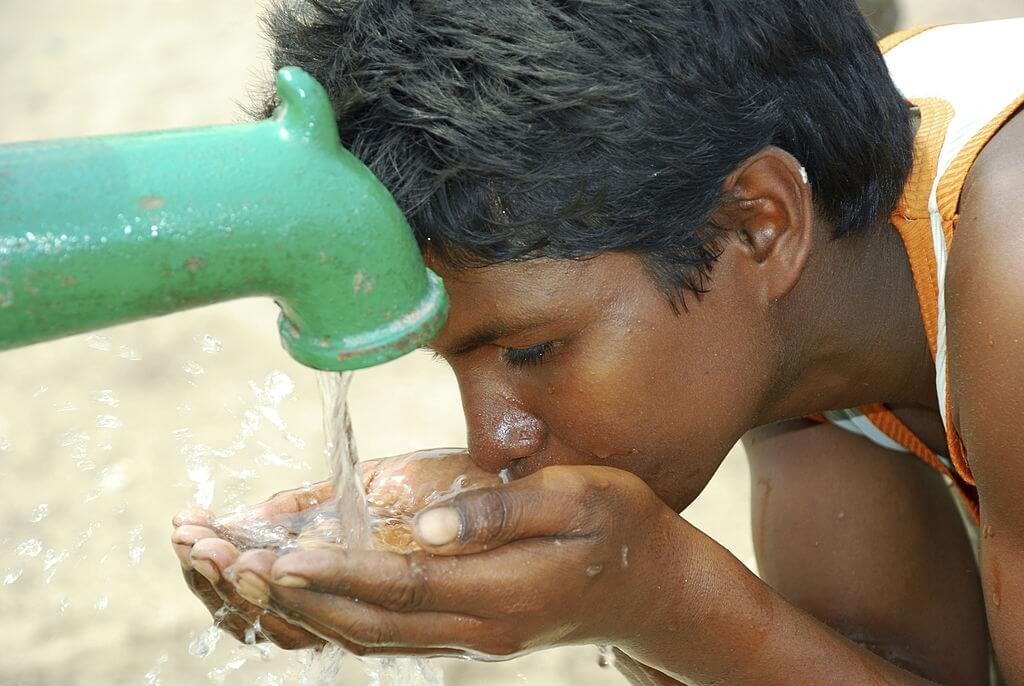
Whereas Europe, the East and the Americas are buckling under floods Africa’s water outlook is getting worse. It is expected that by 2050, more than 87 countries would suffer from absolute water scarcity, meaning less than 1700 cubic metres of rain per year and this does not even take into water quality into consideration.
The Day Zero water crisis in Cape Town was a wake-up call, although it might have already been too late. The United Nations and UNICEF’s indicators and projections on the global water situation showed that the problem is increasingly becoming a local and continental issue. For some time, analysts had been predicting that the major wars in Africa would be over water resources. The recent dispute with Ethiopia over the building of the Grand Ethiopian Renaissance Dam saw other countries in the Nile basin outraged by the effect it would have on them.
With population growth related to socio-economic conditions, water scarcity would especially hurt the poor in Third World countries. Low-income countries are projected to have an average drop in water availability per capita of around 46%, followed by lower-middle-income countries decreasing by around 30%, upper-middle-income countries 12% and high-income countries, close to 5%. With millions of Africans living below the poverty line, there is little or no infrastructure to support the people although these countries may still have many freshwater resources but the poorly educated masses do not have any understanding of caring for the planet.
But, water scarcity may even hit economically-advanced countries. They however, have the benefit of funding and access to the latest innovations to combat that. But, there is no denying among experts that SA’s situation would be repeated across Africa.
Ways to mitigate the impacts of growing water shortages include improving water use efficiency in agriculture, responsible for the highest global water withdrawals. Efficiency alone would not make a difference and scientists said reducing population growth in developing countries was possible and could be be achieved by meeting certain sustainable development goals (SDG’s) such as education or decent job opportunities.
Other ways of ensuring water include harvesting water from air, recycling of used water, capturing flood rainwater in aquifers at large basin scales where geology permits and climate-independent sea water desalination, (a virtually unlimited resource), in coastal areas where the majority of the world population lives. These had already been proved effective across the world.
The perceived high cost of some such technologies is gradually lessening and becoming more affordable. However, the cost of inaction would certainly be higher.
As Guillaume Baggio, Research Associate, Manzoor Qadir, Assistant Director,and Vladimir Smakhtin, the Director at the UN University’s Canadian Institute, said in their published report water scarcity should not be seen as a myth or some science construct. It is a global challenge manifesting itself locally in a variety of ways. The water scarcity in many countries clearly calls for a paradigm shift.
BLURB:
If we fail to act now, do not be surprised when taps stop running dry sooner than we might expect – United Nations report